theFASHIONtamer Where Style Meets Space, Effortlessly
 The entryway is the first glimpse you and your guests get of your home, setting the tone for what lies beyond. Designing small entryways often presents challenges due to limited floor space and unconventional layouts, but these constraints also open doors to innovative design solutions. This guide explores creative small entryway ideas that blend practicality with style, turning compact spaces into welcoming, functional areas that leave a lasting impression.
Optimize Compact Entryways with Versatile Furniture
In tight entry spaces, every inch counts. My go-to strategy is selecting multifunctional furniture that merges storage, organization, and aesthetic appeal. Pieces that combine seating with hidden compartments, mail sorting, and device charging stations help maintain order and reduce clutter effortlessly.
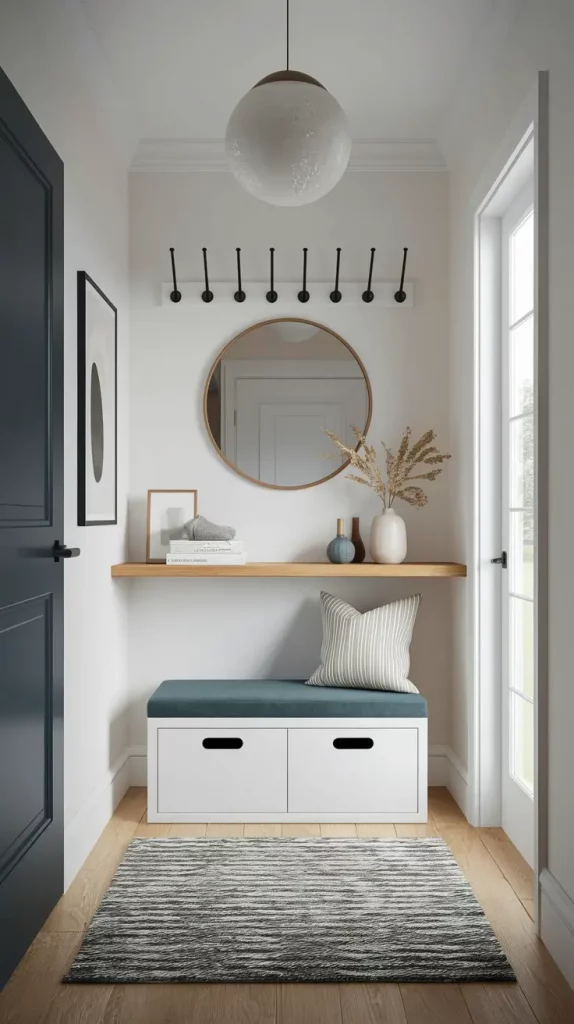
Ideal choices include slim benches with concealed storage and narrow console tables featuring drawers. These compact storage options preserve a balanced look without overwhelming the space. I favor minimalist designs in light finishes to amplify openness, complemented by a round wall mirror above to add depth and functionality.
Seamless Integration of Stairs and Entryways
Entryways adjoining staircases offer unique design opportunities. Treating the stair wall and floor area as a cohesive unit enhances spatial flow and visual harmony. Instead of feeling like an afterthought, the entry should blend seamlessly with the home’s overall aesthetic.
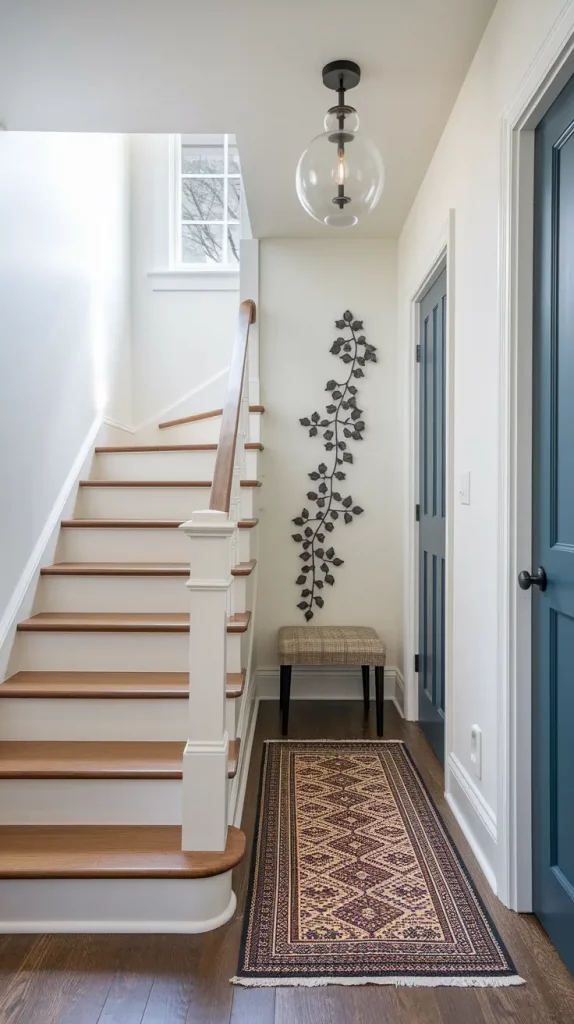
My approach starts with placing a runner to guide guests from the stairs inward, followed by incorporating base-level storage or seating. Wall sconces add both style and illumination to the stair wall, while vertical mirrors or framed art enhance the perception of space along the stair slope. Built-in shelves beneath stairs make excellent use of otherwise wasted space, a trend highlighted by Architectural Digest as a smart design choice for all home sizes.
Adding a contrasting paint color on the stair wall paired with a gallery display ascending the stairs can visually elevate the entry and strengthen the transition into the home.
Innovative Storage Solutions for Small Entryways
Effective storage is the backbone of a tidy entryway, especially when space is scarce. I always assess vertical space first-can hooks, shelves, or cabinets be mounted to maximize utility? This mindset transforms even the smallest entry into a highly functional drop zone.
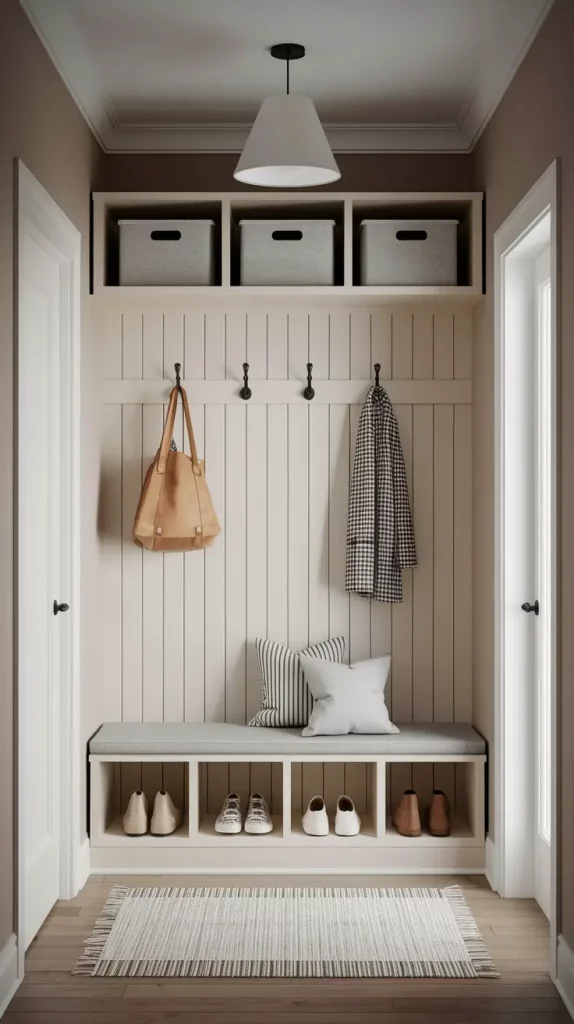
A combination of wall-mounted hooks, a slim vertical shoe cabinet, and a storage bench beneath a floating shelf forms my preferred setup. This mix of closed cabinetry and open shelving balances accessibility with concealed clutter, maintaining a clean and organized look. For compact shoe storage, I recommend exploring options like the shoe storage cabinet that fit narrow spaces without sacrificing style.
Adding woven baskets for umbrellas or yoga mats and labeled bins further enhances organization. Consistency in color and finish across storage elements fosters a calm, cohesive environment, as advised by Domino Magazine.
Entryway Benches: Combining Comfort and Storage
Benches in small entryways offer dual benefits: a place to sit and additional storage. They are especially valuable in compact homes, serving as shoe racks or decorative platforms without overwhelming the room.
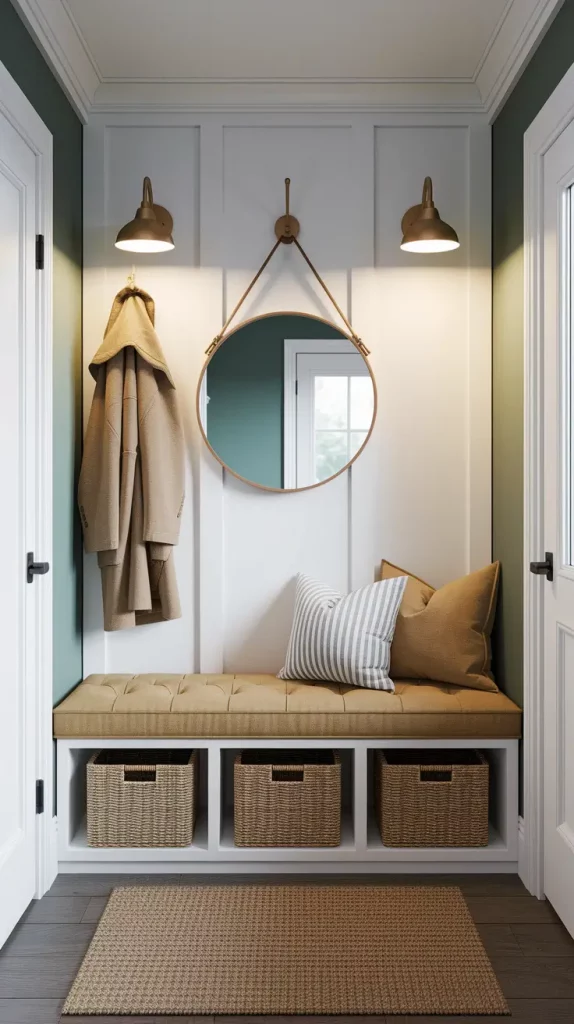
I prefer benches with hidden compartments or wooden bases that accommodate storage baskets underneath. Pairing the bench with a mirror and coat hooks above completes the entry setup. In narrow spaces, elevating the bench slightly off the floor creates a sense of openness and improves air circulation.
Adding texture through a throw, tufted cushion, or decorative tray elevates the bench beyond mere functionality, making it a stylish focal point. HGTV highlights that entryway benches foster a welcoming atmosphere by offering guests a comfortable spot to pause.
Transforming Corners into Functional Design Features
Often overlooked, corners in small entryways can become striking design elements with the right approach. Depending on available space, I opt for tall narrow shelving units or corner-mounted benches to maximize utility without crowding the area.
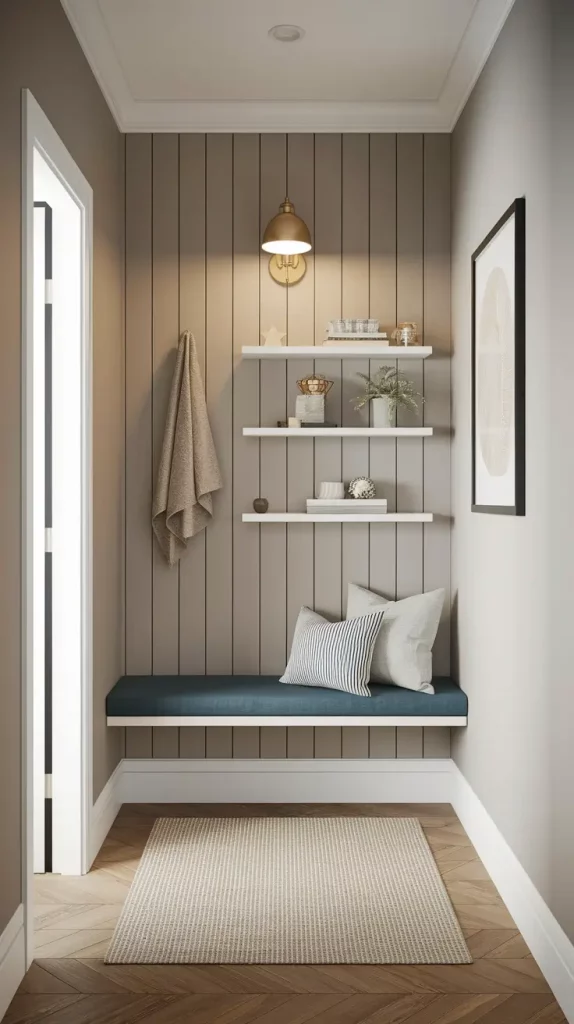
Triangular floating shelves paired with wall sconces provide both storage and ambient lighting while preserving floor space. Creative corner solutions I’ve implemented include corner coat racks and repurposed vintage ladders as hanging storage. Real Simple magazine calls corners the “untapped goldmine” of small space design, a sentiment I wholeheartedly agree with.
To anchor the corner visually, I recommend adding a small mirror or artwork above the storage unit, creating a focal point that draws the eye.
Mirrors: Expanding Space and Enhancing Light
Mirrors are indispensable in small entryways, serving far beyond their traditional role. They amplify natural light, add elegance, and create the illusion of a larger space. For compact areas, installing a well-chosen mirror can dramatically transform the ambiance without occupying valuable floor space.
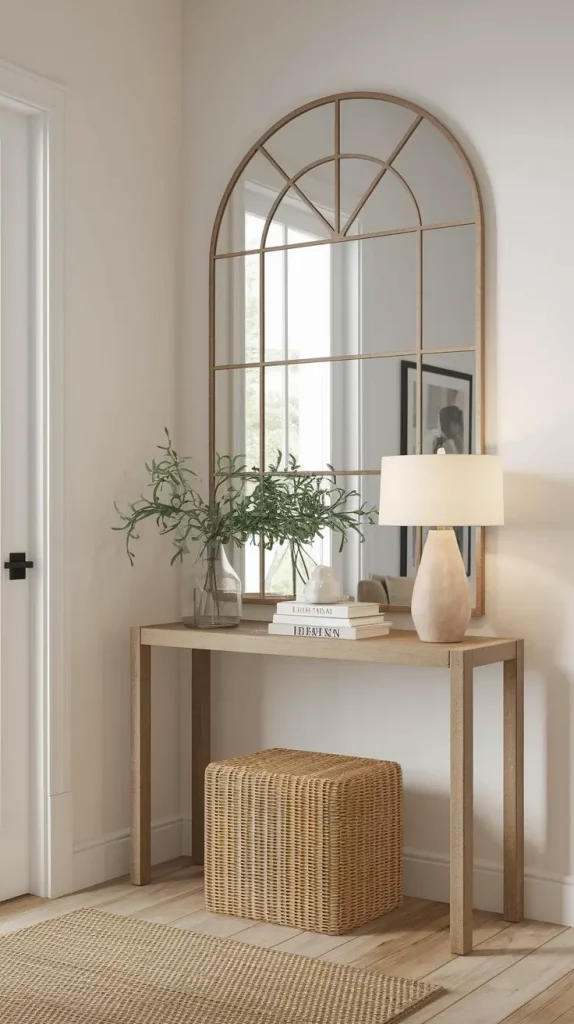
My mirror selection varies by style: large arched frames suit traditional interiors, while round minimalist mirrors complement modern spaces. Positioning a mirror opposite a window reflects sunlight beautifully, enhancing brightness. Pairing mirrors with a console or bench creates a purposeful and visually expanded entry.
Mirrors with integrated ledges or hooks add extra functionality, serving as convenient spots for keys or small items. Elle Decor notes the rising popularity of oversized mirrors in small spaces for their dual decorative and practical benefits.
For evening ambiance, placing a slim table lamp or candle in front of the mirror adds warmth and depth.
Smart Shoe Storage Solutions for Limited Spaces
Shoe clutter is a common challenge in small entryways. I recommend a variety of strategies to keep footwear organized and the area tidy. Closed vertical cabinets with shallow depths, tiered baskets, and under-bench drawers are excellent options.
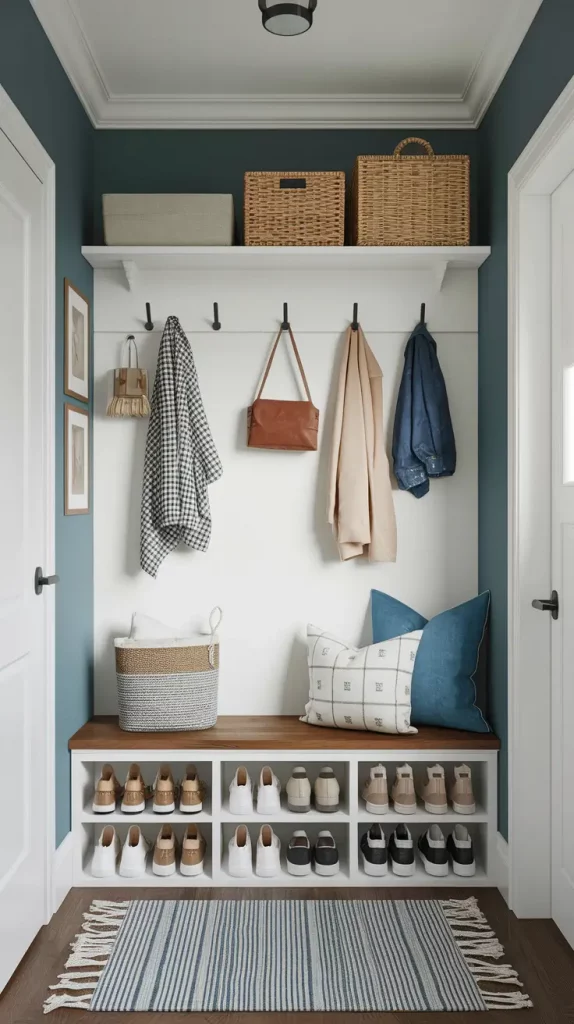
Space-saving shoe racks that fit behind doors or on door frames help maintain clear floor space. For compact solutions, consider shoe racks for small entryway that blend functionality with style.
In my own experience living in a narrow apartment entry, I used IKEA Hemnes cabinets combined with rolling shoe crates under benches. Modular stacking cubes from brands like Dwell offer adaptable storage that fits various needs. To combat odors, ventilated cabinets or sachet drawer liners are practical additions that enhance the shoe storage area.
Elevate Small Entryways with Thoughtful Wall Decor
Wall decor is a powerful tool to add personality and style to small entryways. Walls often remain underutilized, yet they hold immense potential to transform the mood and character of the space.
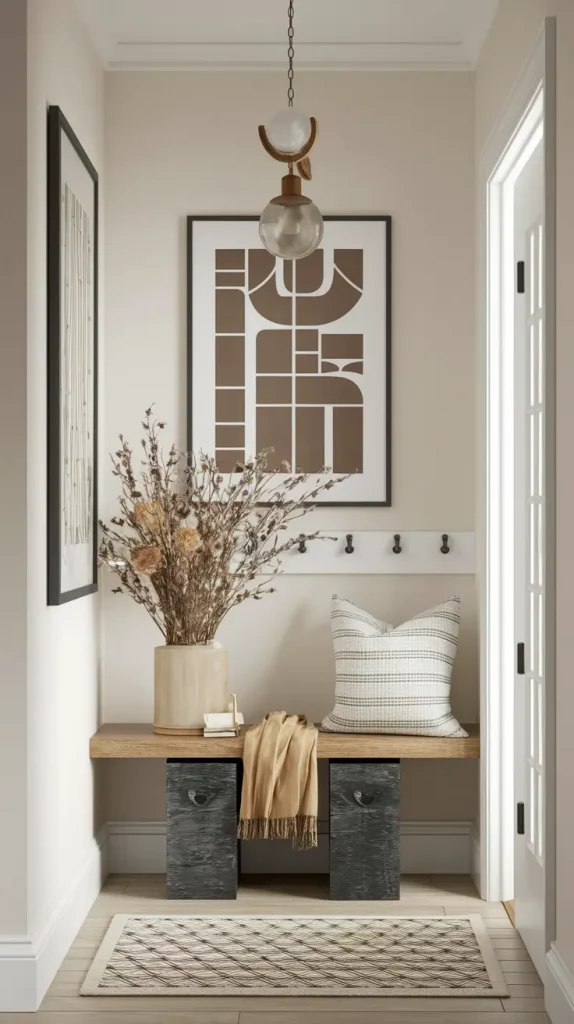
Start by establishing a visual anchor such as a large piece of artwork, framed textiles, or a vertical trio of prints. Adding sculptural sconces and ledge-style shelves introduces depth and dimension. Maintaining a simple color palette that harmonizes with other materials ensures a cohesive look.
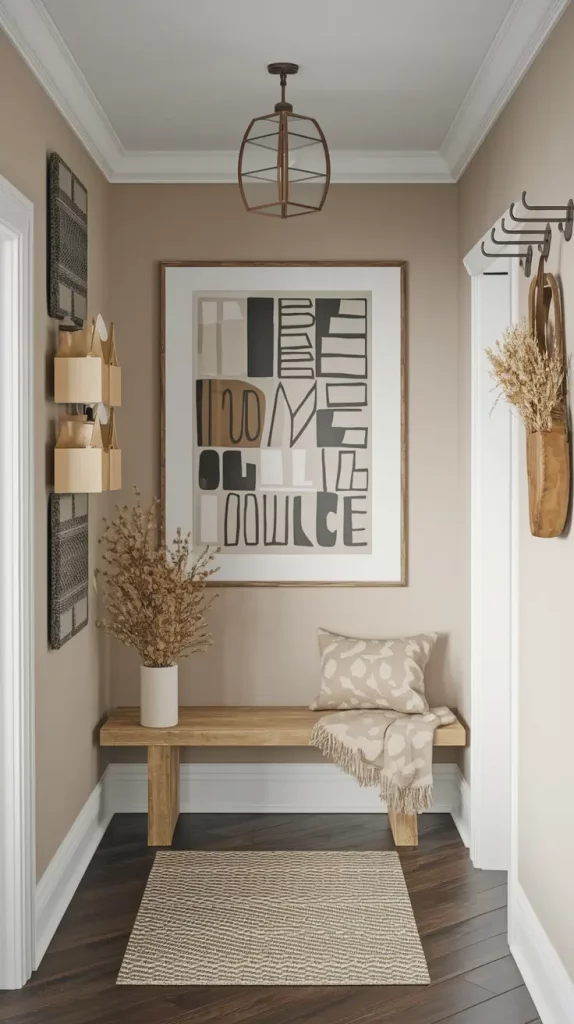
In one project, I combined framed quotes, small mirrors, and dried floral bundles on a peg rail to transform a narrow hallway into a charming space. House Beautiful highlights that textured wall treatments can significantly enhance the appeal of small entryways.
To boost functionality, integrating wall hooks, pinboards, and small shelves with catchall bowls provides both practical and decorative benefits.
Apartment-Friendly Entryway Solutions Without Damage
For renters and apartment dwellers, entryway design must avoid permanent alterations and bulky furnishings. I treat apartment entryways as flexible art installations-functional yet easily removable.
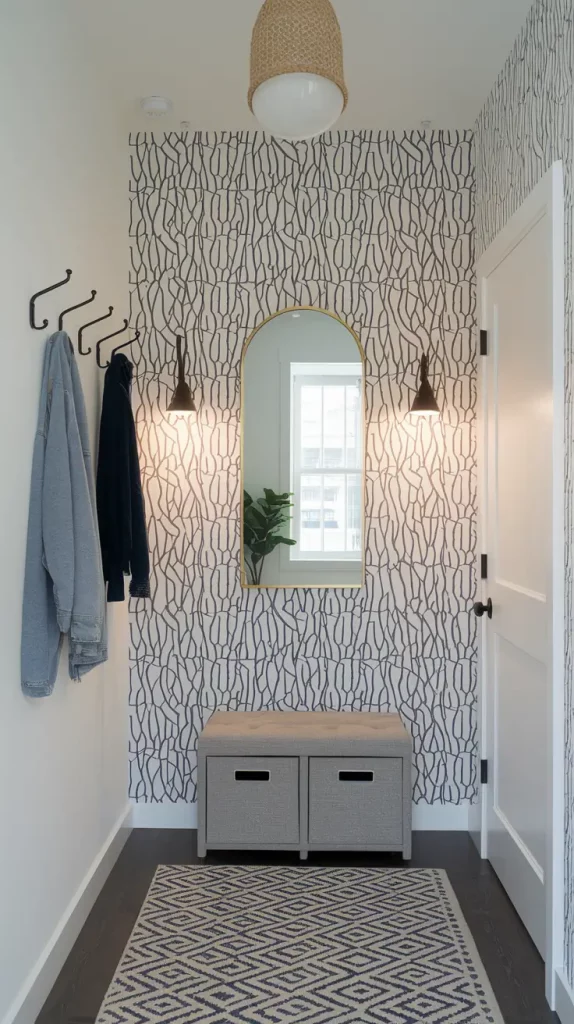
My preferred items include peel-and-stick wallpaper, no-drill hooks, and over-the-door racks. Dual-purpose cube storage units serve as seating and storage, complemented by lightweight decorative pieces like freestanding mirrors and framed prints leaning against walls. Layering thin accessories creates a polished look without clutter.
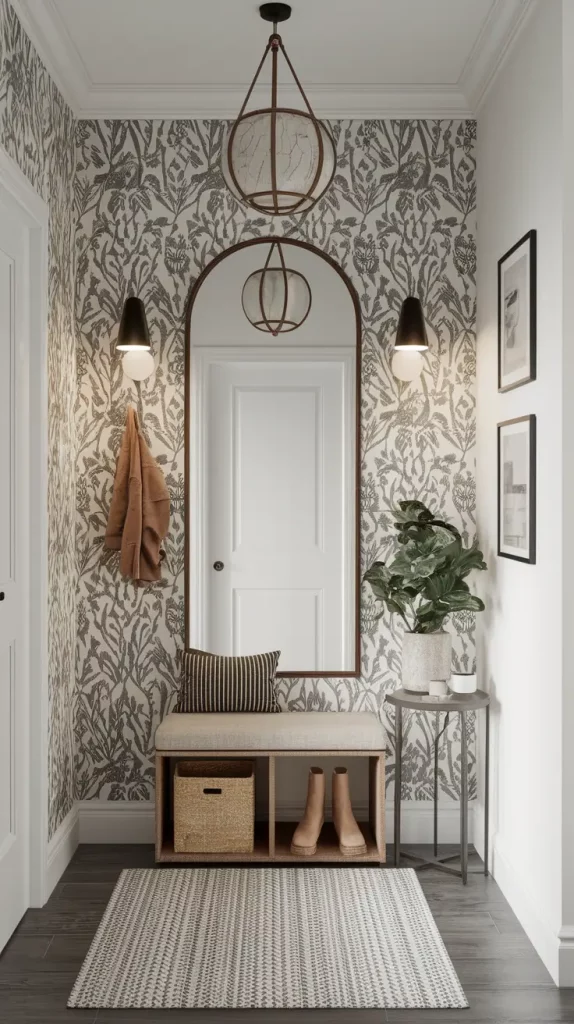
Portable storage solutions like rolling carts and bins are invaluable in walk-up apartments. Plug-in sconces or motion-sensor lights brighten dark rental hallways, while tension-rod coat racks offer closet alternatives without installation. Adding a washable floor rug and closed shoe storage container completes the setup, balancing practicality with style.
Closet Alternatives for Entryways Without Built-Ins
When built-in closets are absent, open “visible closet” designs provide airy, accessible storage. I often install wall-mounted rods or hooks paired with slim benches and vertical shelving above. Seasonal items go into labeled bins, while daily essentials stay in baskets on shelves. A tension rod with a fabric curtain can serve as a temporary door.
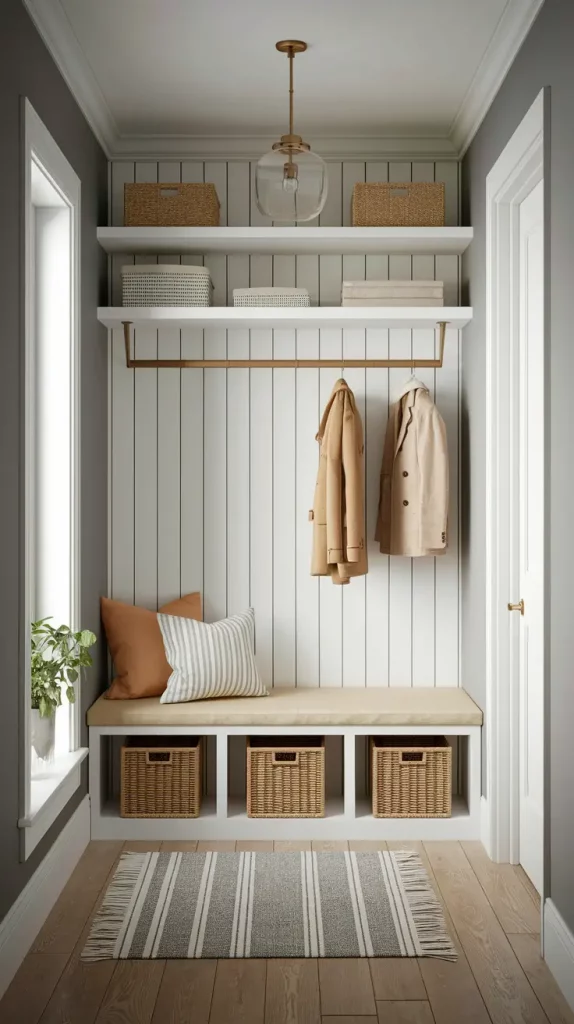
The IKEA BRIMNES wardrobe is a popular freestanding option for creating closet space where none exists. The Spruce emphasizes the importance of floor mats to define the area and protect flooring. Mirrors placed inside wardrobe doors or above coat rails enhance lighting and visibility, completing the entryway’s functionality.
Floating Shelves: Space-Saving and Stylish
Floating shelves are a sleek solution for small entryways, offering storage without consuming floor space. Positioned at various heights, they appear weightless yet provide ample room for essentials and decor.
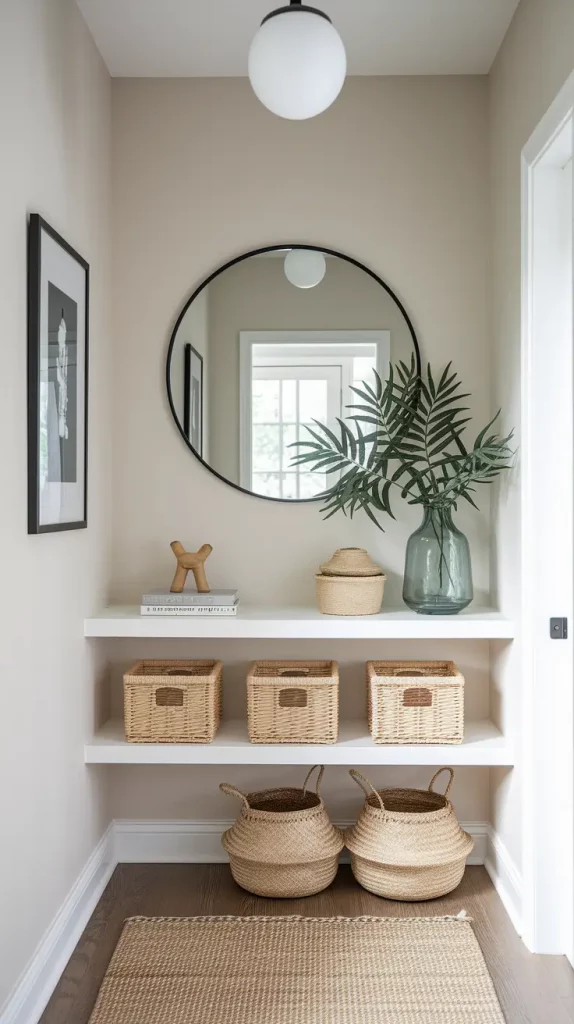
I typically install a long floating shelf about four feet from the floor, placing decorative items above and baskets below. Narrow vertical shelves serve as key holders, hat racks, or plant stands. The hidden bracket design lends a modern, minimalist vibe. Better Homes & Gardens recommends floating shelves to mimic built-ins, ideal for tight spaces.
Adding a mirror above the top shelf or puck lights underneath enhances illumination, crucial during dim mornings and evenings.
Maximizing Narrow Hallways with Smart Design
Designing for hallways under three feet wide demands creativity and restraint. Prioritizing essentials and layering in style carefully prevents overcrowding.
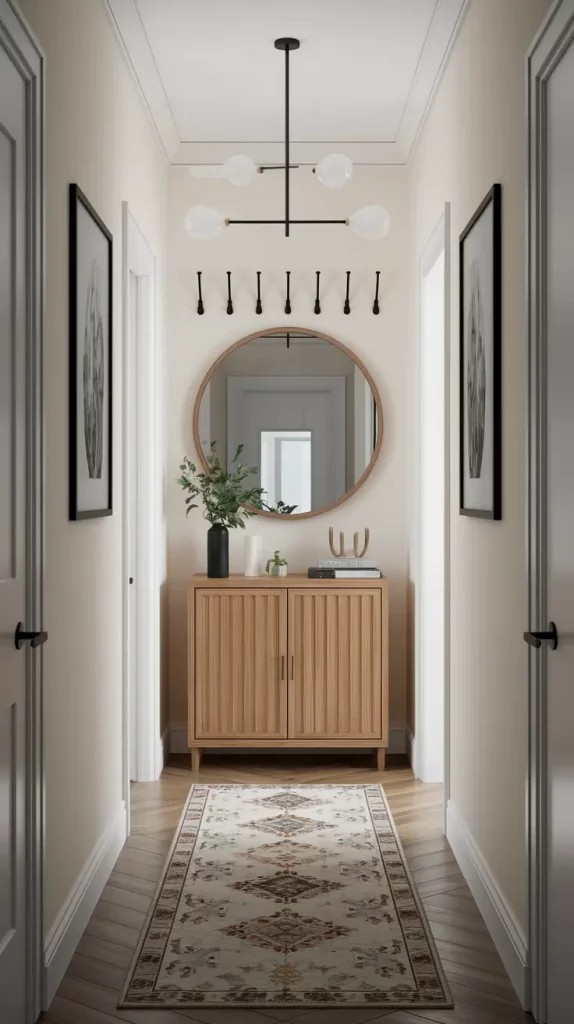
Combining wall-mounted shelves, hooks, and mirrors creates a visually expanded and organized space. Large mirrors amplify light, while vertical elements like long hooks and narrow artwork add interest. A narrow runner rug can elongate the hallway visually. Clear silhouettes and uncluttered arrangements are key.
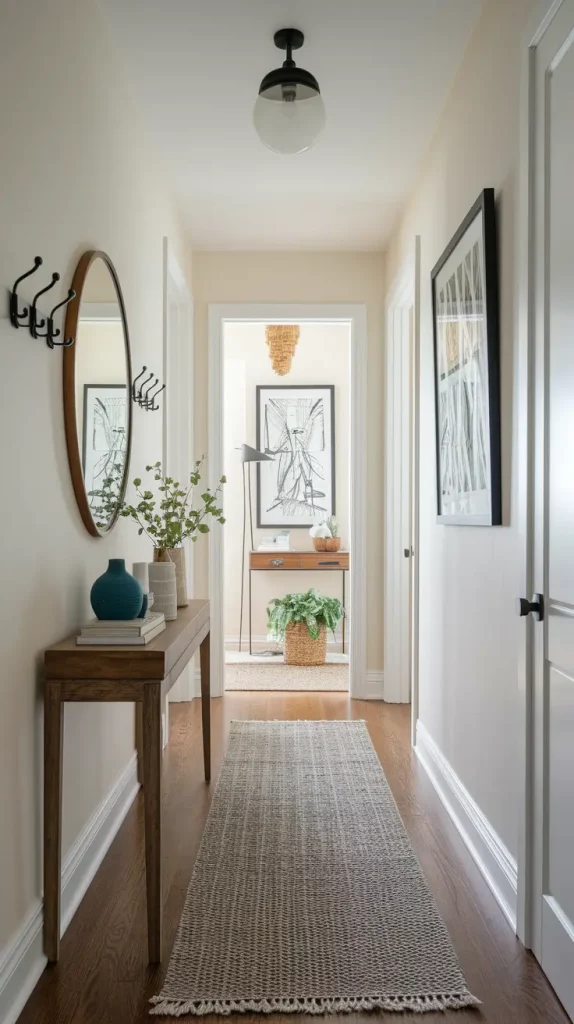
Wall-mounted organizers, acrylic accents, and sconces that wrap corners are staples in my city apartment projects. Domino magazine highlights peg rails and built-in ledges as practical solutions for narrow hallways. Adding a drop zone basket or fold-down shelf at the hallway’s end further enhances functionality.
Hooks and Racks: Essential Wall Storage for Small Entryways
Hooks and racks are indispensable for organizing small entryway walls without adding bulk. A well-planned wall storage system keeps belongings orderly and adds visual appeal.
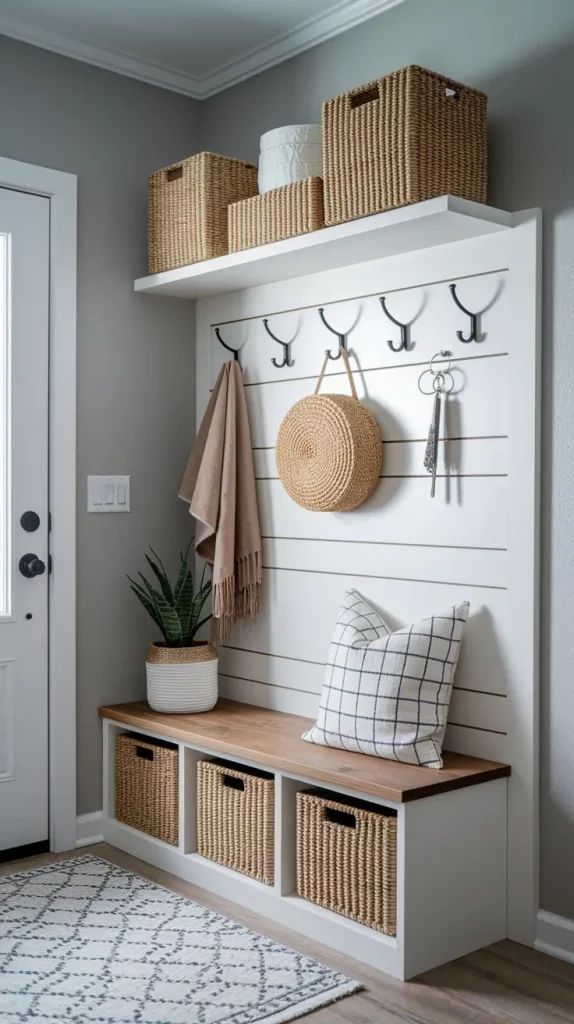
For homes with children, I select matte black or brass hooks at varying heights to accommodate all users. Hooks placed above slim shelves or integrated into modular wall systems with baskets and key rings maximize storage. This setup efficiently holds coats, bags, and accessories.
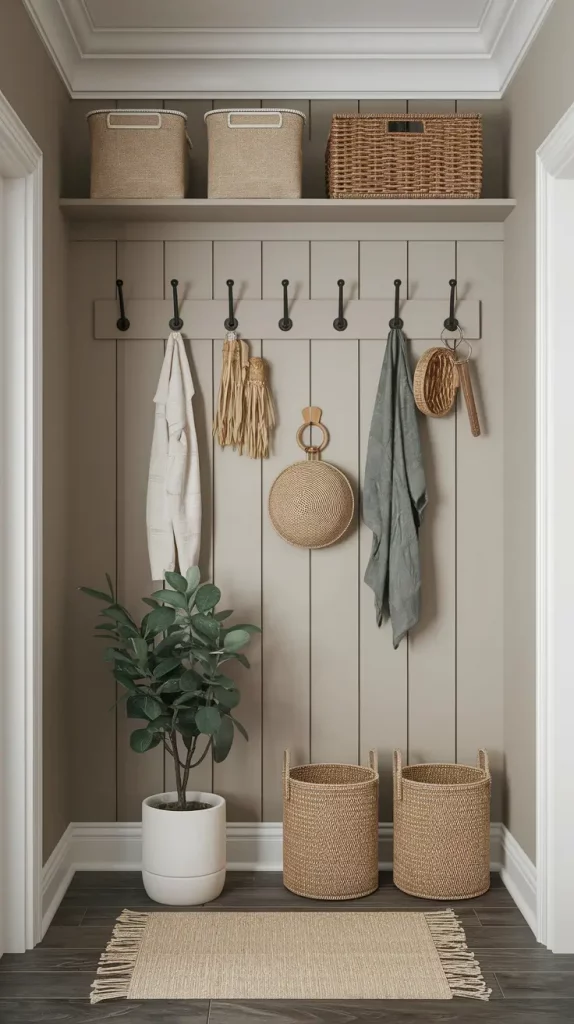
My projects often feature double-level hooks for adults and children, preventing shoe clutter. HGTV advises designing hook systems tailored to household routines. Adding a ledge above hooks allows for seasonal decor or photo displays, enriching the wall’s visual interest.
Entryway Benches with Storage: Where Style Meets Practicality
Benches with integrated storage revolutionize small entryways by combining seating with organization. I focus on versatile pieces that offer both comfort and clutter control.
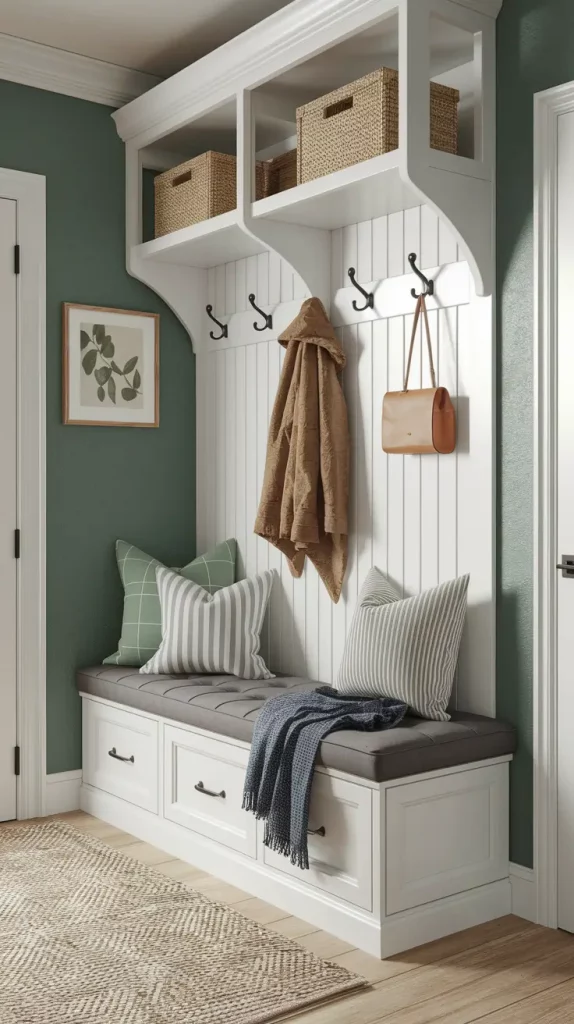
My favorite designs include tufted seats with hidden drawers and open cubby benches with sliding baskets. These pieces serve dual purposes and allow personalization with throws, books, or decorative pillows. This approach works well in both family homes and apartments.
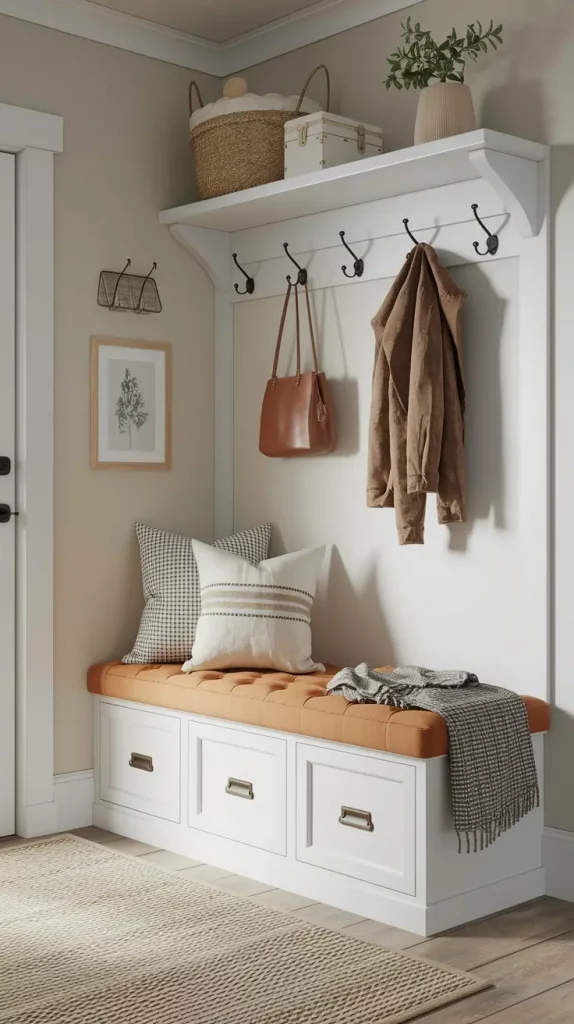
One of my most successful installations featured a walnut bench with canvas bins and a mail tray. Elle Decor notes that combining open and closed storage in entryway benches yields optimal real-life functionality. Adding a wall-mounted charging shelf above the bench enhances convenience by providing a dedicated spot for devices and keys.
Compact Console Tables Perfect for Small Entryways
Narrow console tables can dramatically improve small entryways by offering a stylish focal point and practical storage. Tables with depths between 8 and 10 inches provide space for keys, mail, and phones while keeping pathways clear.
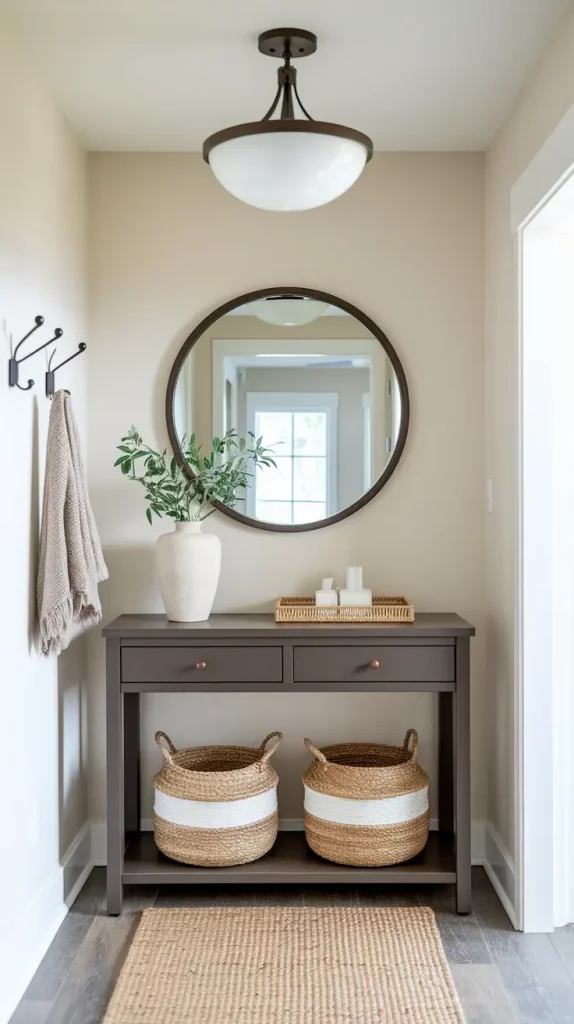
I prefer consoles in light wood or matte black finishes with drawers for concealed storage. Accessories like trays, ceramic bowls, table lamps, and vertical mirrors complete the look. These tables maintain high utility without bulk, ideal for apartment living.
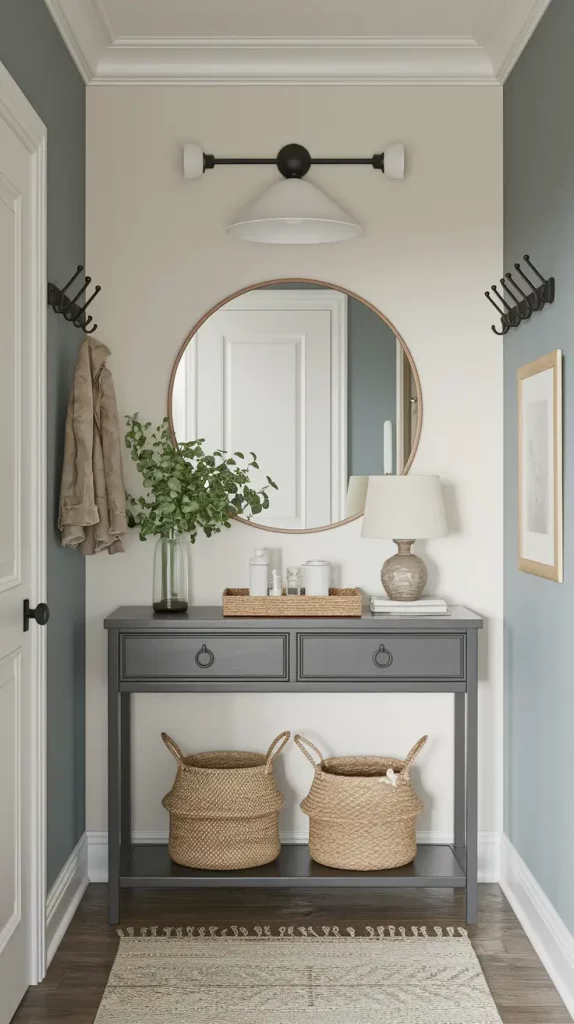
Fold-down console tables paired with compact stools or ottomans that double as hidden storage offer flexible solutions for studio apartments. Domino Magazine highlights console tables with vertical storage elements like pegboards as a smart choice for small entries.
Layered Lighting for a Warm and Inviting Entry
Thoughtful lighting transforms small entryways, adding depth and warmth while defining the space. A layered lighting scheme combining overhead fixtures with wall or table lamps creates a welcoming atmosphere and prevents the area from feeling transient.
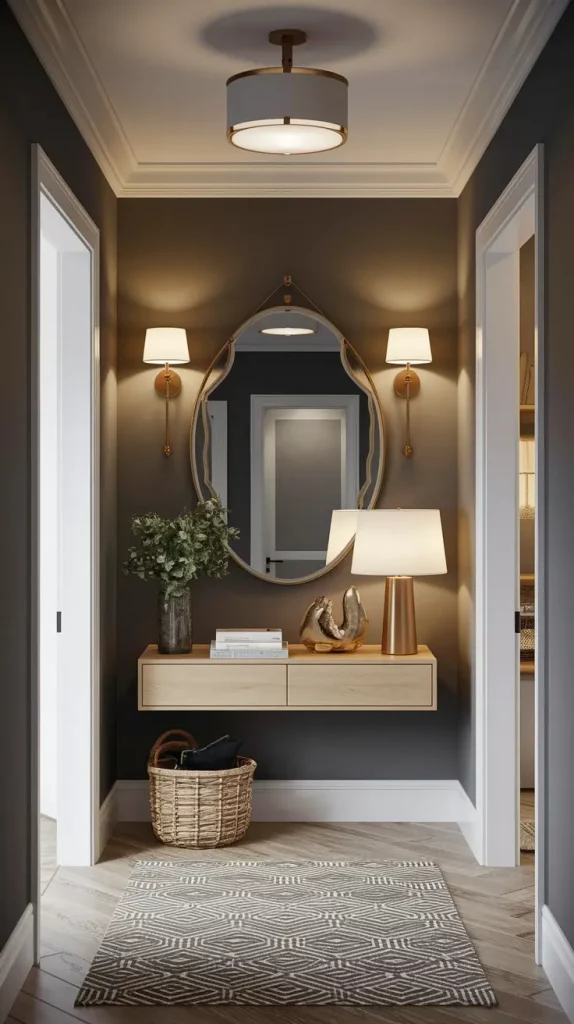
Flush-mount ceiling lights with metallic finishes and sculptural glass add personality overhead. Wall sconces, battery-powered picture lights, or plug-in lamps contribute texture and warmth. Reflective surfaces and light-colored walls enhance the sense of space. Architectural Digest emphasizes layered lighting as essential for narrow spaces.
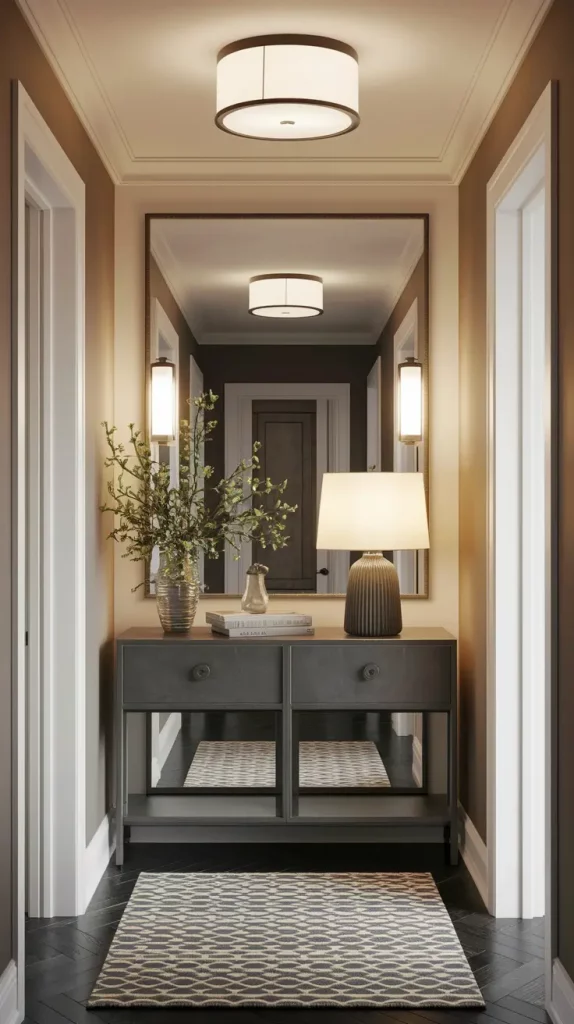
Motion-sensor floor lighting and LED strips under floating shelves combine function with modern style, perfect for dark mornings and evenings.
Sliding Doors and Concealed Storage for Clutter-Free Entryways
Sliding doors and hidden compartments are excellent for small entryways, concealing clutter while maintaining a sleek look. This approach works especially well when the entry connects to living or dining areas.
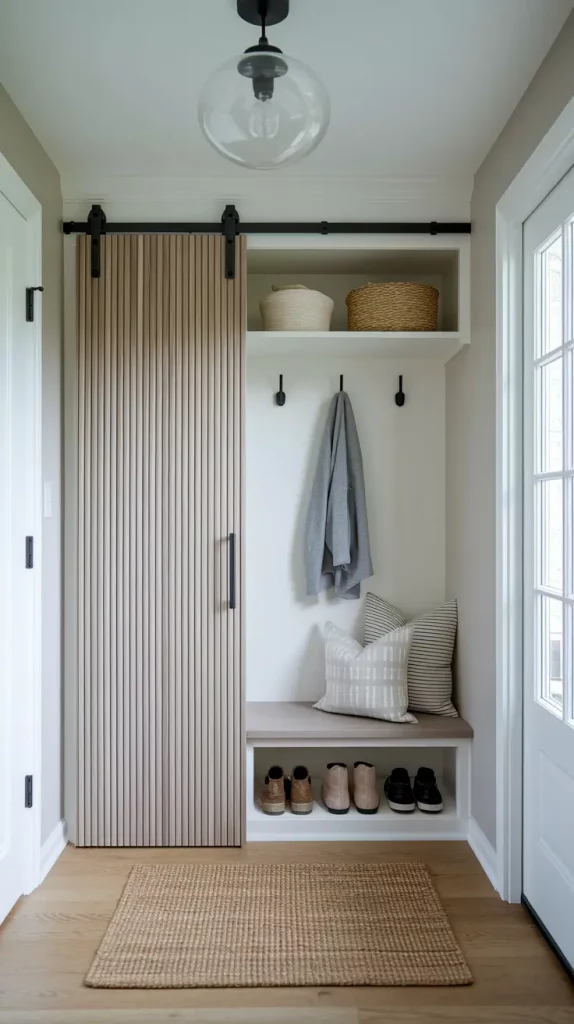
For narrow spaces, built-in cabinets with sliding barn or track doors made of wood or frosted glass optimize storage. Interiors with shelves and pegs organize shoes, bags, and seasonal items. Furniture with sliding panels, such as benches with hidden drawers or mirror-front cabinets, are favorites of mine.
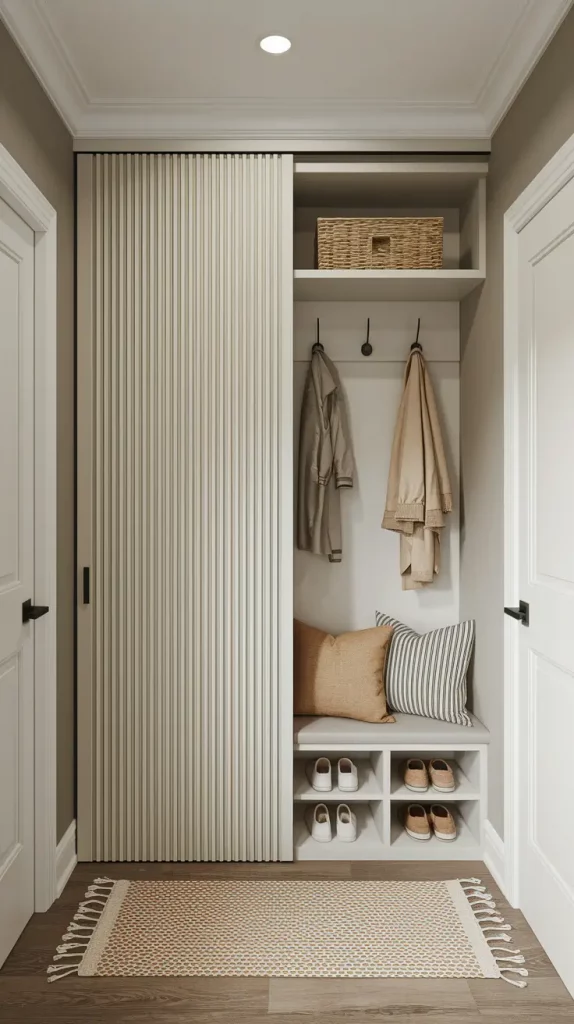
The IKEA PAX system is highly customizable with sliding doors and inserts. The Spruce notes the growing trend of soft-close and mirrored sliding doors in apartments for their sleek, space-saving design. Adding textured panels in cane, fluted wood, or fabric to sliding doors introduces warmth without visual clutter.
Integrating Entryways into Living Rooms
When a dedicated foyer is absent, entryways within living rooms require thoughtful design to create a distinct yet open transition. I treat these areas as visual zones that maintain flow while meeting functional needs.
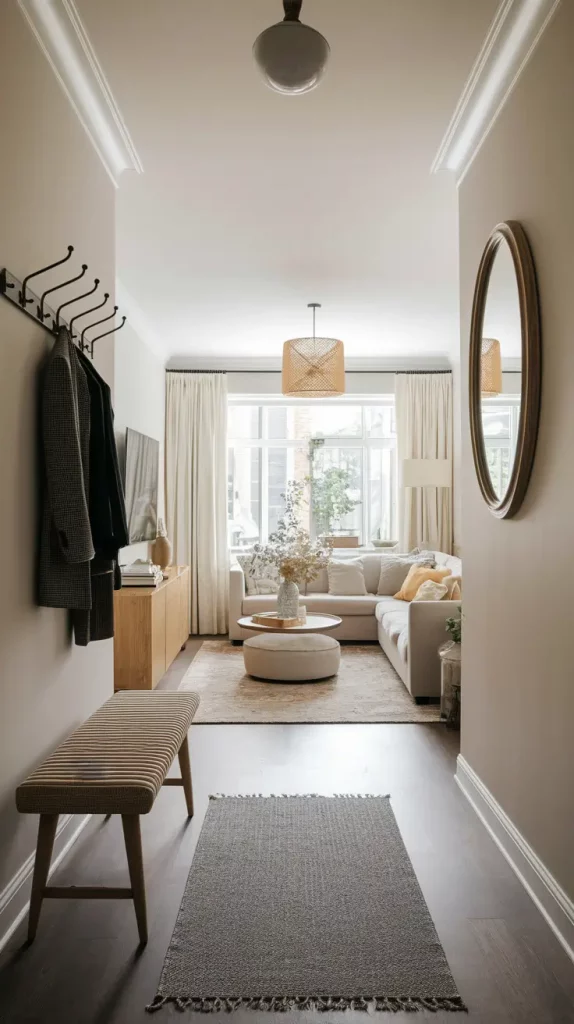
Using small rugs, narrow consoles, and wall decor helps define the entry zone. Floating hooks, vertical shoe cabinets, and standing mirrors create an arrival experience without crowding. Backless benches serve as seating and subtle partitions between living and entry areas.
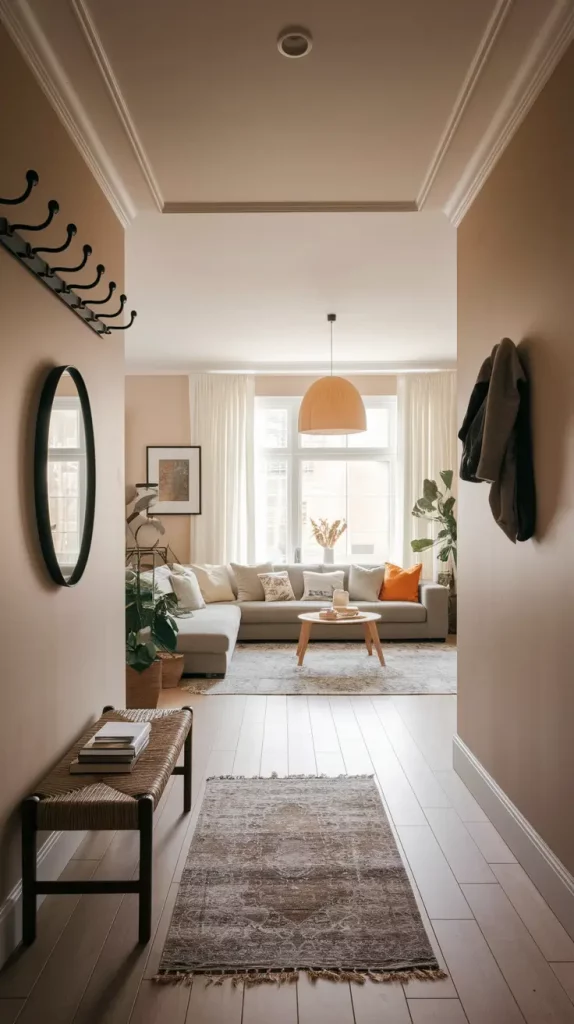
In open-concept apartments, area rugs and well-placed furniture create visual separation. Better Homes & Gardens recommends multiple light sources to define “room zones,” enhancing the entry’s identity. Vertical artwork or textured wall panels add finishing touches without disrupting living room decor.
Artistic and Statement Pieces to Add Character
Striking artwork and unique decor inject personality into even the smallest entryways. Every entry benefits from a standout element that sparks conversation and reflects personal style.
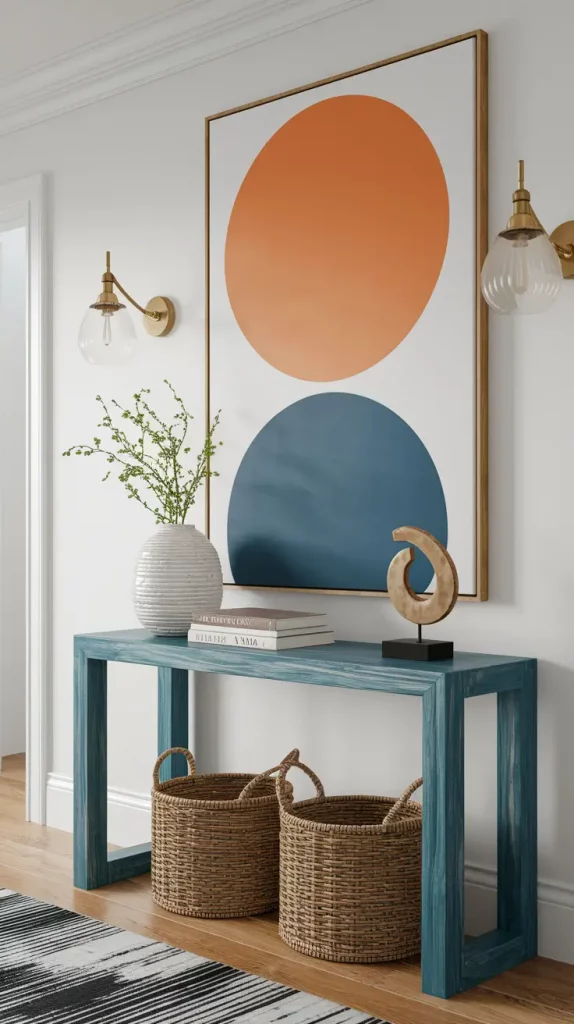
I often use large canvases, eclectic sculptures, and mixed-media art to create focal points. Graphic wallpapers, custom signs, and salvaged architectural pieces add depth and identity to narrow halls. A cheerful framed quote can brighten the mood, as I’ve experienced firsthand.
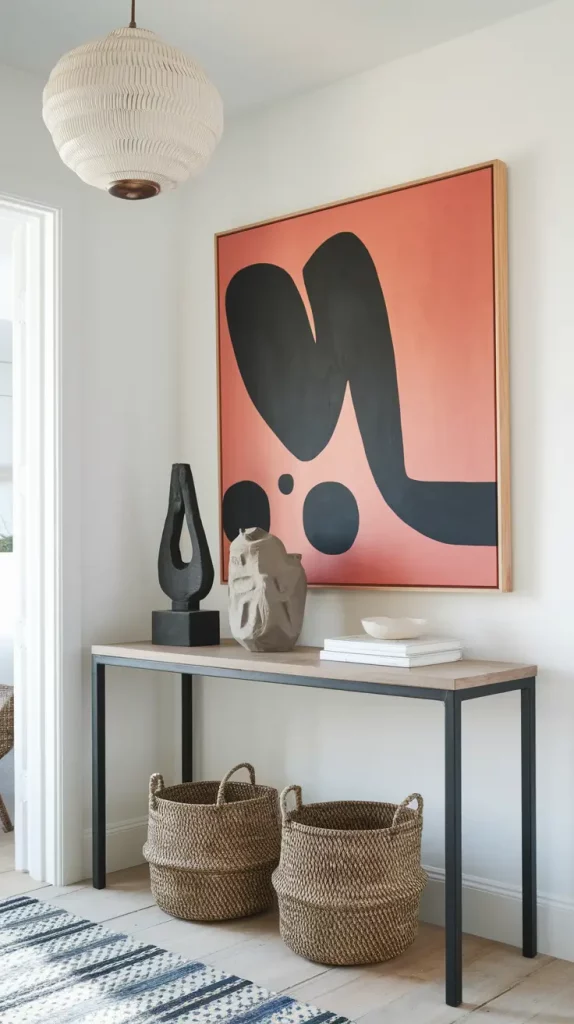
Elle Decor notes a rising trend in colorful artwork to personalize functional entry spaces. Complementing art with textured elements like jute rugs and velvet cushions balances the display and grounds the area.
DIY Upgrades for Budget-Friendly Entryway Enhancements
Renters and budget-conscious homeowners can personalize small entryways with simple DIY projects. Painting, installing hooks, and applying peel-and-stick tiles or wallpaper can dramatically refresh the space without permanent changes.
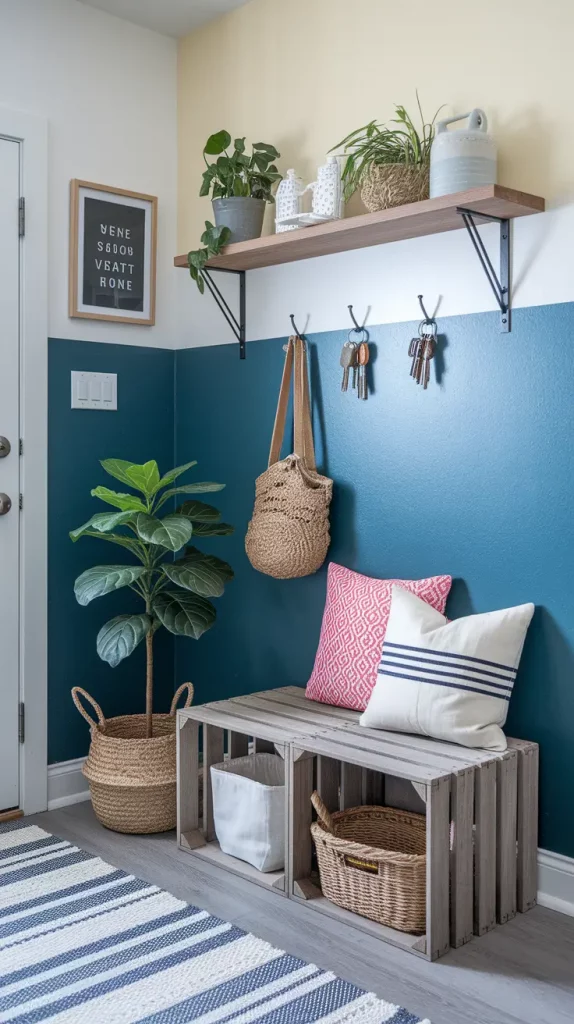
Popular projects include crafting wooden key holders, decorative gravel boot trays, and painting wainscoting lines to add visual height. Peel-and-stick tiles and removable wallpaper add texture without damaging walls. Real Simple recommends these quick updates for renters.
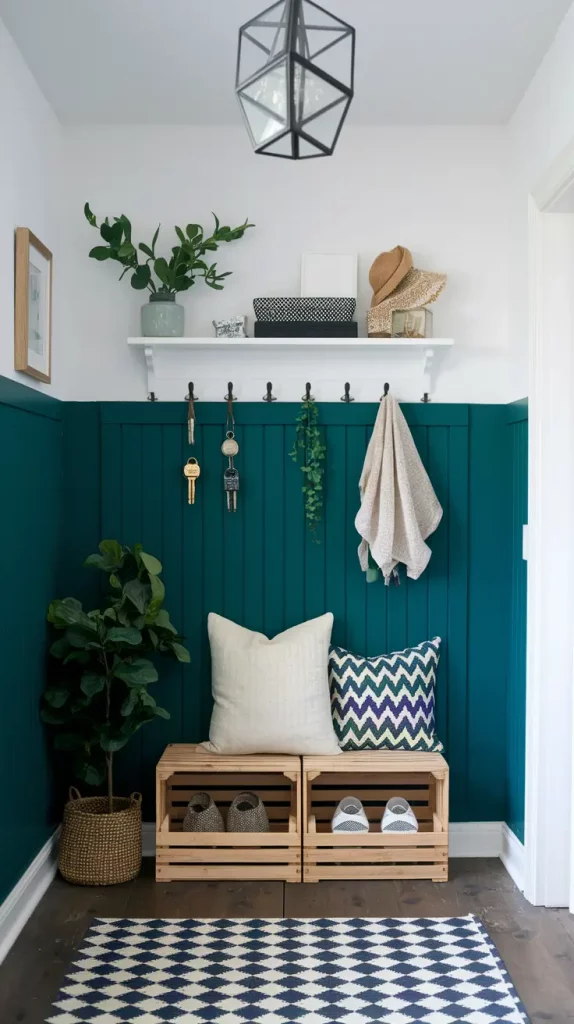
Adding a low-profile bench made from crates or IKEA hacks creates a personalized seating area that meets practical needs.
Adding Warmth and Personality with Rugs
Rugs are essential in small entryways, anchoring the space and injecting color and texture. They help define the foyer area even in open-plan layouts.
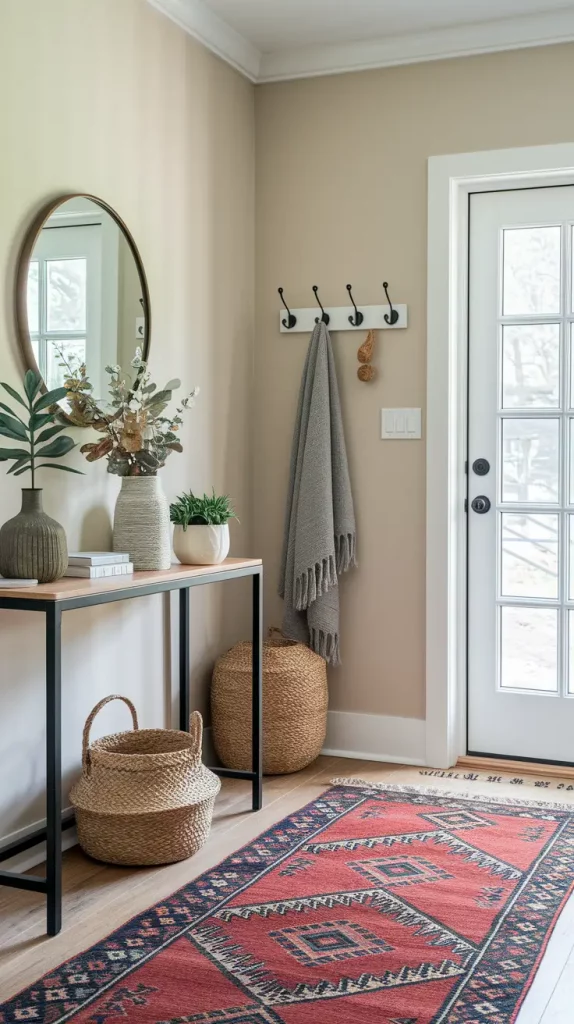
I favor durable, washable rugs with bold patterns or earthy tones. Long runners elongate narrow spaces, while round rugs soften compact areas. Moroccan-style rugs and Turkish kilims are particularly effective, offering stain resistance and authentic charm. House Beautiful advises choosing striking patterns to add visual interest without overwhelming the room.
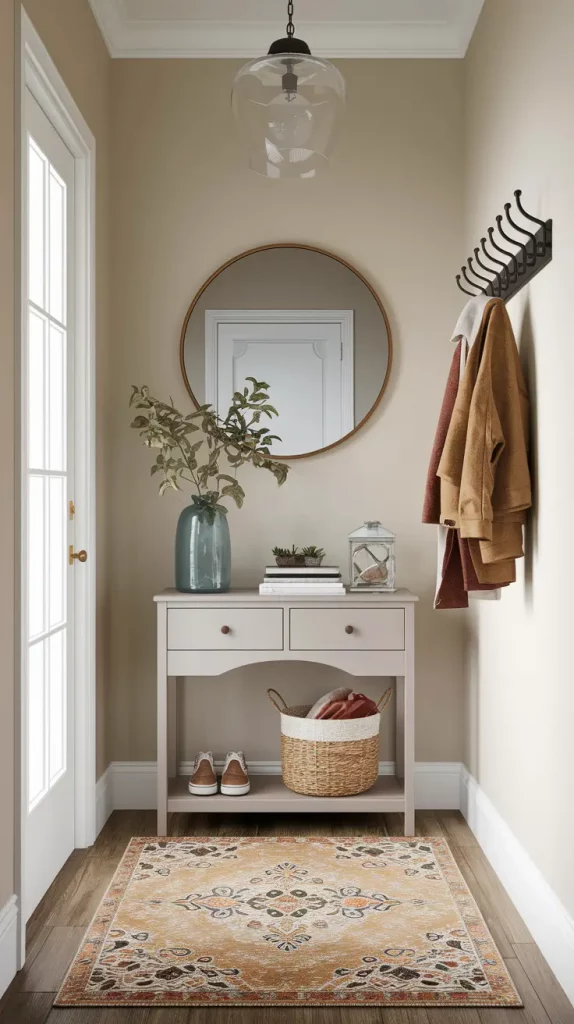
Using a rug pad prevents slipping, and coordinating an outdoor doormat with the rug creates a smooth transition from outside to inside.
Designing Around Stair Railings in Small Entryways
Stair railings significantly influence the look and feel of small entryways. Whether parallel or perpendicular to the front door, railings can either obstruct or enhance the space.
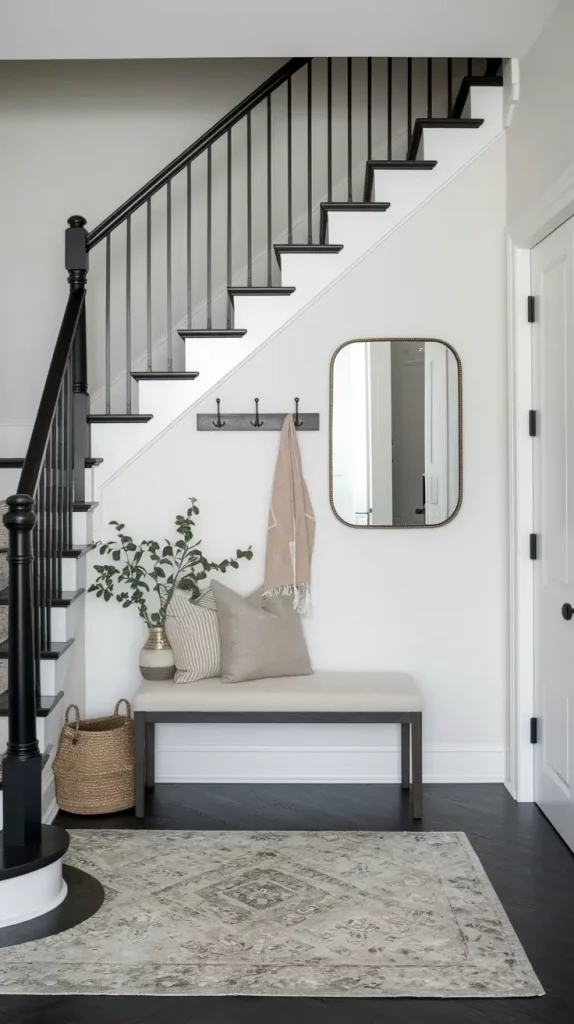
Low-profile benches or storage trunks work well alongside railings if space allows. For half-wall railings, hanging artwork or mirrors above them visually extends the area. Open railings benefit from decorative baskets or plant stands to soften edges.
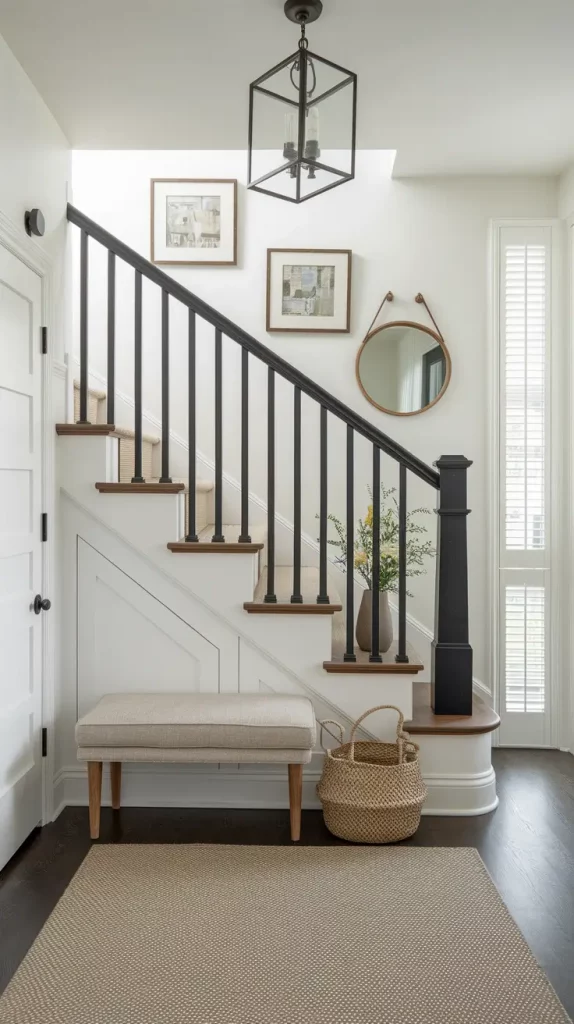
In one project, painting the stair railing black and adding a custom console that hugs the staircase shape added definition without blocking light. Better Homes & Gardens recommends using contrasting colors on stairways to highlight architectural features. Adding wall-mounted hooks and a shelf could further enhance functionality.
Minimalist Designs for Compact Entryways
Minimalism suits small entryways perfectly, emphasizing function and simplicity. Neutral tones, clean lines, and flat finishes prevent visual clutter and maintain a serene atmosphere.
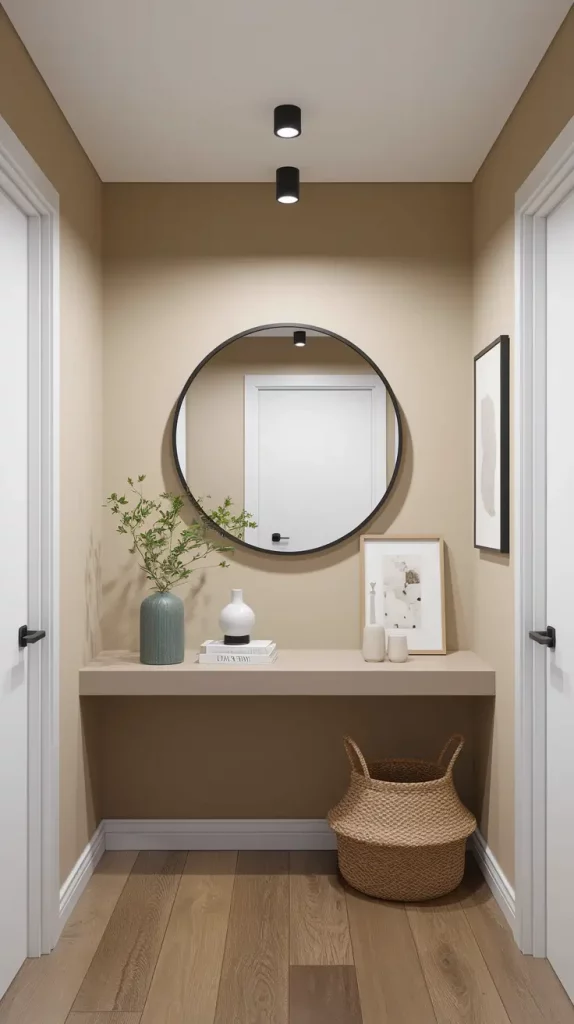
My minimalist setups often include a narrow console or floating bench, a wall mirror, and a single statement piece like an illuminated fixture or tall vase. Drawer organizers and wall-mounted file boxes optimize storage. Dwell magazine notes that minimalist entryways help “decompress” home energy.
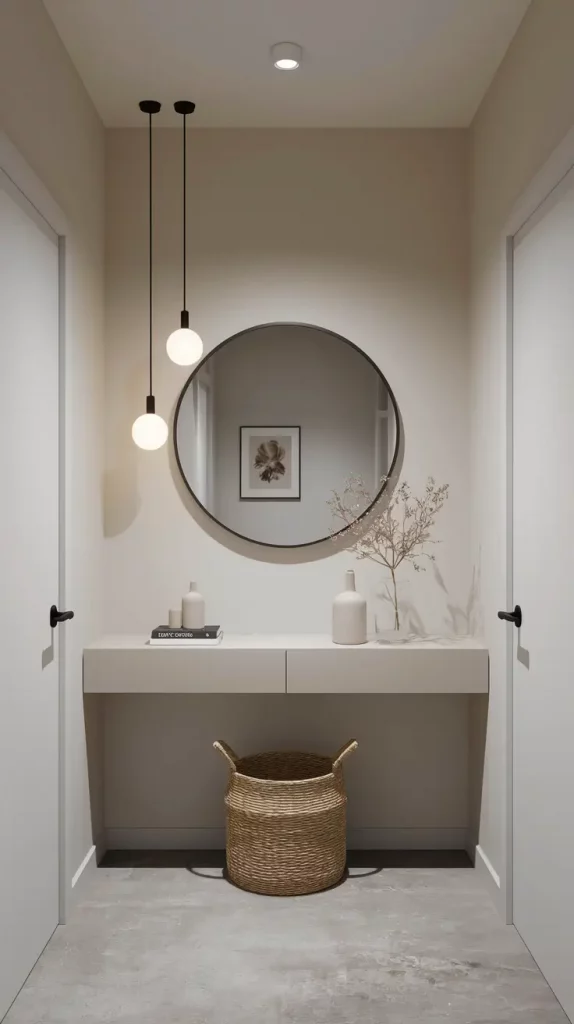
Finishing touches like large-format tile floors and micro-cement walls add texture without cluttering, enhancing the minimalist aesthetic.
Bold Wallpaper for Dramatic Small Entryways
For those unafraid of statement-making, bold wallpaper can transform small entryways with color, pattern, and texture, creating memorable first impressions without physical clutter.
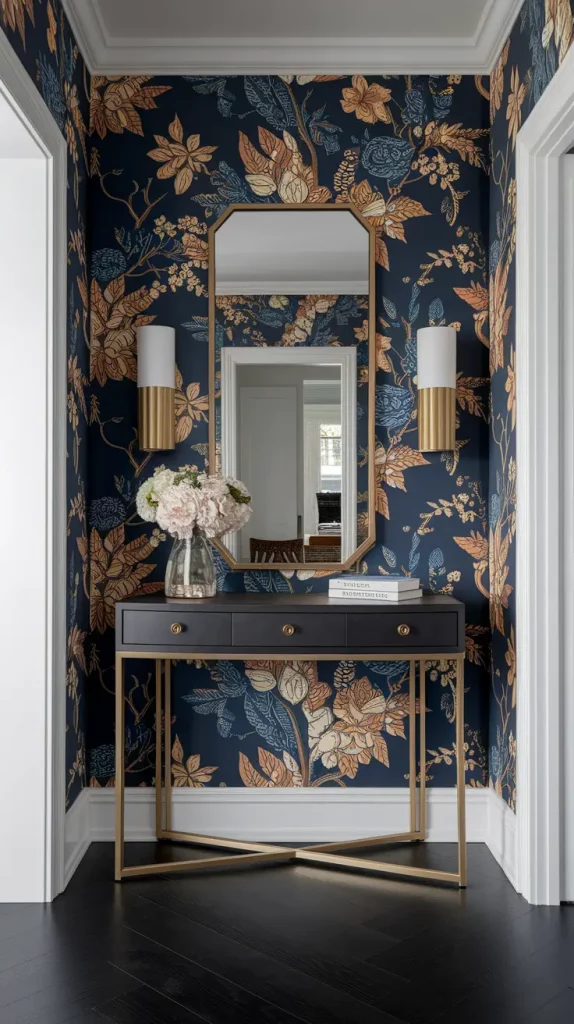
I gravitate toward botanical, geometric, and soft metallic motifs. Wallpapering a single wall or above wainscoting creates a designer focal point, especially when paired with neutral benches or consoles.
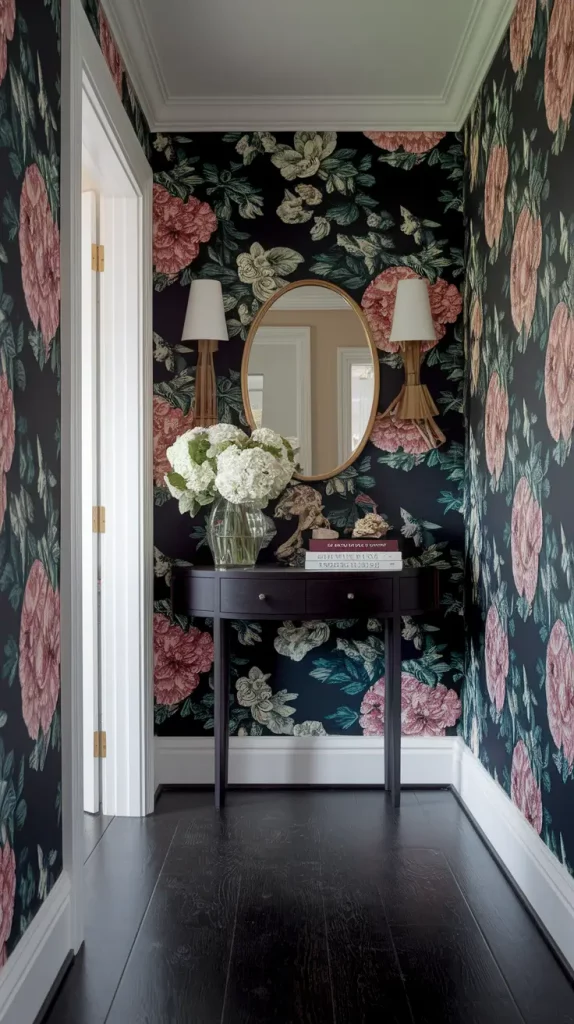
Dark floral wallpaper combined with antique gold accents can turn a windowless hallway into a cozy, sophisticated space. Elle Decor highlights dark wallpaper as a growing trend for creating intimate atmospheres in small areas. Adding sconces or glass lamps softens the effect and highlights texture.
Vertical Storage: Elevate Your Entryway
Utilizing vertical space is key to making small entryways feel larger and more functional. From floor to ceiling, tall shelving, ladder racks, and stacked cubes maximize storage without crowding.
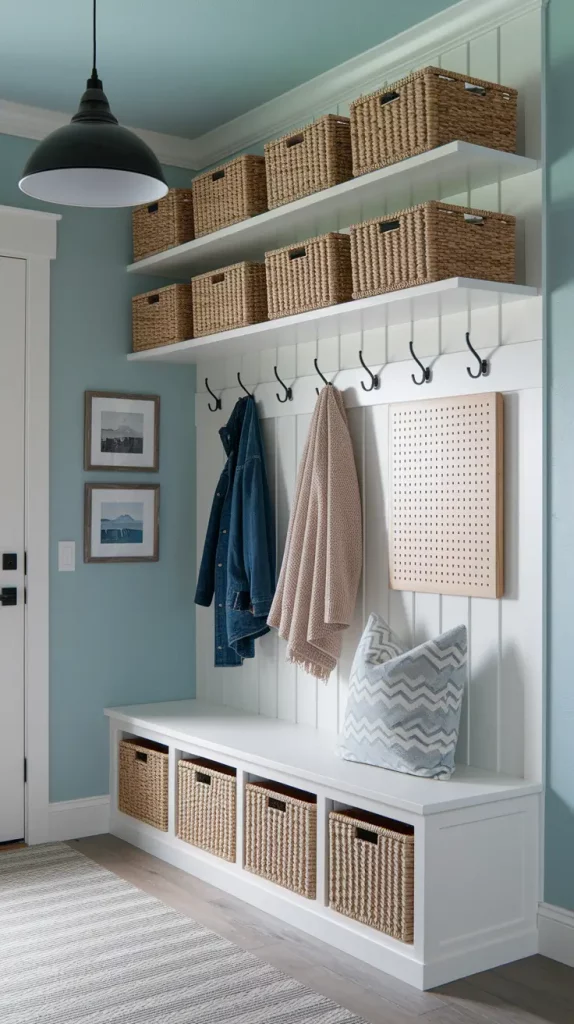
Floating shelves with baskets, vertical coat racks, and tall pegboards offer adaptable storage. Decorative pendants or vertical artwork draw the eye upward, enhancing the sense of height. I installed four floating boxes vertically for hats, keys, and decor, creating a functional and stylish wall. The Spruce endorses tall cabinet inserts for open-plan closet organization.
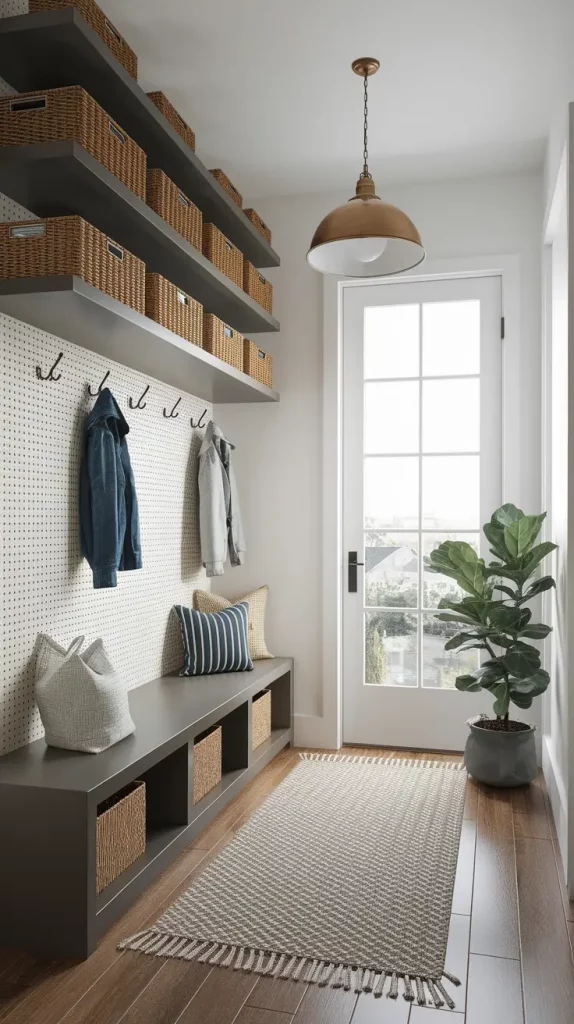
To soften the vertical storage wall, I recommend adding an eye-level framed photo, mirror, or textile piece to break up the storage appearance.
Incorporating Plants Without Overcrowding
Plants bring freshness and life to entryways but must be used judiciously in small spaces to avoid clutter. I focus on one or two statement plants, carefully considering container style, height, and placement.
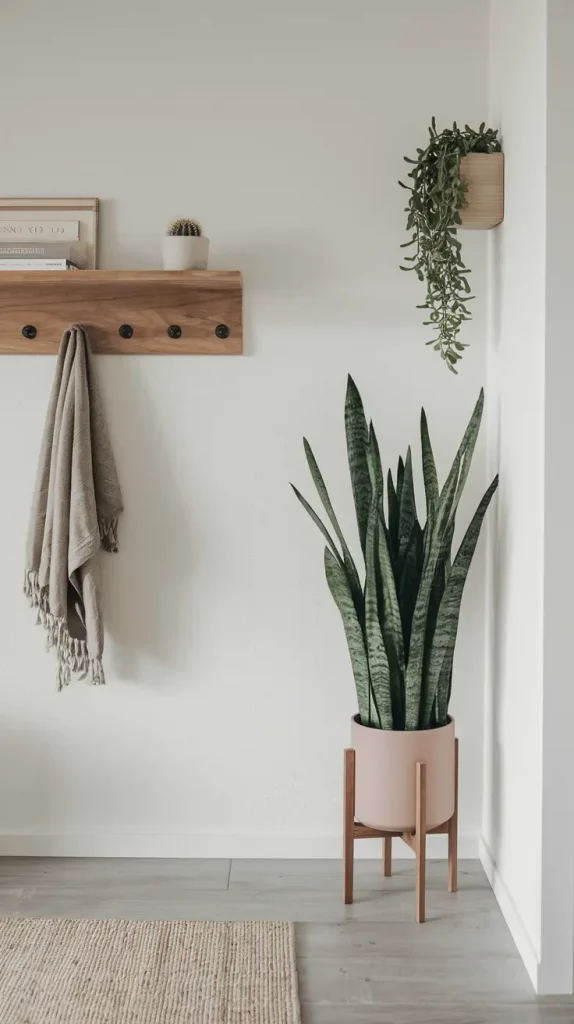
Thin planters with snake plants and wall-mounted containers for trailing vines are favorites. Small cacti and artistic succulents complement shelves or ledges. Black metal, wood, and matte ceramic pots maintain a streamlined look.
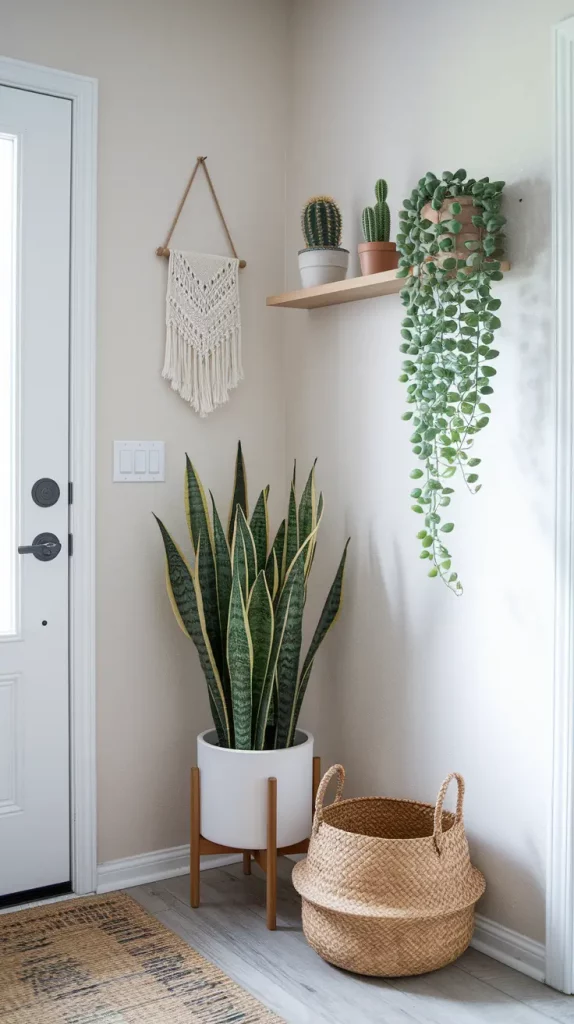
Pedestal stands in corners, under stairs, or beside benches add vertical greenery. A single plant near the front door improves air quality and mood, as noted by House & Garden. Completing the look with a natural fiber rug and rattan basket ties the greenery into the color scheme.
Stylish Storage for Umbrellas and Bags
Small entryways often lack proper storage for wet umbrellas and bags, leading to mess and frustration. Well-designed holders and racks improve cleanliness and comfort.
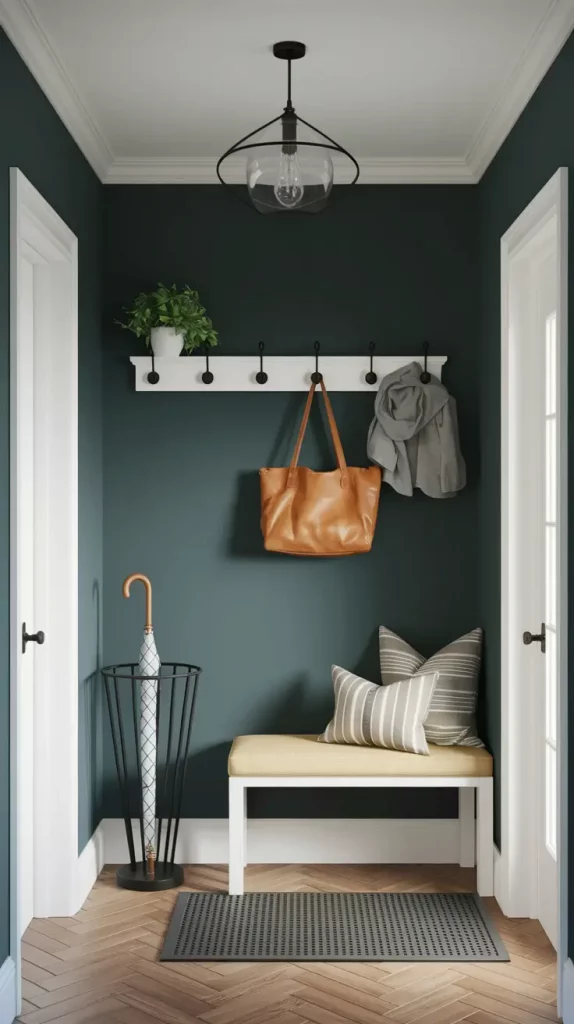
My preferred umbrella stands feature open ceramic or metal bases for drainage. Matte brass and black powder-coated hooks are ideal for bags, with lower levels for children’s backpacks. Hanging bag sorters attached to doors save space in tight areas.
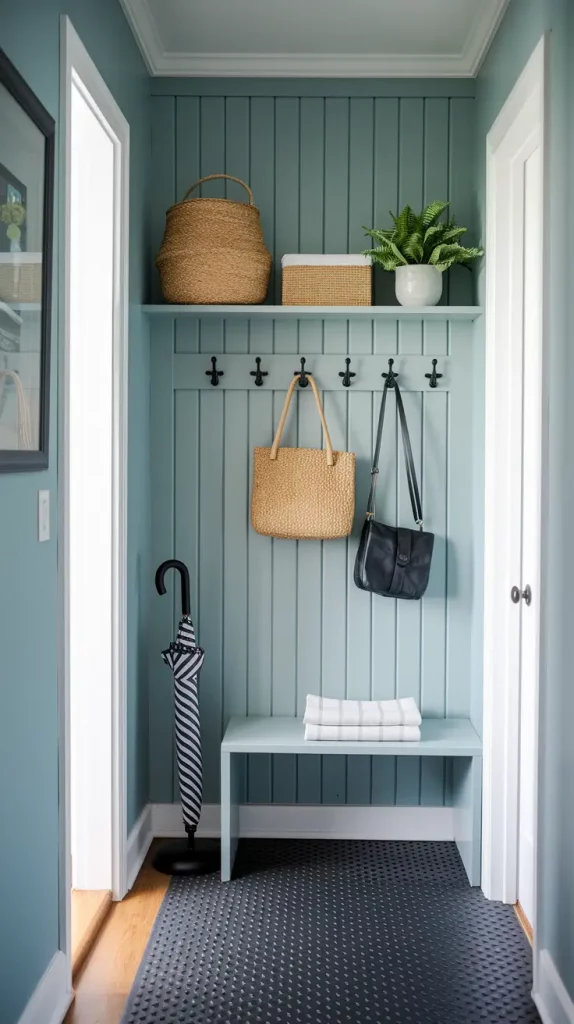
Combining a modern umbrella stand with multiple bag hooks on a painted plank reduces visual clutter. HGTV confirms that organizing daily essentials at the door enhances small space functionality. Adding a tray beneath the umbrella stand protects floors, while a cushioned wall panel behind hooks prevents damage.
Before and After: Inspiring Small Entryway Transformations
Nothing illustrates the power of design like before-and-after reveals. I start with decluttering and organizing, then layer in lighting and personalized decor to create inviting entryways.
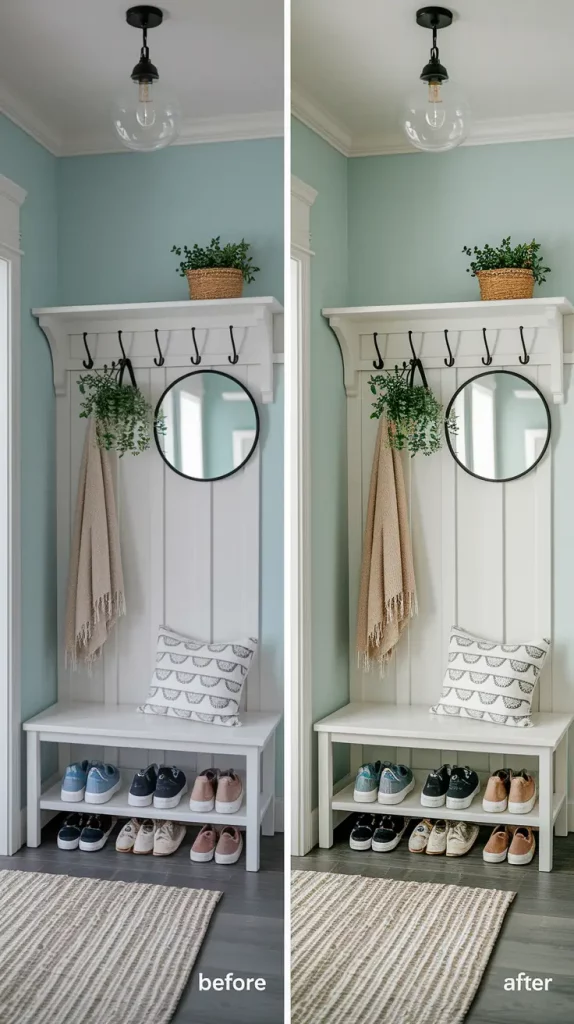
One rental entryway, just three feet wide and lacking storage, was transformed with floating shelves, a mirror, wall hooks, and a slim rug. What was once chaotic became a curated, functional space. Another client’s stair entry evolved from empty to stylish with a storage bench concealing shoes.
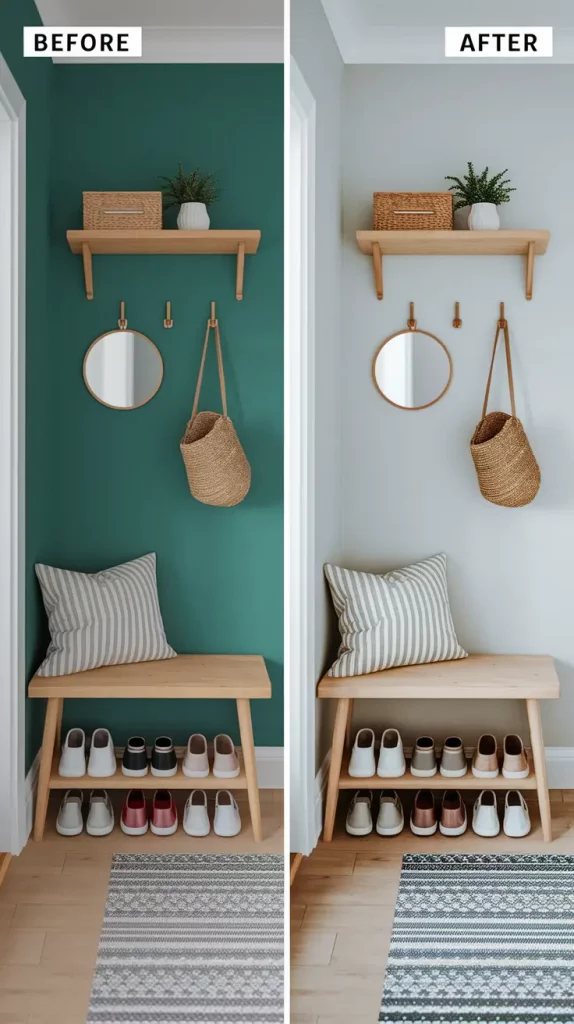
Apartment Therapy regularly showcases budget-friendly entryway makeovers proving that smart organization trumps square footage. I advise revisiting projects periodically to maintain freshness and prevent clutter buildup.
Final Thoughts
Revamping small entryways doesn’t demand a hefty investment-just intentional design choices. With clever storage, stylish accents, and multifunctional furniture, even the tiniest entry can feel inviting and orderly. Whether working with corners, stairs, or apartment layouts, these ideas demonstrate that beauty and practicality can coexist. Share your favorite entryway tips or solutions in the comments below!