theFASHIONtamer Where Style Meets Space, Effortlessly
 Are dark kitchens just a fleeting trend, or are they set to redefine contemporary home interiors? With the rise of moody, sophisticated spaces, kitchens featuring deep hues have become synonymous with bold, elegant design. This guide explores how to elevate your kitchen using luxurious modern elements, sumptuous materials, and intelligent layouts. Whether you’re working with a compact area or envisioning a spacious open-plan kitchen, discover how to make your culinary space truly distinctive.
The Rising Popularity of Dark Kitchens in Contemporary Design
Dark kitchens have surged in popularity, blending minimalist aesthetics with a rich, atmospheric vibe. Deep tones paired with tactile materials evoke a sense of permanence and warmth, appealing to those seeking a kitchen that feels both inviting and cutting-edge. By harnessing natural light and layering diverse textures, this style achieves a luxurious ambiance without sacrificing livability.
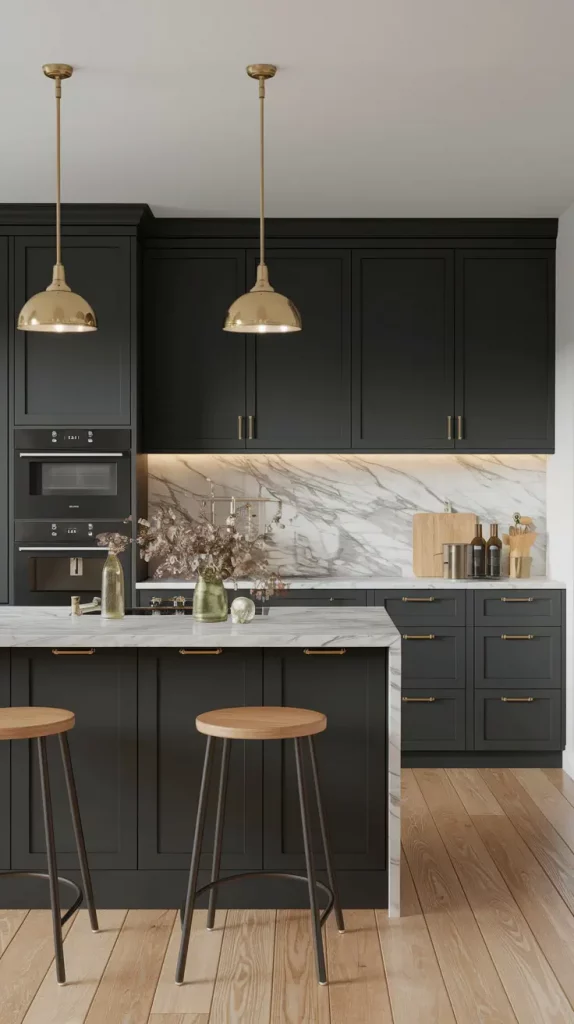
From matte black cabinetry to countertops veined with charcoal, every element contributes to a cohesive aesthetic. I often recommend incorporating warm metals like brass or aged bronze for fixtures to soften the mood and add a welcoming glow. A dark-stained wooden island paired with sculptural pendant lighting not only enhances functionality but also injects character. The interplay of oak, metal, and stone surfaces is essential to achieving a balanced, textured environment.
Refreshing Your Kitchen with Dark Tones: Practical Tips and Ideas
For those seeking a kitchen makeover, experimenting with contrast and personalization can yield impressive results. Reconfiguring layouts to emphasize clean lines, integrating appliances that blend seamlessly, and unifying surfaces with a monochromatic palette can transform your space without extensive remodeling.
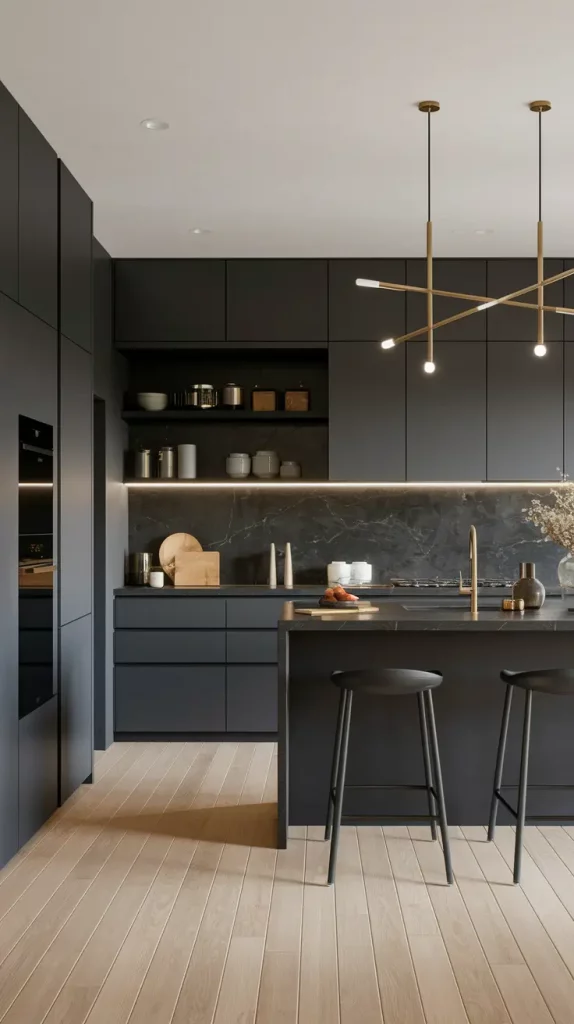
Graphite cabinetry with satin or high-gloss finishes, minimalistic open shelving, and uniquely designed bar stools are staples in my designs. Floating islands, waterfall countertops, and recessed lighting contribute to a sleek yet inviting atmosphere. Handleless cabinets further modernize the look, emphasizing material quality over hardware.
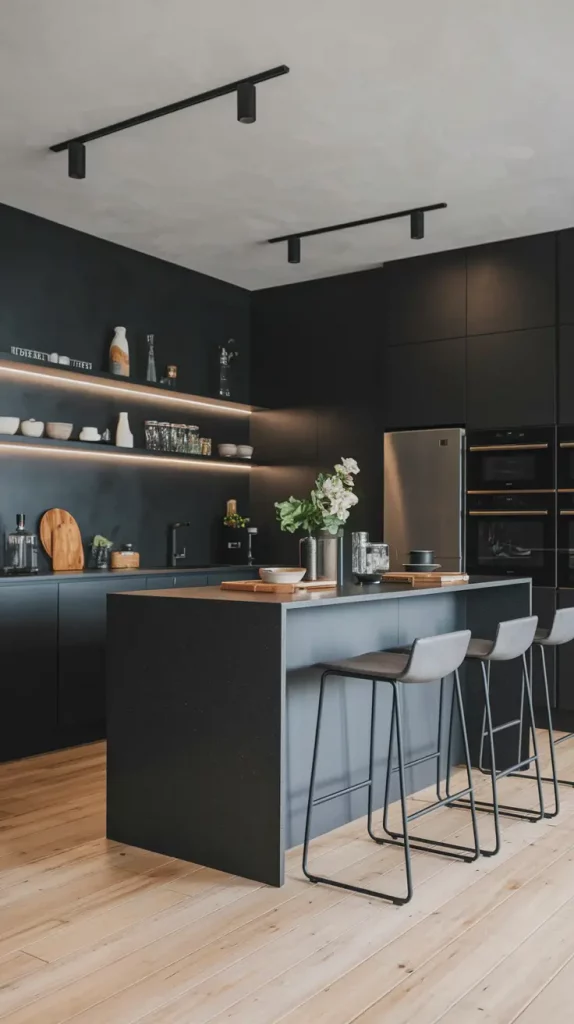
Warmth is crucial to prevent dark kitchens from feeling sterile. Incorporating walnut, smoked oak, and leather cushions adds tactile comfort. Elle Decor highlights the importance of pairing dark hues with natural materials, a principle I wholeheartedly endorse. Additionally, integrating smart technology like touchless faucets or LED-lit drawers enhances both aesthetics and functionality.
Creating Luxurious Dark Kitchens That Feel Like a Sanctuary
Modern luxury in dark kitchens is about balancing opulence with usability, crafting spaces that feel like a chef’s private retreat or a boutique hotel suite. The secret lies in combining sumptuous fabrics, artisanal craftsmanship, and architectural lighting.
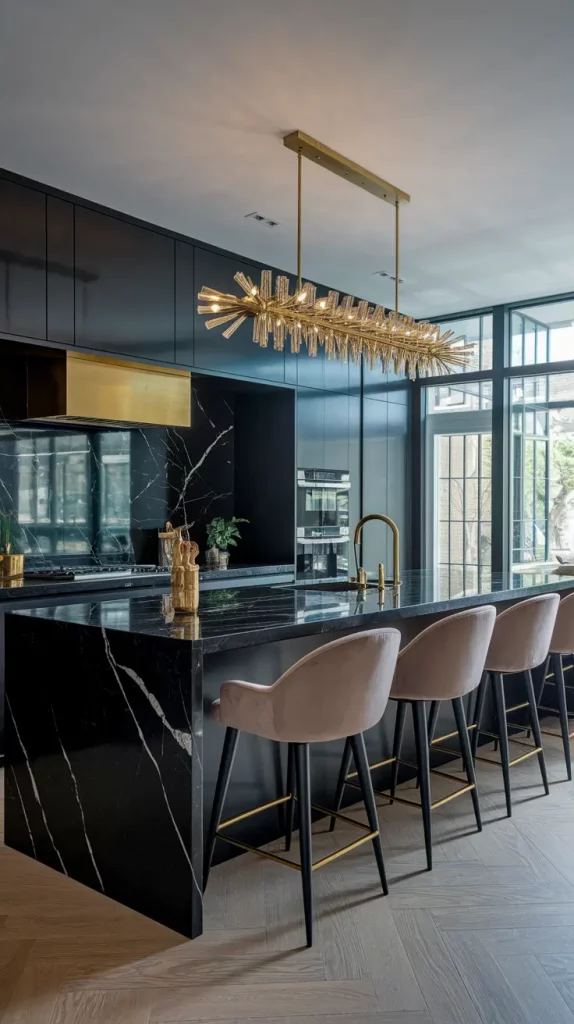
Imagine ebony cabinets with gold-trimmed panels, a marble backsplash with bold veining, and a grand brass chandelier illuminating the space. Panel-ready appliances maintain a seamless look, while built-in wine storage and custom drawer organizers optimize space and order.
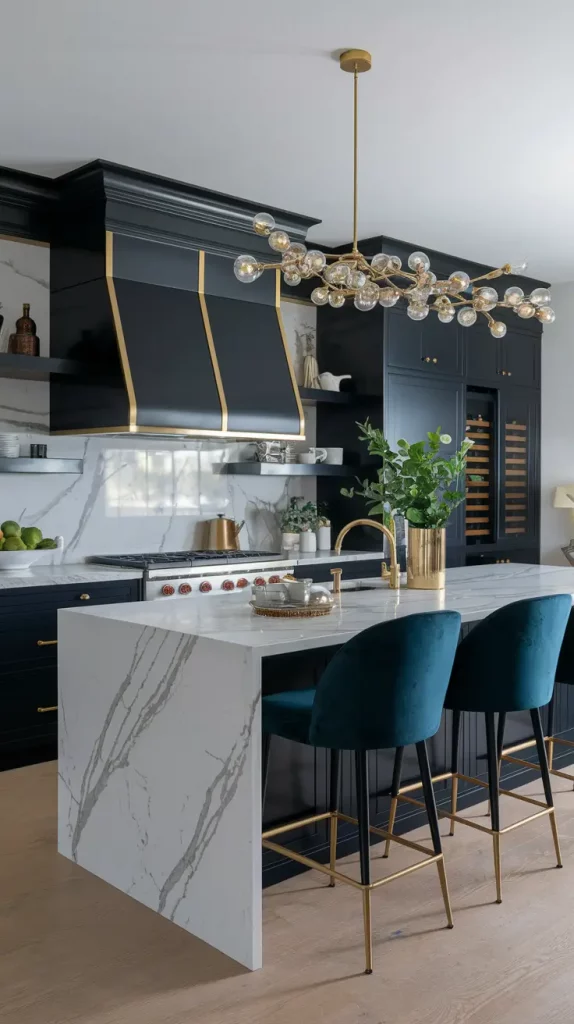
One project embraced a speakeasy vibe, featuring velvet bar stools, vintage sconces, and dark oak flooring to evoke drama and warmth. House Beautiful emphasizes that layering materials thoughtfully is key to luxury, a philosophy I apply consistently. Adding recessed ceiling molding painted to match cabinetry can further unify the space’s mood and style.
Brightening Dark Kitchens Without Compromising Atmosphere
Many wonder how to infuse light into a moody kitchen without losing its intimate charm. The answer lies in strategic use of contrast, reflective surfaces, and well-planned lighting. A dark kitchen can feel expansive and inviting when illuminated thoughtfully.
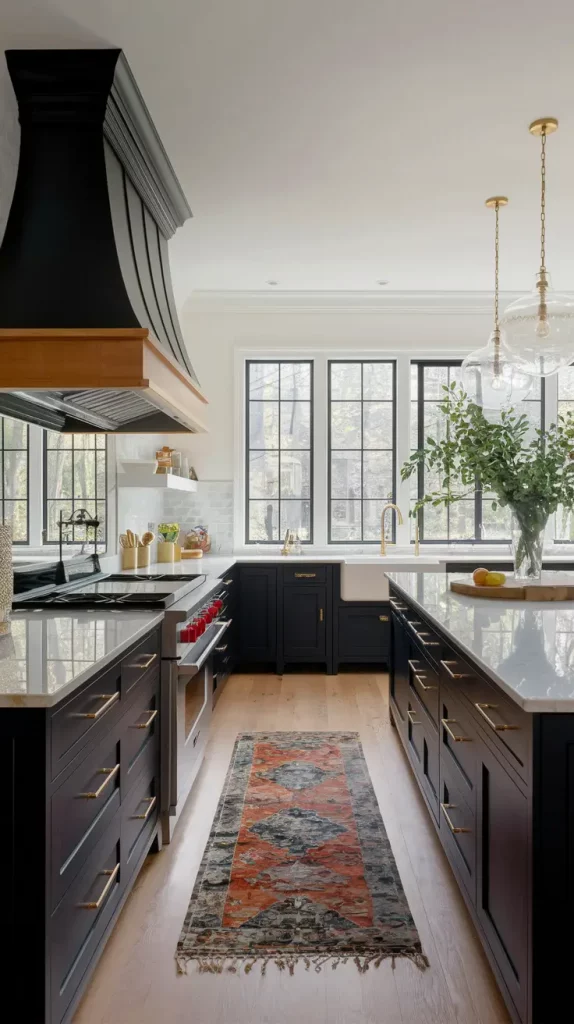
Glossy cabinetry and metallic accents reflect light effectively. Mirrors or glass backsplashes amplify natural light, while light-toned countertops like quartz or marble open up the space visually. Skylights and pendant lights with warm bulbs enhance both visibility and ambiance.
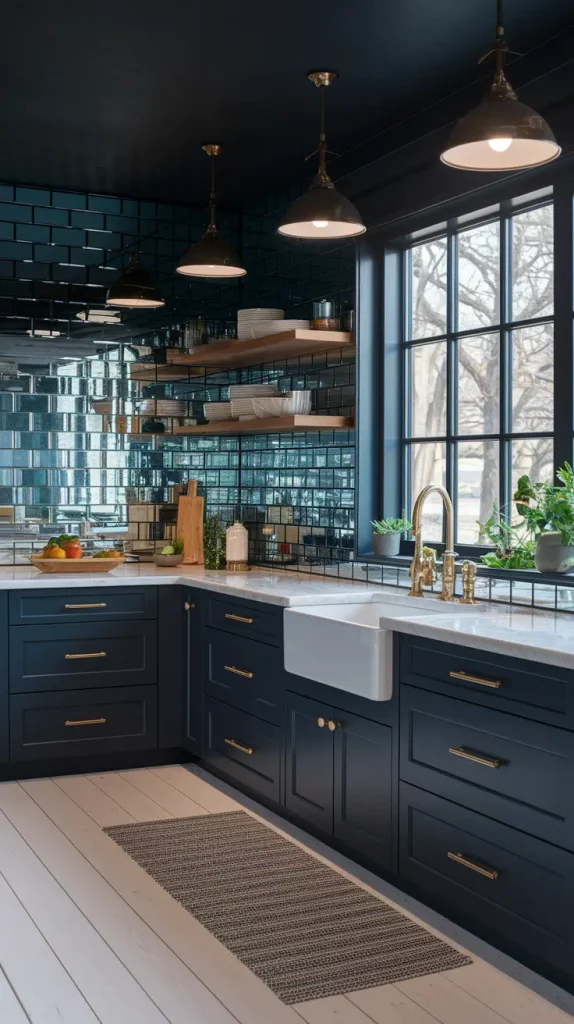
Under-cabinet lighting is transformative, accentuating countertop textures and adding depth to backsplash tiles. Real Simple highlights the importance of layered lighting zones, which I’ve found dramatically shifts a kitchen’s mood. Pale hardwood floors and white ceramic accents balance the darkness, ensuring the space feels harmonious.
Personalizing Dark Kitchens with Unique Decor
Decor in a dark kitchen is a powerful way to express individuality. A deep color palette serves as a versatile backdrop for adding personality through color, texture, and curated objects. Whether it’s artisan ceramics on open shelves or sculptural lighting fixtures, small details make a significant impact.
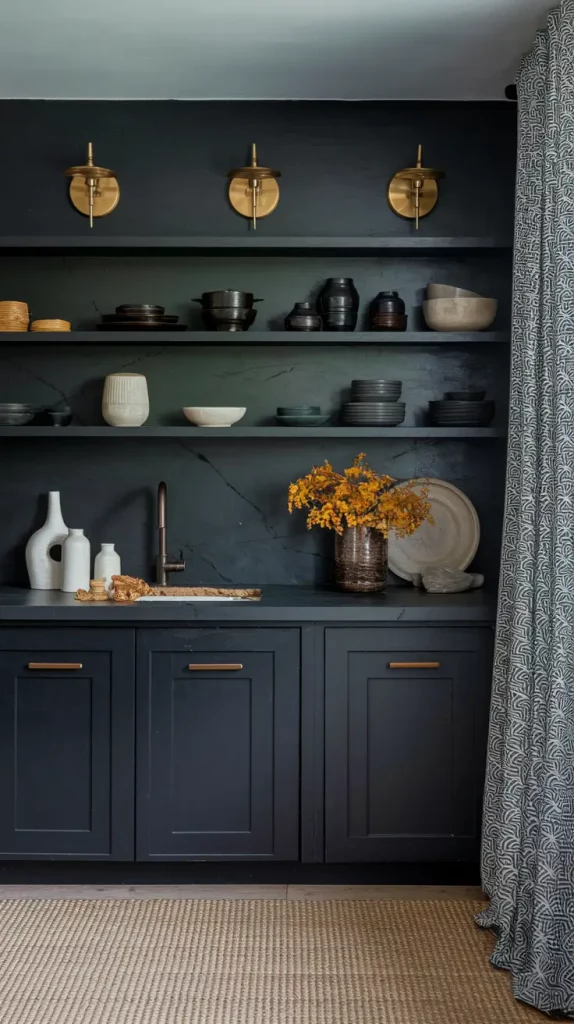
Statement artwork, distinctive vases, and eye-catching hardware add character. Matte black wall sconces, terracotta planters, and vintage rugs introduce warmth and texture. Upholstered stools, textured curtains, and woven baskets create a cozy yet refined atmosphere.
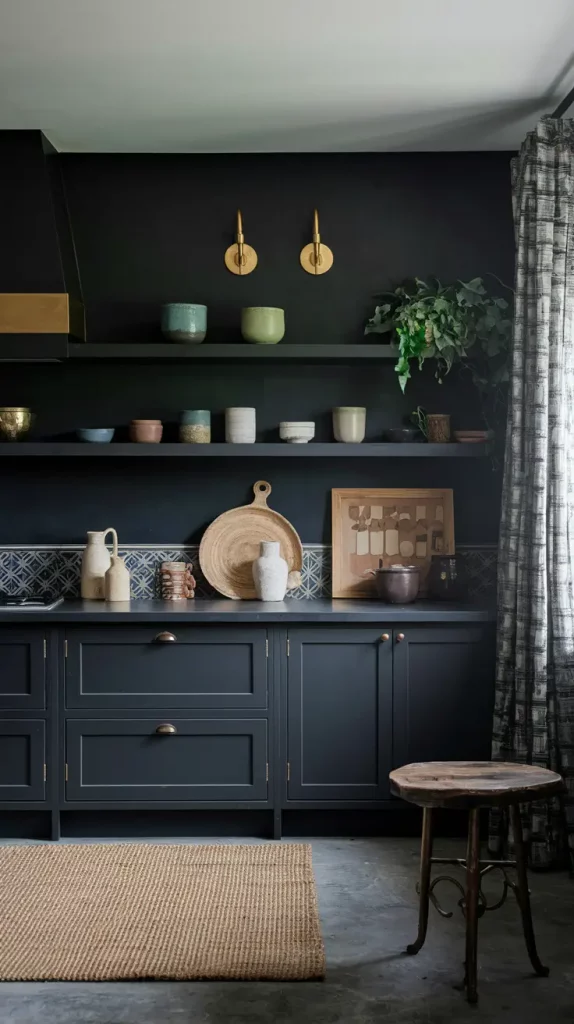
Adding a marble fruit bowl or a large wooden cutting board can dramatically elevate the space. Domino magazine often recommends incorporating handmade or globally sourced pieces into minimalist kitchens, a strategy I find enriches any dark kitchen. Don’t overlook greenery-large-leaf plants or a small herb garden can brighten and enliven the room.
Choosing Impactful Dark Paint Colors for Your Kitchen
The paint color in a dark kitchen profoundly influences its atmosphere. Testing swatches under various lighting conditions is essential to understand how undertones shift throughout the day. Popular choices include charcoal, deep navy, forest green, and rich plum.
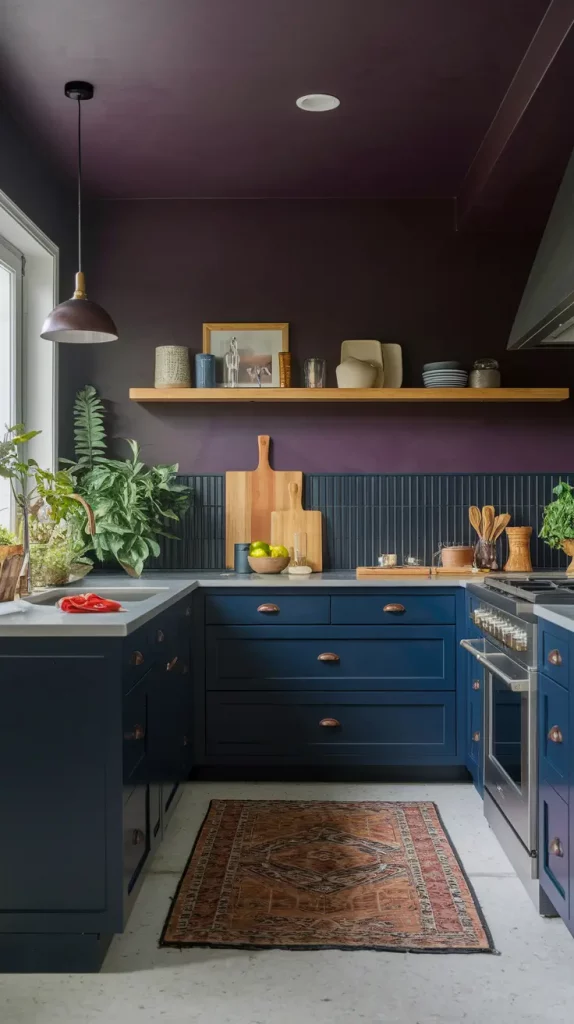
For a contemporary edge, shades like Farrow & Ball’s “Railings” or Sherwin-Williams’ “Iron Ore” offer depth without harshness. Satin finishes add subtle sheen while preserving richness. Painting walls, cabinetry, or even ceilings in these tones can create a bold yet balanced look when paired with lighter accents.
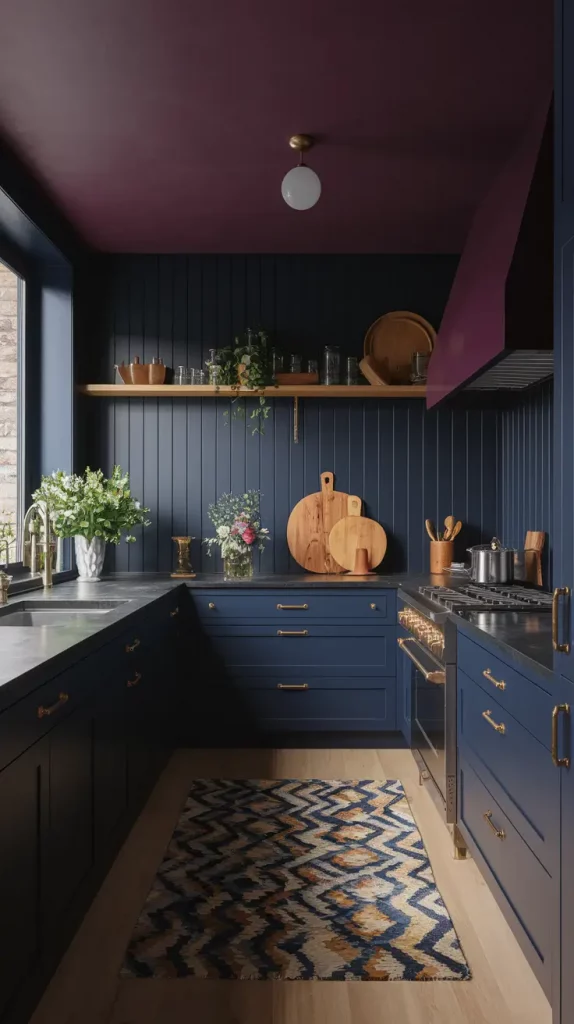
Painting the interior of a glass pantry cabinet in a deep eggplant hue can add unexpected elegance. HGTV suggests using dark colors selectively on feature walls or kitchen islands for a striking effect. Coordinating wall and cabinet colors in varying textures or shades creates subtle yet impactful contrast.
Timeless Elegance: The Harmony of Black and Wood
The pairing of black and wood is a classic that never goes out of style. Dark kitchens featuring walnut or oak alongside matte black cabinetry or countertops strike a perfect balance between warmth and sophistication.
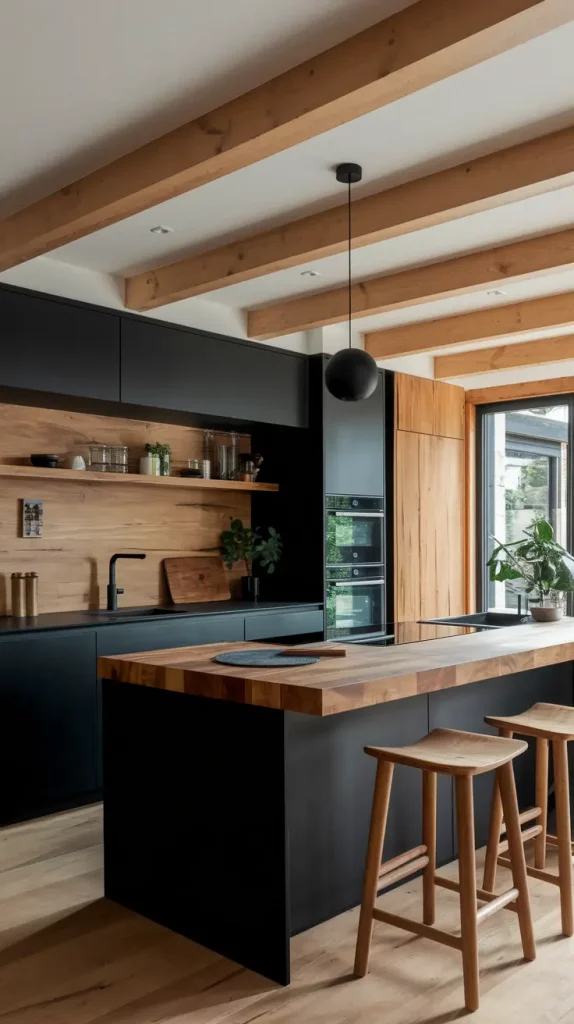
Matte black islands paired with warm wood open shelving or butcher block counters create inviting focal points. Walnut backsplashes or oak-paneled fridge doors add visual interest. Incorporating reclaimed wood elements, such as stools or beams, softens the intensity of black finishes.
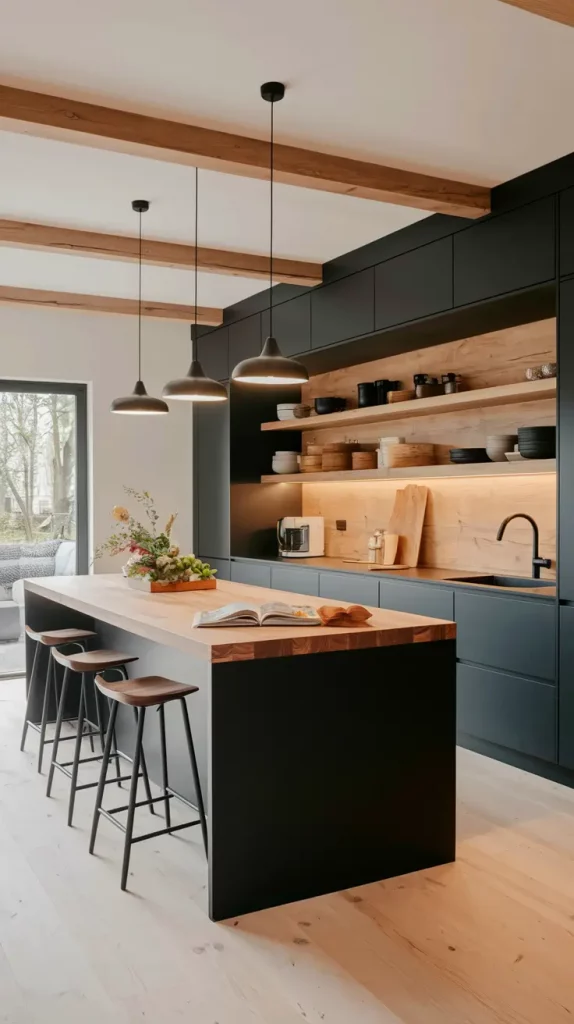
Both new and reclaimed wood bring unique character, with the natural grain serving as a focal point. Elle Decor notes that organic wood accents help balance sleek modern interiors, a sentiment I fully support. For lighter contrast, smoked wood or bleached oak are excellent choices that complement dark palettes.
Smart Dark Kitchen Solutions for Compact Apartments
Designing a moody kitchen in a small apartment doesn’t mean sacrificing style or efficiency. Dark kitchens in apartments often feature clever storage, compact layouts, and layered lighting to maximize space and comfort.
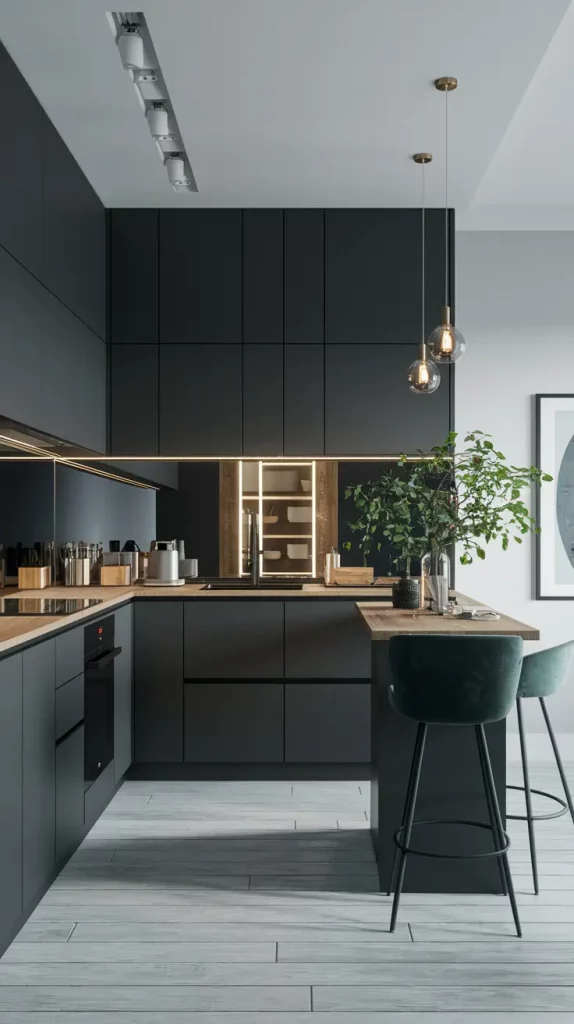
A galley layout with matte black lower cabinets and glossy upper units can visually expand the kitchen. Pull-out dining surfaces, mirrored backsplashes, and slimline appliances enhance both style and practicality. Tall, custom cabinetry optimizes vertical space.
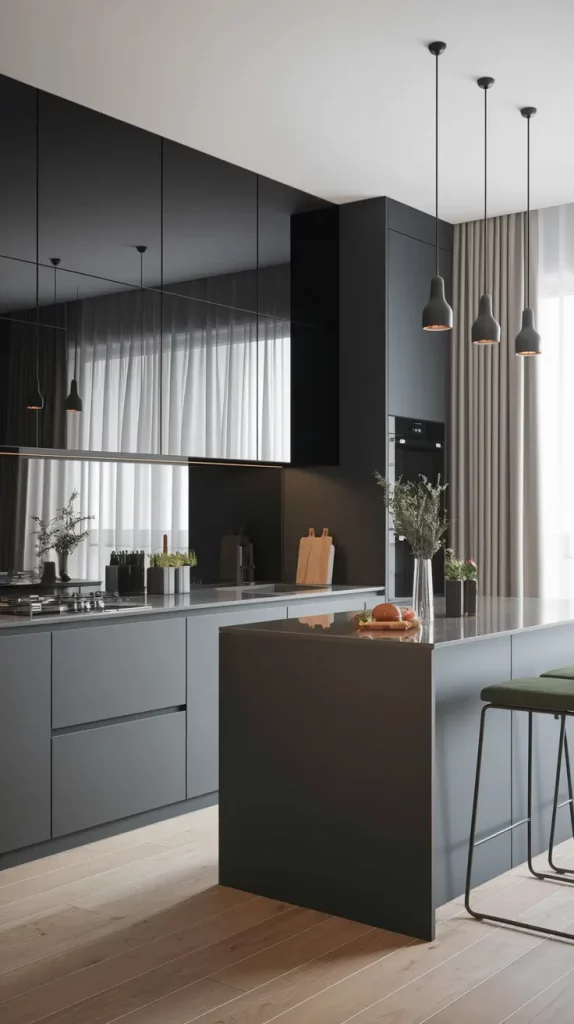
One Brooklyn apartment kitchen featured dark blue-gray cabinets with walnut countertops, achieving a moody yet livable vibe. Apartment Therapy emphasizes that bold choices in small kitchens work best with smart layouts, a principle I’ve found invaluable. Adding a slim rolling island or mobile butcher block cart offers flexible workspace and storage.
Virtual Inspiration: Bloxburg-Inspired Dark Kitchen Designs
Designs from Bloxburg’s virtual world offer fresh ideas for real-life kitchens, showcasing modern, symmetrical, and stylish interiors with strong lighting and versatile furniture.
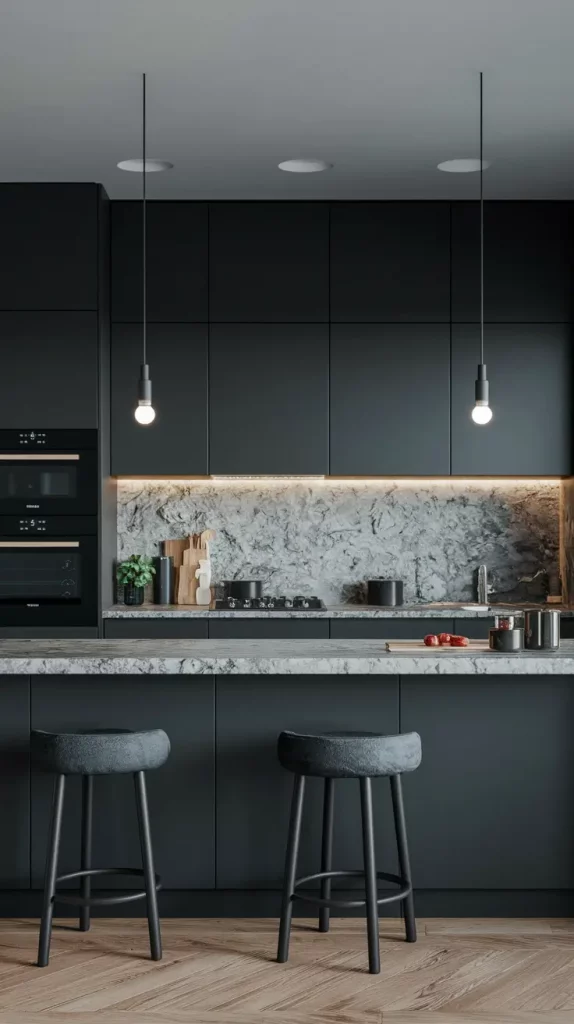
By incorporating LED under-cabinet lighting, varied cabinet depths, large pendants, and stone accent walls, I recreate this clean yet impactful aesthetic. The Bloxburg style pushes beyond traditional boundaries, appealing especially to Gen Z homeowners influenced by digital design trends, as noted by Dezeen.
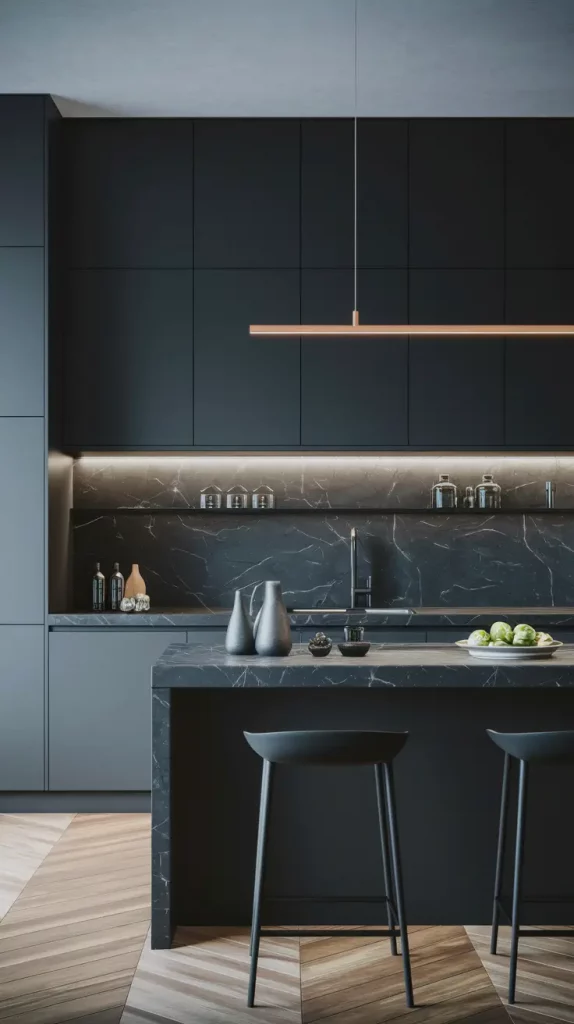
For larger spaces, dramatic ceiling beams or floor-to-ceiling windows add grandeur while maintaining functionality, blending fantasy with practicality.
Maximizing Style in Small Dark Kitchens
Compact kitchens can exude sophistication and warmth with intentional design. Dark hues add depth and create a sense of order, making even small spaces feel curated and elegant.
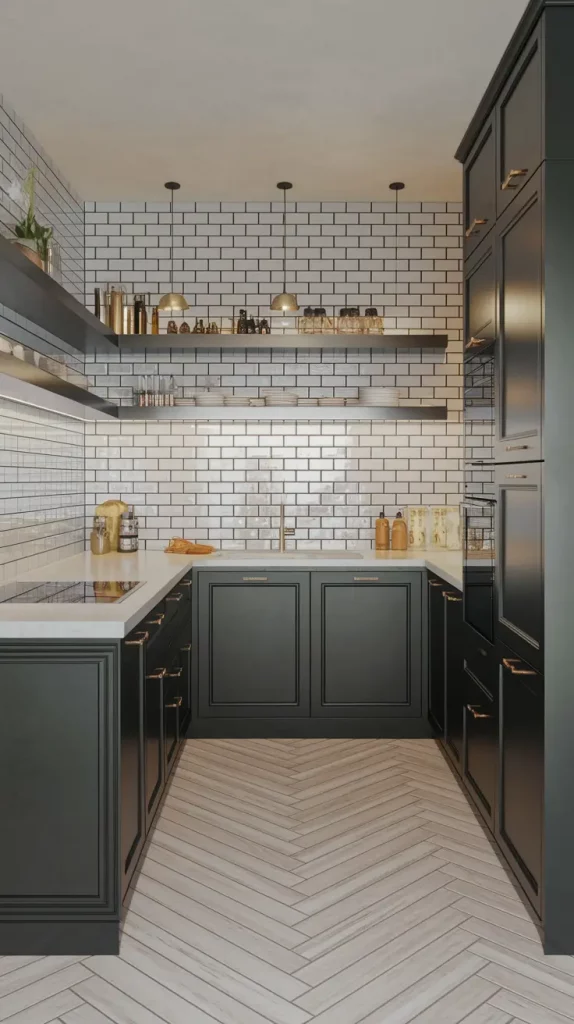
Opting for dark lower cabinets with lighter uppers opens the room visually. Floating shelves, narrow islands, and built-in seating maximize utility. Subway tile backsplashes and stainless steel appliances keep the space bright and contemporary.
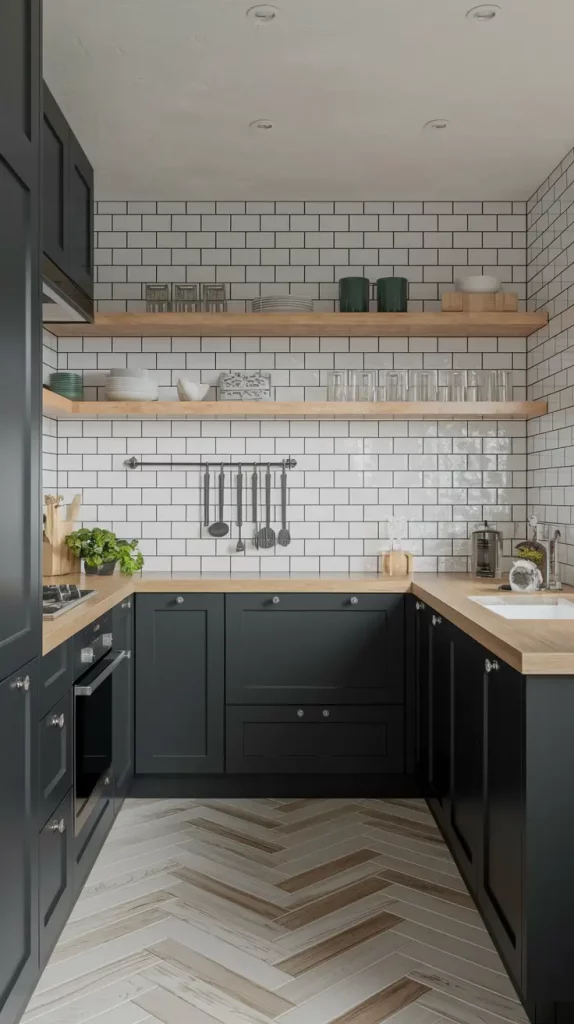
Charcoal cabinets paired with light herringbone flooring create striking contrast. Real Homes magazine highlights the trend of dark colors in small kitchens for adding visual interest. Incorporating pocket doors or retractable panels to conceal appliances enhances the seamless look.
Urban UK Kitchens: Blending Tradition with Dark Elegance
Urban UK homes, from London townhouses to converted lofts, lend themselves beautifully to dramatic dark palettes. Combining heritage elements with modern finishes creates kitchens that are both functional and stylish.
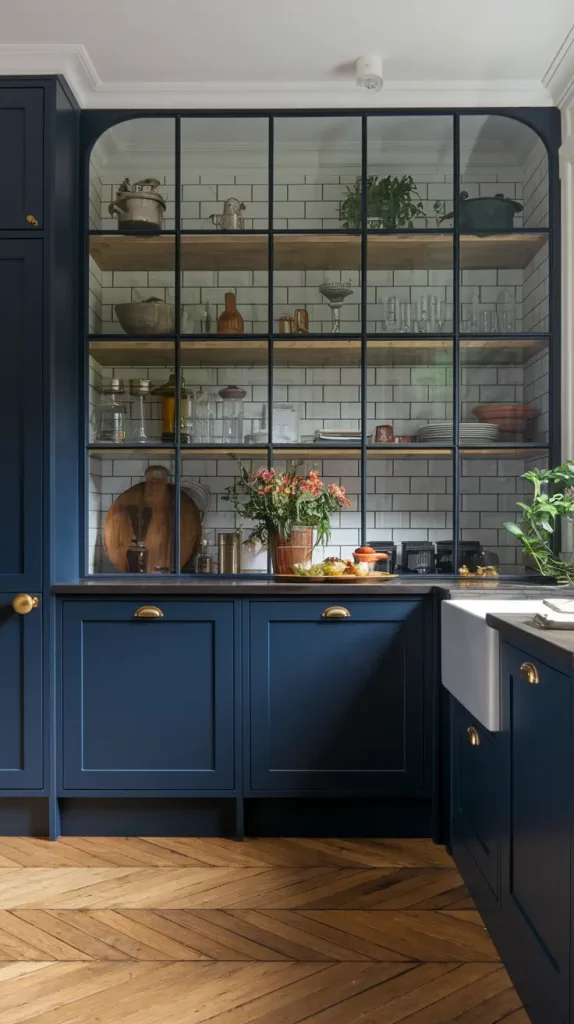
Matte black or navy cabinets, herringbone wood floors, Crittall-style glass partitions, and brass fixtures are my go-to choices. Velvet or leather banquette seating fits perfectly in compact kitchen diners. Curated ceramics and antique mirrors add depth and personality.
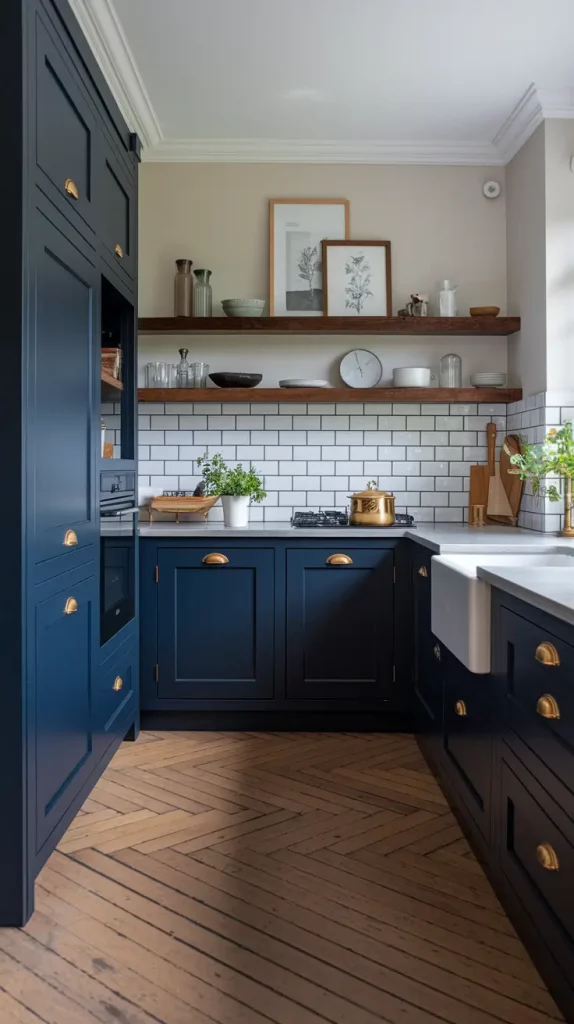
A Notting Hill project featured black shaker cabinets, a butcher block island, and a copper faucet, embracing the building’s character. Livingetc notes that British kitchens blend function, tradition, and style-a perfect formula. Adding patterned encaustic tiles or exposed brick can further enhance the urban feel.
Matte Finishes: Softening and Elevating Dark Kitchens
Matte surfaces are ideal for dark kitchens, absorbing light and reducing glare to create a rich, soft ambiance. Whether on cabinets or stone countertops, matte finishes make a bold statement.
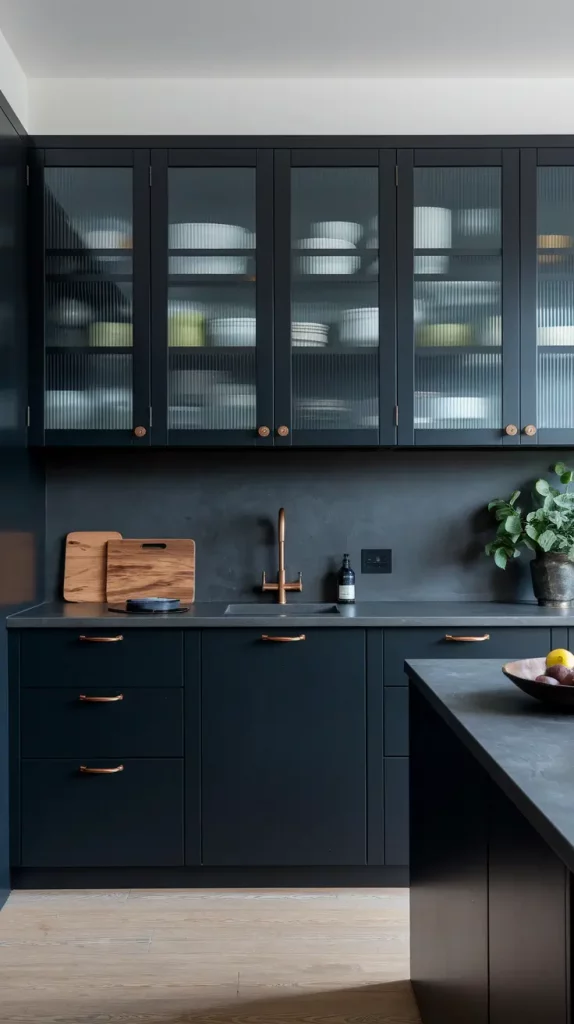
I pair matte cabinetry with brushed metal hardware and natural stone backsplashes. Matte black faucets, flat-front drawers, and frosted glass cabinet doors create a cohesive, calming effect. A client’s choice of matte forest green cabinets over glossy navy resulted in a more organic, architecturally pleasing kitchen. Dwell associates matte materials with understated luxury, explaining their growing popularity.
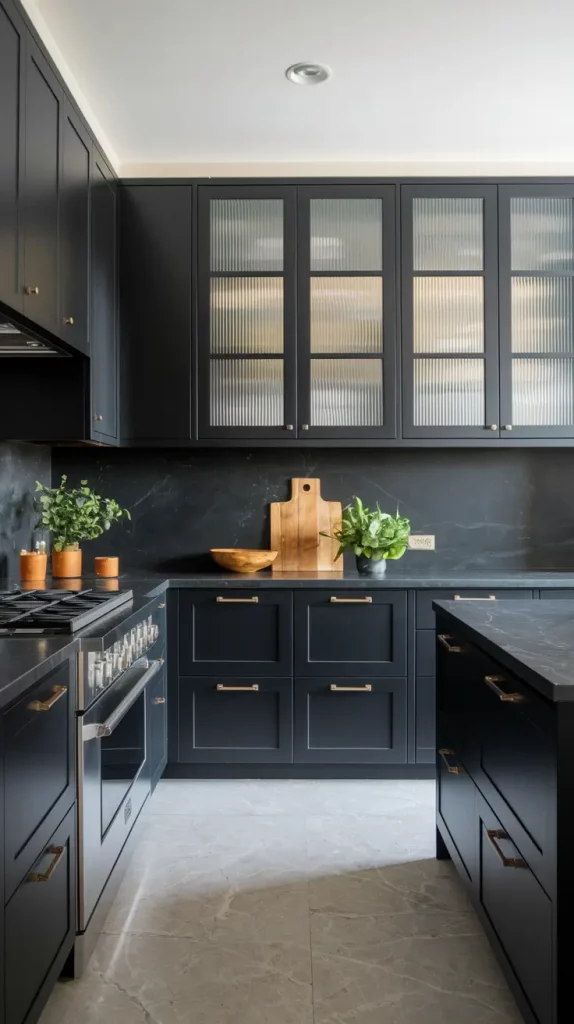
Matte finishes on ceilings or vent hoods are subtle details that unify vertical spaces and enhance the overall design.
Pairing Dark Cabinets with Light Countertops for Visual Balance
Combining dark cabinetry with light countertops is a timeless strategy that delineates space and maintains a clean, balanced look. This contrast energizes the kitchen while preserving harmony.
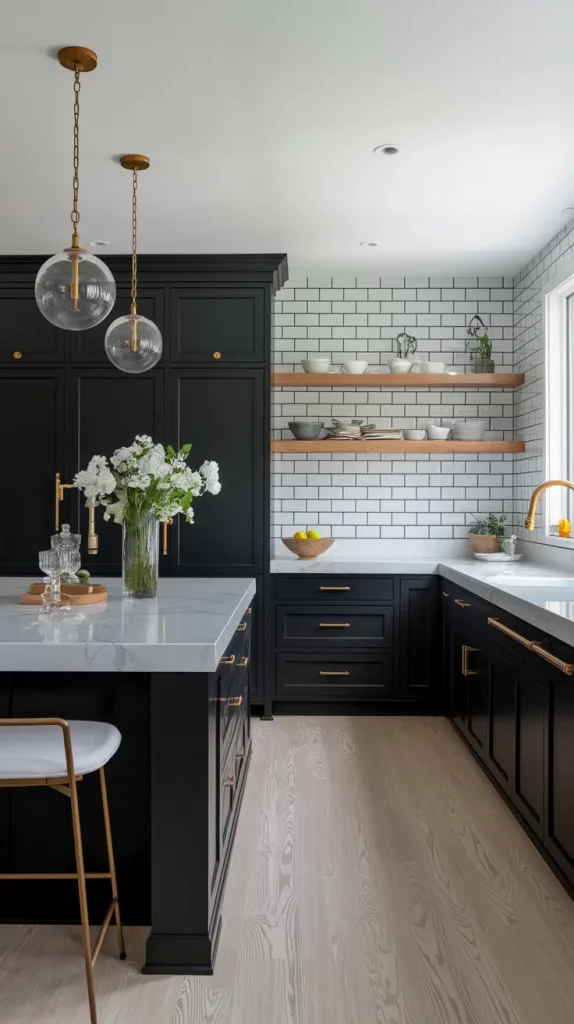
Black or navy cabinets paired with white quartz or marble countertops, sometimes featuring gray or gold veining, create a dramatic yet refined look. Waterfall islands and large slab surfaces add smoothness, while open shelving above prevents clutter. Studio McGee emphasizes contrast as vital in kitchen design, a principle that helps dark kitchens avoid feeling heavy.
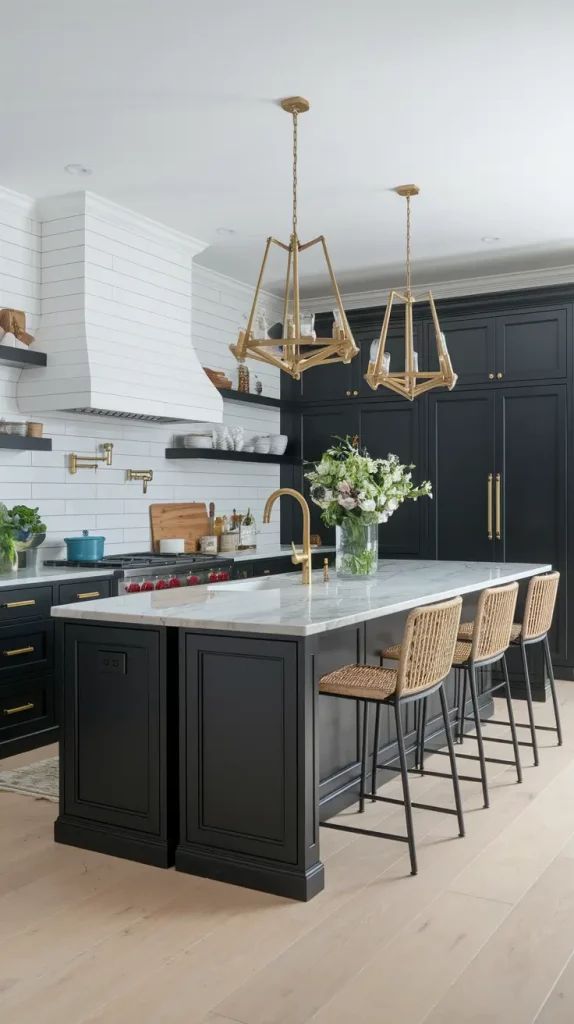
Light-colored flooring or backsplashes can further brighten the lower half of the room, enhancing openness.
Integrating Natural Stone with Dark Color Schemes
For kitchens that exude elegance and a connection to nature, pairing dark hues with natural stone is a winning combination. Inky cabinetry alongside dramatic marble or slate surfaces creates a striking, sophisticated environment.
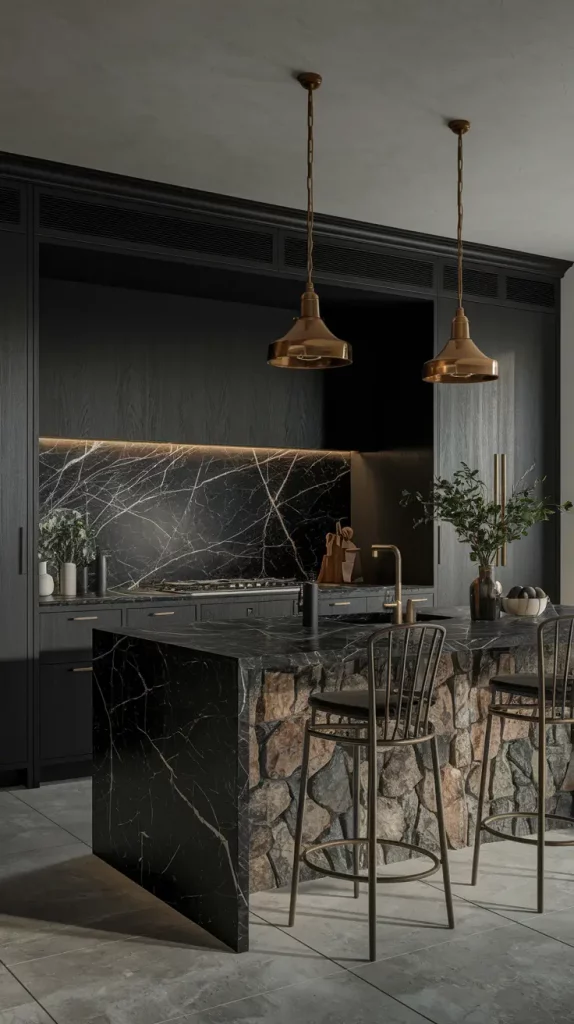
Honed black granite, soapstone, and marble with bold veining complement matte finishes, brass accents, and integrated lighting. Stone backsplashes or islands become captivating focal points.
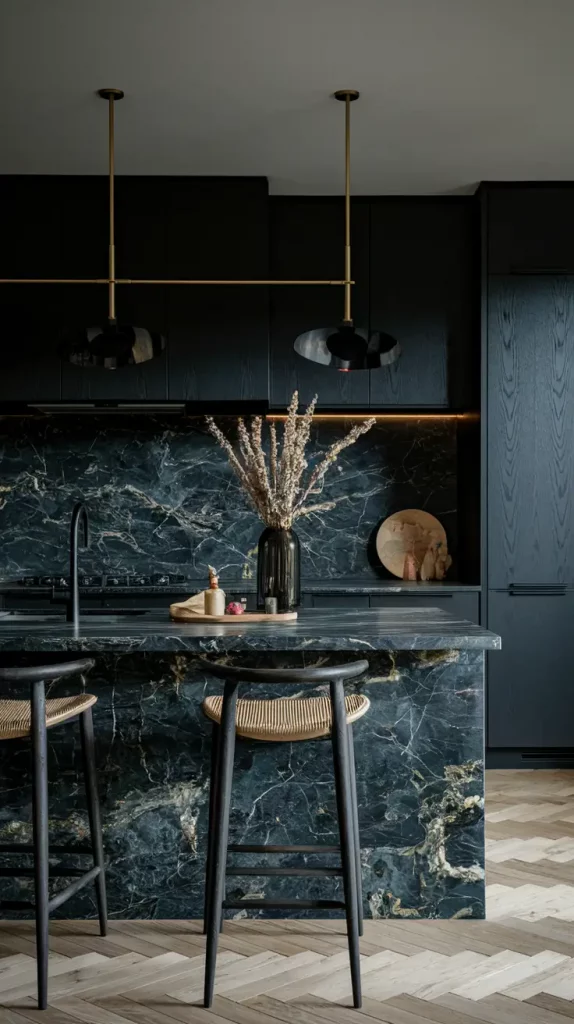
A favorite project featured a Pietra Grey stone backsplash, charcoal cabinets, and walnut flooring, creating a moody yet grounded space. Better Homes & Gardens notes that natural materials help kitchens stay stylish and durable. Consider integrated stone sinks or window ledges to extend the tactile experience.
Innovative Lighting Strategies for Atmospheric Dark Kitchens
Lighting transforms dark kitchens from somber to sophisticated. I view lighting as the jewelry of the kitchen, essential for both function and style. Layered lighting prevents the space from feeling oppressive.
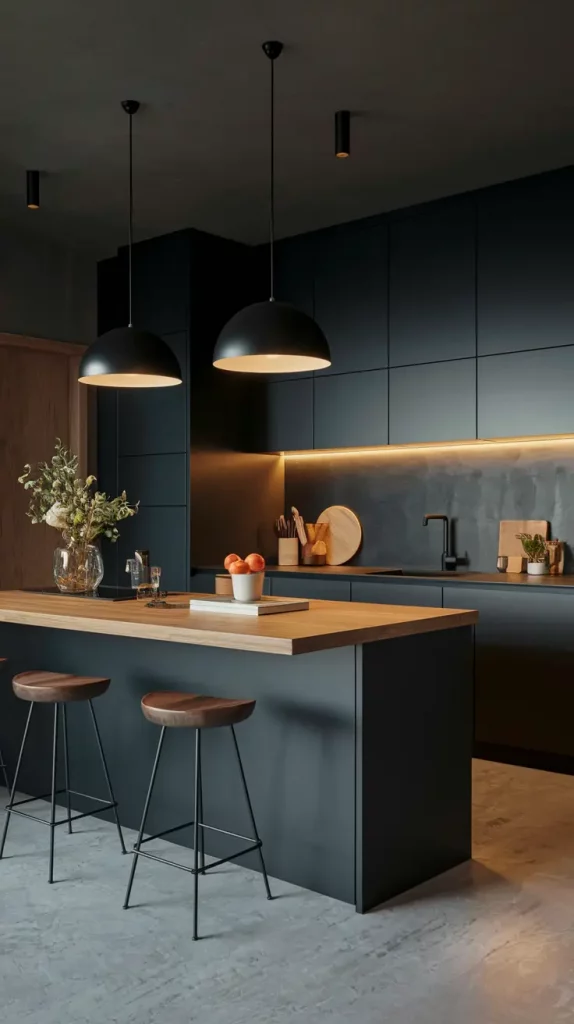
Combining ambient, task, and accent lighting-such as pendant lights over islands, LED strips beneath cabinets, and warm ceiling spots-creates versatility. Dimmers allow mood adjustments from bright and energetic to cozy and intimate. Fixtures in glass or metal add sparkle and contrast against dark surfaces.
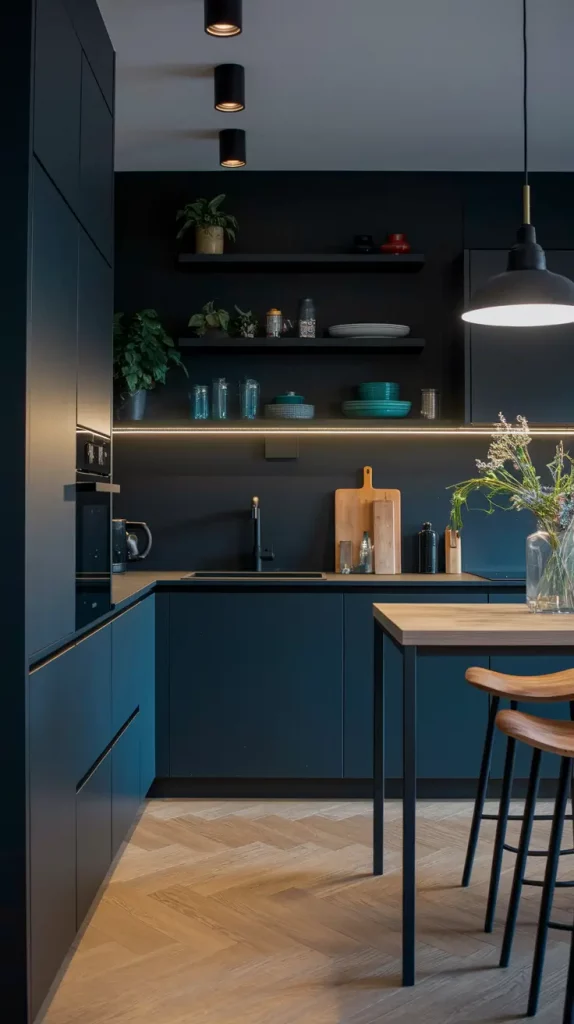
One standout kitchen featured matte black cabinets, large brass dome pendants, and a backlit quartz backsplash. Luxe Interiors + Design stresses that lighting should define space and eliminate shadows, a principle I prioritize. Toe-kick lighting adds a subtle floating effect to cabinetry.
Striking Backsplash Options for Dark Kitchens
A bold backsplash can either harmonize with or contrast dark walls and cabinets. Some of the most compelling dark kitchen designs use floor-to-ceiling stone, patterned mosaic tiles, or matte black herringbone patterns. Texture and contrast are key.
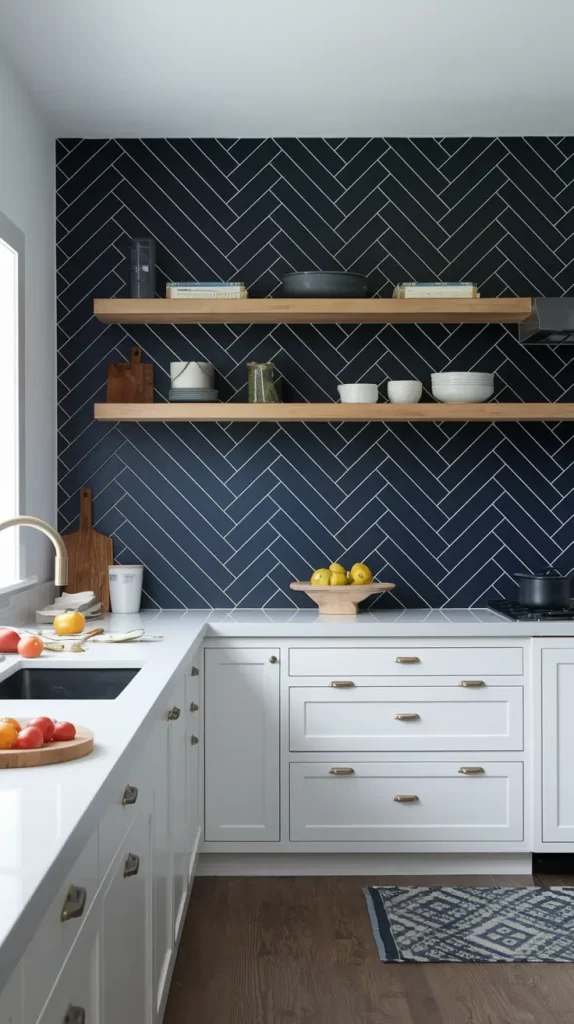
Materials like soapstone, zellige tile, or quartz slabs create unique visual interest. Extending countertop material up the wall for a continuous surface is a popular technique. For a more daring look, hand-painted tiles or mixed-metal accents add depth.
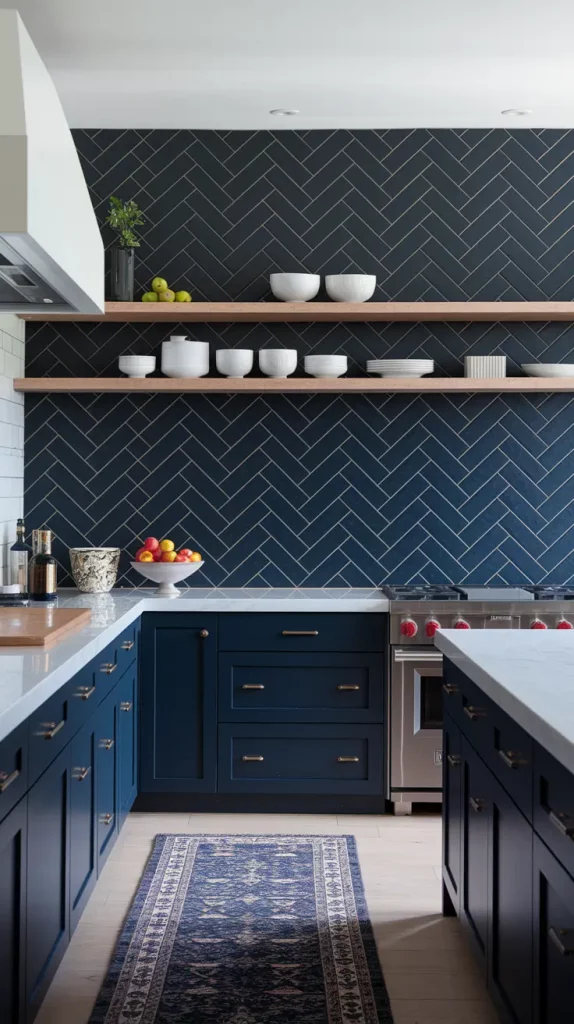
Homeowners often find backsplashes tie the entire kitchen together. For example, navy-blue stacked subway tiles paired with forest green cabinets create a distinctive look. Domino recommends large or boldly finished tiles to enhance darker areas. Grout color also influences style-contrasting grout adds interest, while matching grout offers a sleek, modern finish.
Open Shelving in Dark Kitchens: Balancing Style and Function
Open shelving sparks debate, especially in dark kitchens. When thoughtfully integrated, it brightens walls, showcases favorite items, and breaks up long runs of cabinetry.
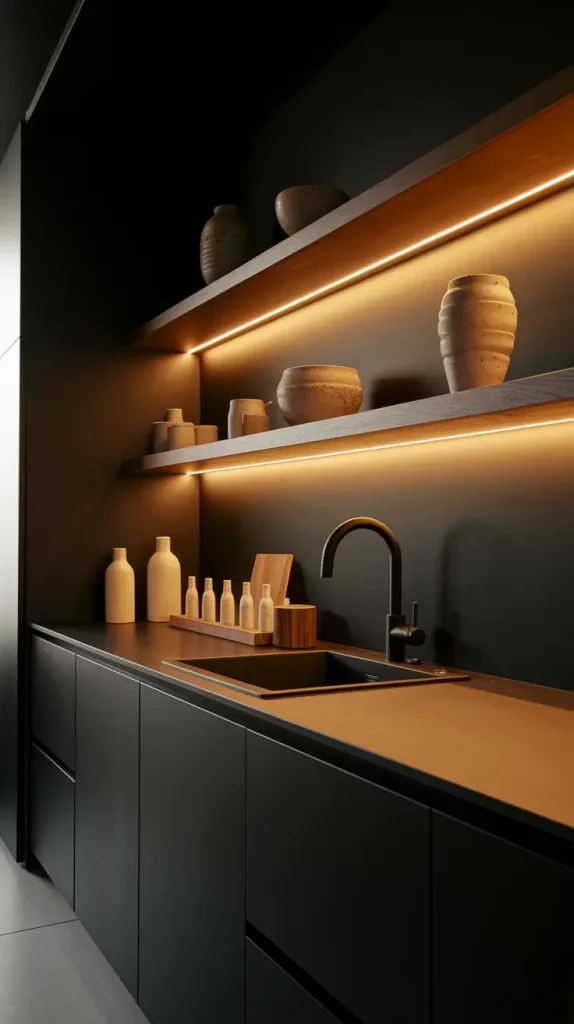
Floating walnut shelves on matte black tiled walls add warmth and openness. I recommend mixing everyday essentials like dishes with decorative pieces such as ceramics and vintage books. Open shelving personalizes the space and adds visual interest without overwhelming.
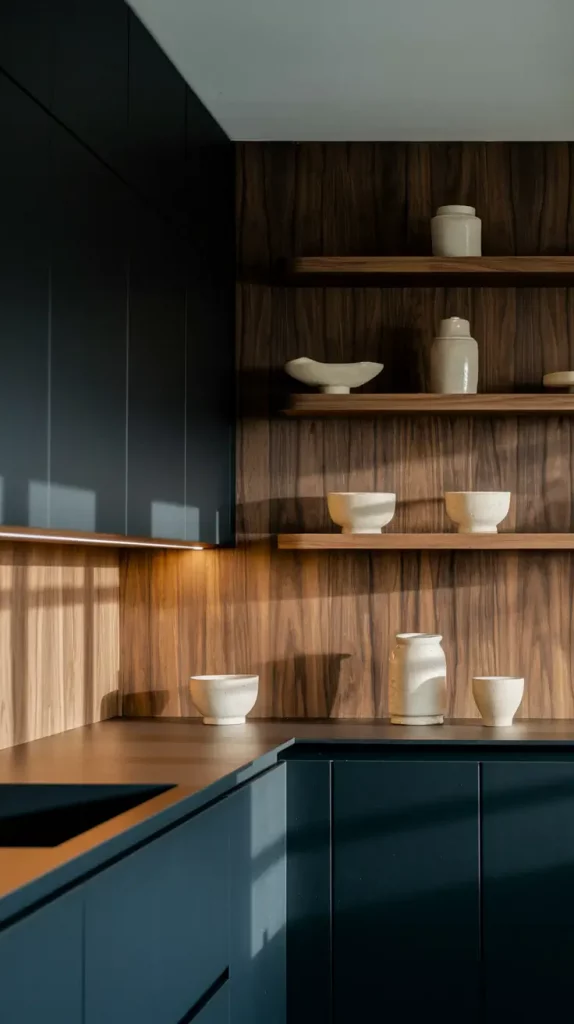
House & Garden UK notes that open shelving acts as a bright spot amid closed storage. However, if maintenance is a concern, glass-front cabinets offer a similar aesthetic with less upkeep.
Enhancing Dark Kitchens Through Texture
Texture is a vital design tool in dark kitchens, adding dimension and interest beyond color. It’s a subtle yet powerful way to enliven the space.
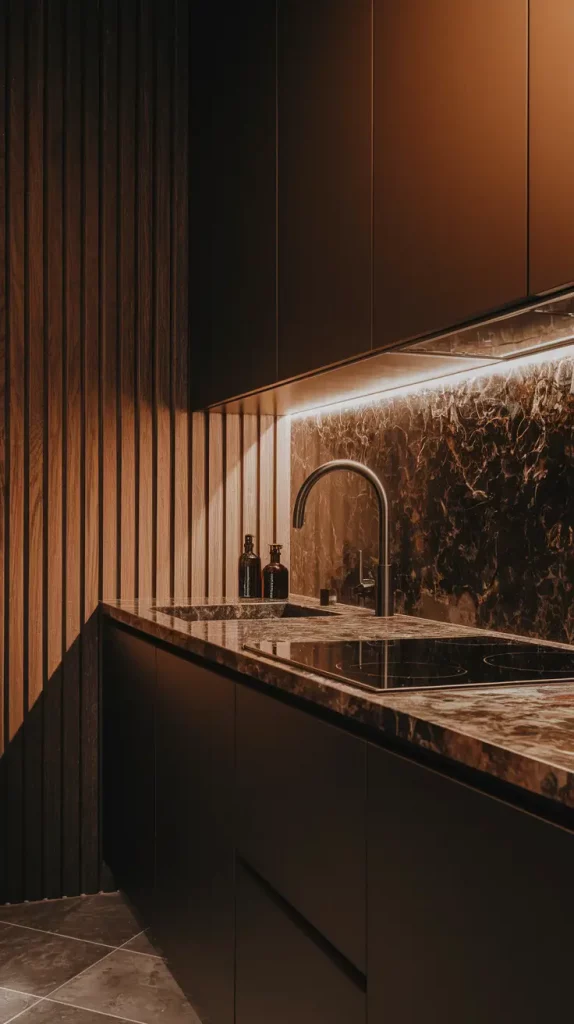
Combining leathered granite, fluted wood, brushed metals, and unlacquered brass creates layered visual interest. Cabinet fronts may be paneled, grooved, or upholstered. Honed or etched countertops and backsplashes are preferred over polished finishes. Paint finishes like chalky matte or eggshell significantly influence the room’s character.
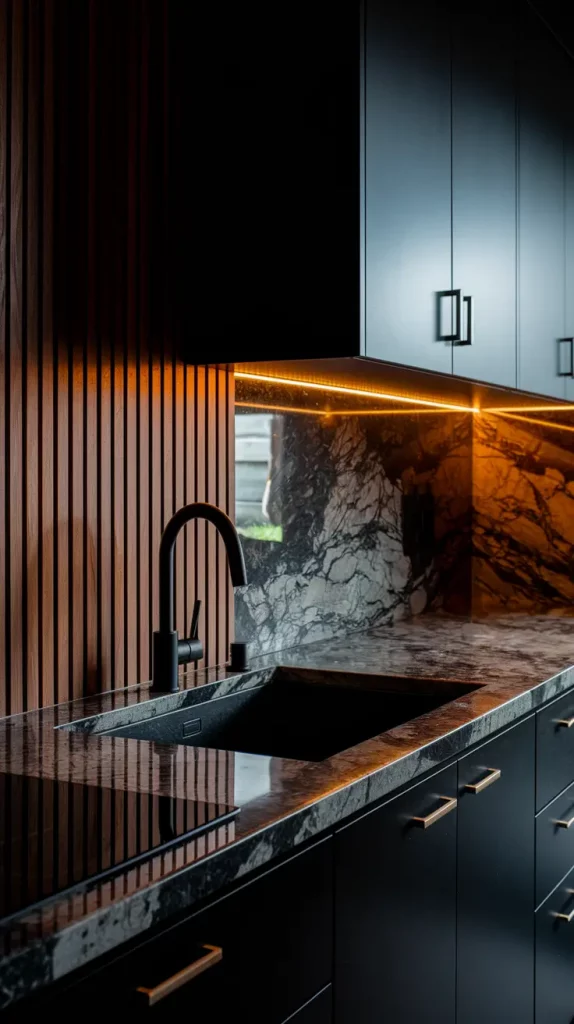
One kitchen I designed featured matte black cabinets, a ribbed oak island, and textured concrete flooring, achieving an organic yet bold look. Architectural Digest recommends textured materials to add depth, a strategy that resonates with this style. Embossed tile or plaster on a feature wall can add subtle charm, especially when softly lit.
Statement Kitchen Islands That Command Attention
Your kitchen island doesn’t have to blend in-it can be a centerpiece. A distinctive island often anchors the design and becomes a conversation starter.
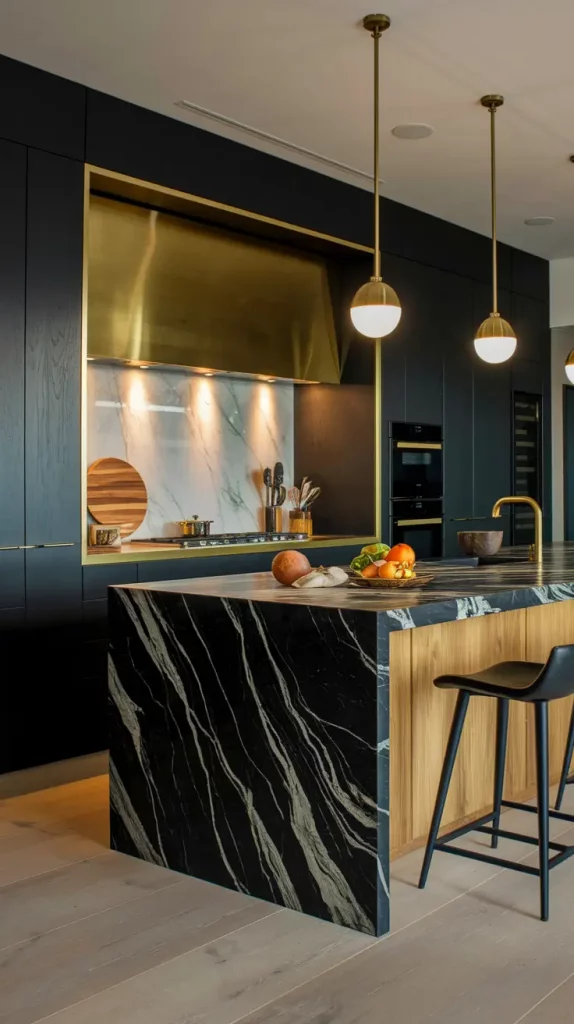
I enjoy pairing black marble waterfall islands with warm wood base cabinets or navy islands accented with brass and fluted paneling. Stone or quartz countertops are common, but wood surfaces add warmth and approachability. Combining storage, seating, and open shelving balances practicality with style.
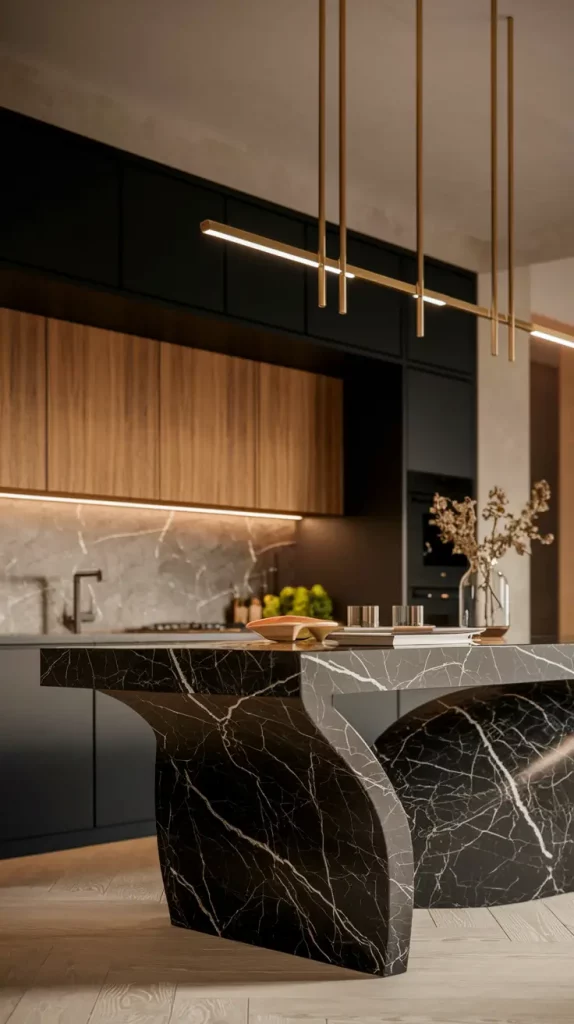
A charcoal island featuring wine storage and a backlit stone countertop became a highlight in one project. Better Homes & Gardens notes that kitchen islands are increasingly viewed as architectural elements. Curved or sculpted island designs are gaining popularity, softening rigid kitchen layouts.
Earthy Sophistication: Dark Green Kitchens
For an earthy yet refined kitchen, dark green hues are an excellent choice. Shades like forest green, olive, or blackened teal offer a cozy yet bold statement.
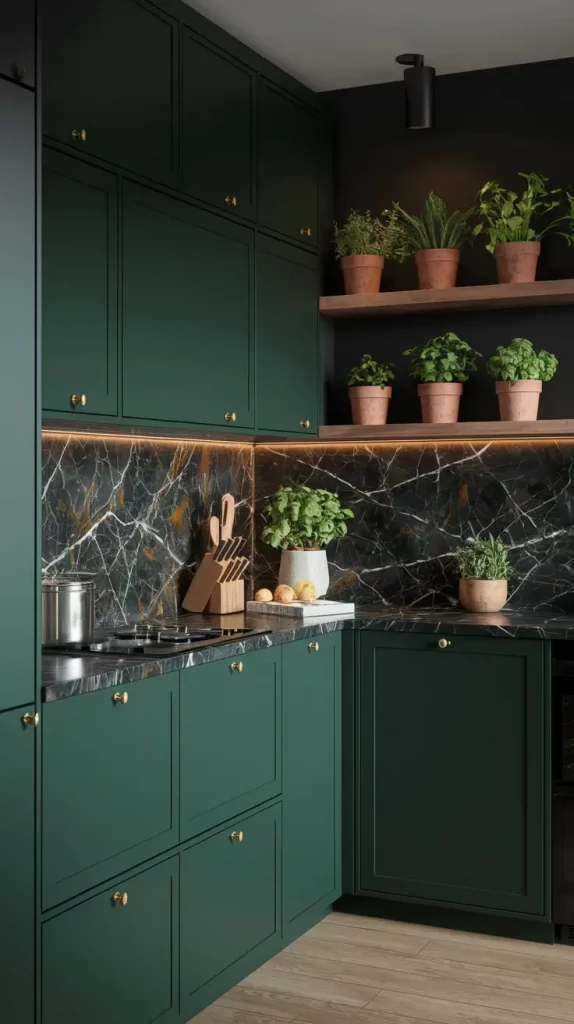
One design featured dark green cabinetry with unlacquered brass hardware, a marble backsplash, and walnut shelving, creating a timeless, natural atmosphere. Green works well in galley kitchens or spaces with ample daylight. My own kitchen combines green lowers with cream uppers and black hardware for a balanced, modern look. Elle Decor highlights green’s calming effect and versatility.
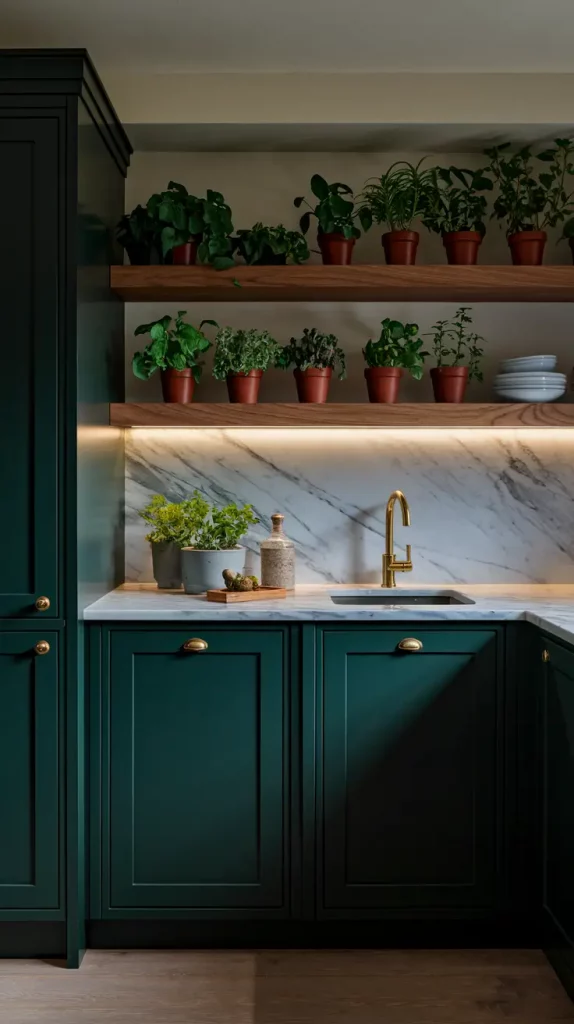
Adding potted herbs or botanical artwork reinforces the natural theme and livens the space.
Gothic Elegance for Dramatic Dark Kitchens
For those seeking drama, Gothic-inspired kitchens offer a rich, ornate aesthetic. Arched cabinetry, intricate moldings, and wrought iron fixtures in dark palettes create a striking yet tasteful look.
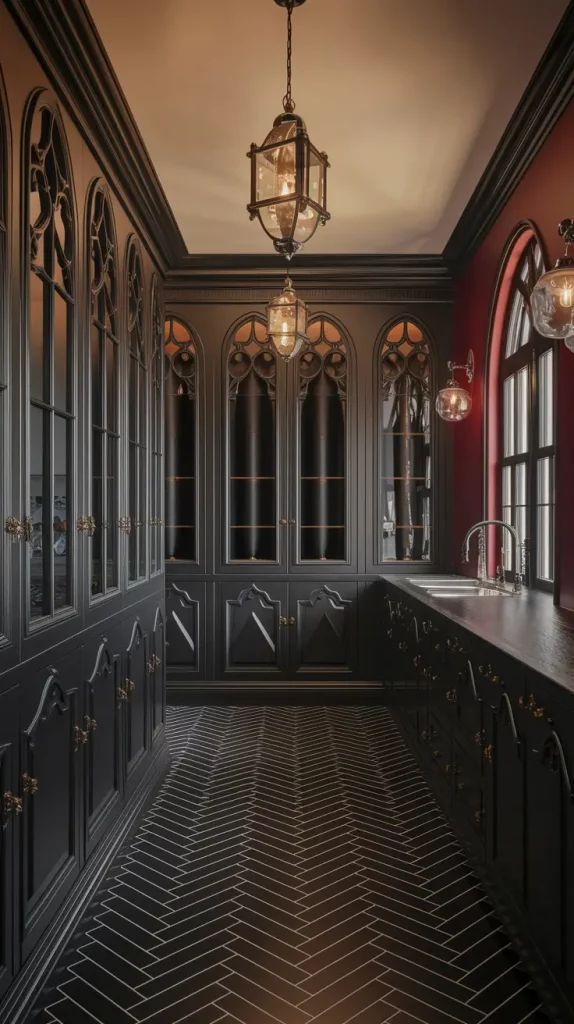
Deep black or oxblood cabinets paired with vintage glass, candelabra lighting, and stone countertops evoke an Old World charm. Textured walls, arched alcoves, and dark herringbone floors enhance authenticity. Antique or distressed finishes add character.
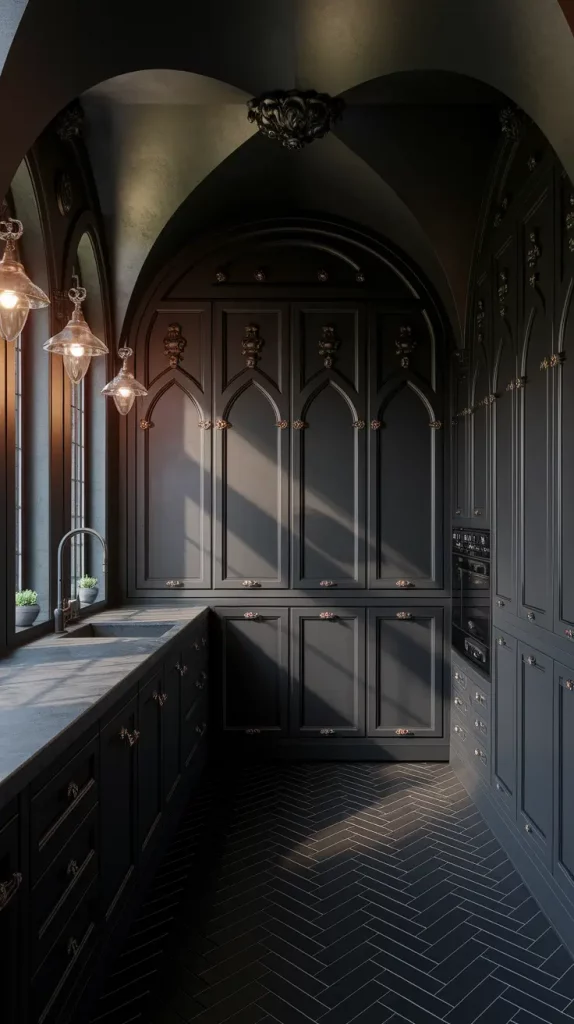
A 19th-century French kitchen inspired one project featuring iron pulls, reclaimed limestone, and a black cast-iron stove. Veranda notes that “new Gothic” focuses on atmosphere over narrative, a concept I embrace. Architectural details like stained glass cabinet inserts or dark oak ceiling beams deepen the story.
Mid-Century Modern Flair Meets Moody Kitchens
Combining Mid-Century Modern design with dark kitchens creates a stylish fusion of vintage charm and contemporary drama. Clean lines, organic shapes, and dark woods establish a moody yet inviting atmosphere.
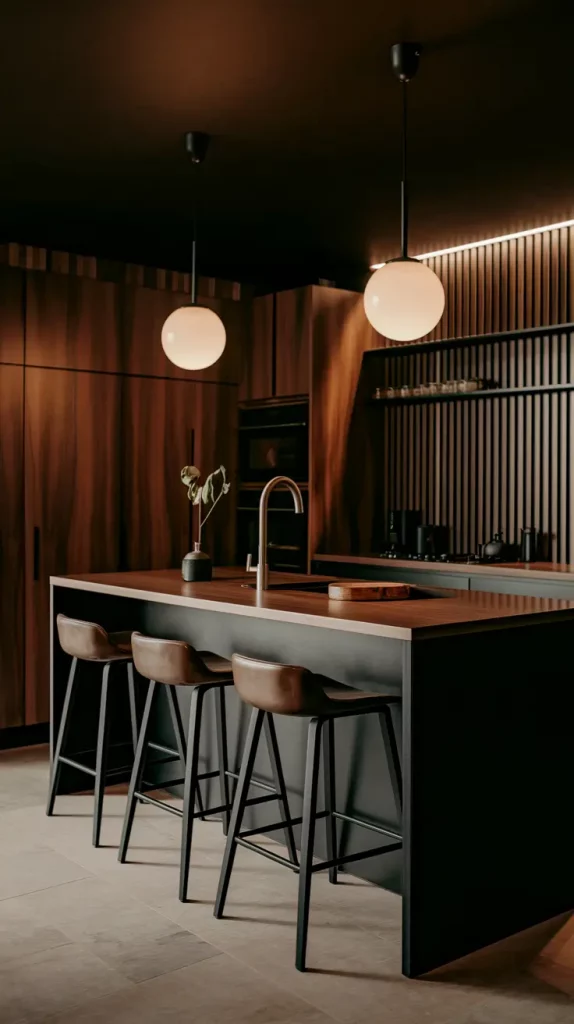
Walnut or teak cabinetry with matte black or navy accents, tapered legs, globe pendants, and built-in shelving define the style. Mustard, burnt orange, or brass details add vintage warmth. Flat-front cabinets and low-profile hardware maintain a streamlined look.
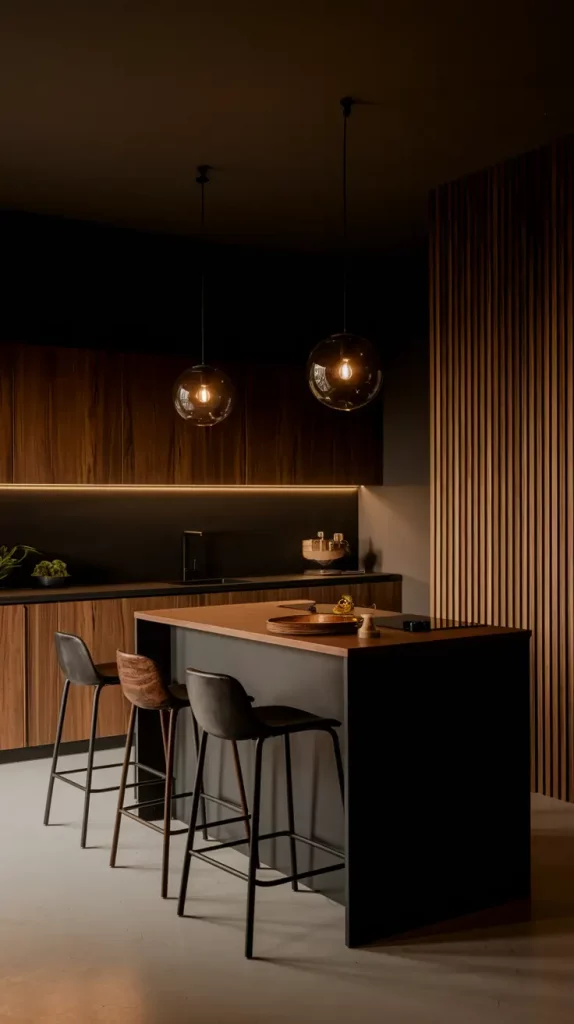
A ranch-style kitchen renovation combined black quartz countertops, wood slat paneling, and vintage brass lighting, evoking a “Mad Men meets minimalism” vibe. Dwell highlights the enduring success of designs balancing form and function. Classic stools and barware complete the look without overcrowding.
Minimalist Dark Kitchens for Sleek, Clean Spaces
Minimalism pairs beautifully with dark kitchens, emphasizing simplicity and material quality. Flat-front cabinets, slab backsplashes, and integrated appliances create calm, architectural spaces.
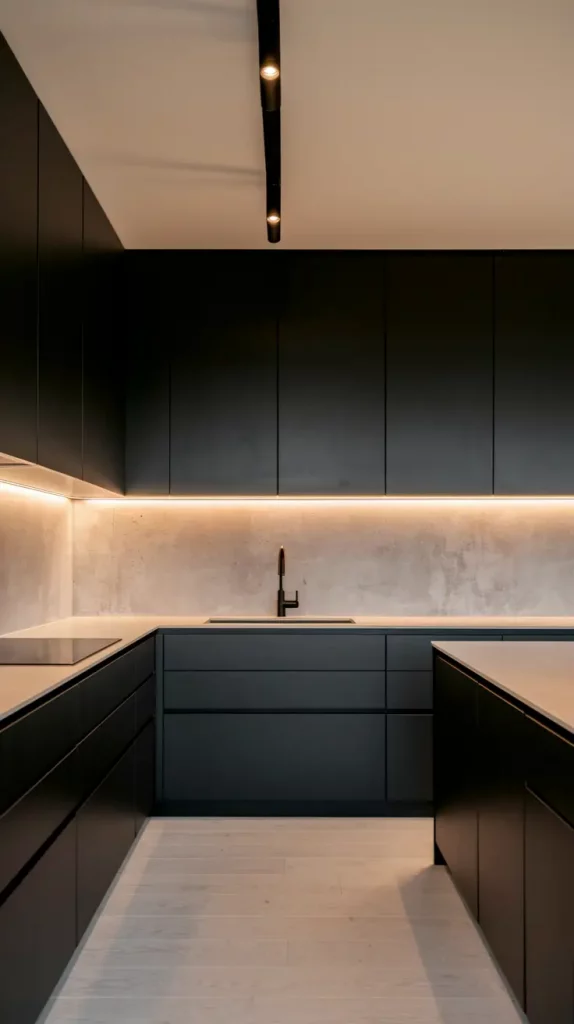
In small kitchens, matte black or charcoal cabinets with white countertops and concealed handles foster tranquility. Linear shapes, waterfall edges, and neutral flooring reduce visual clutter. Minimal lighting-such as thin LED tracks or sculptural pendants-suffices.
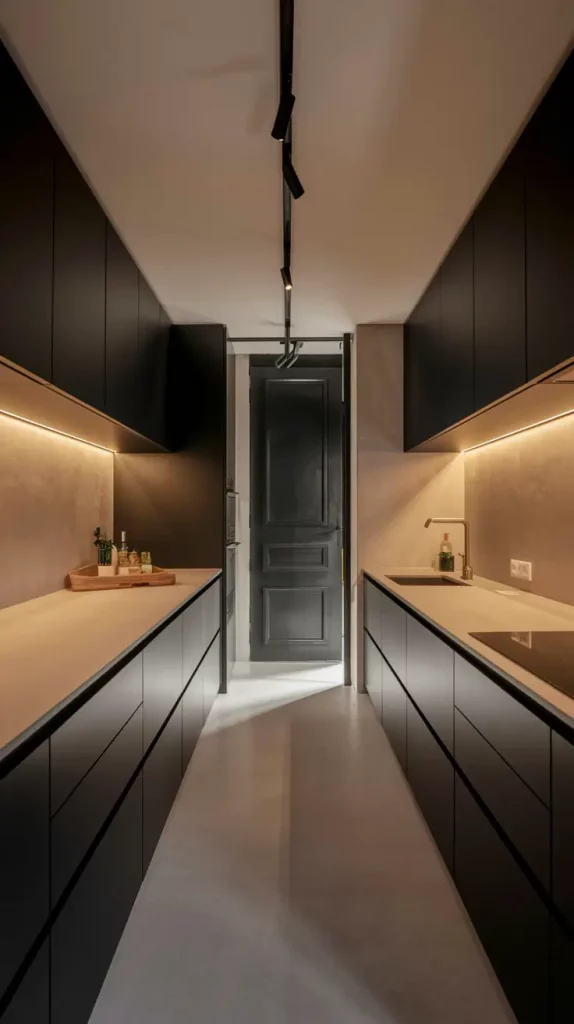
A recent project featured black cabinetry extending to the ceiling with a concrete backsplash, creating a meditative atmosphere. Dezeen advises focusing on materials over decoration in minimalist kitchens, a principle I follow. Handle-free drawers and a single open shelf of monochrome ceramics enhance the aesthetic.
Rustic Meets Modern: Dark Wood Kitchens
Dark wood kitchens that blend rustic charm with contemporary elements offer a unique appeal. The contrast between rough and smooth surfaces adds depth and interest.
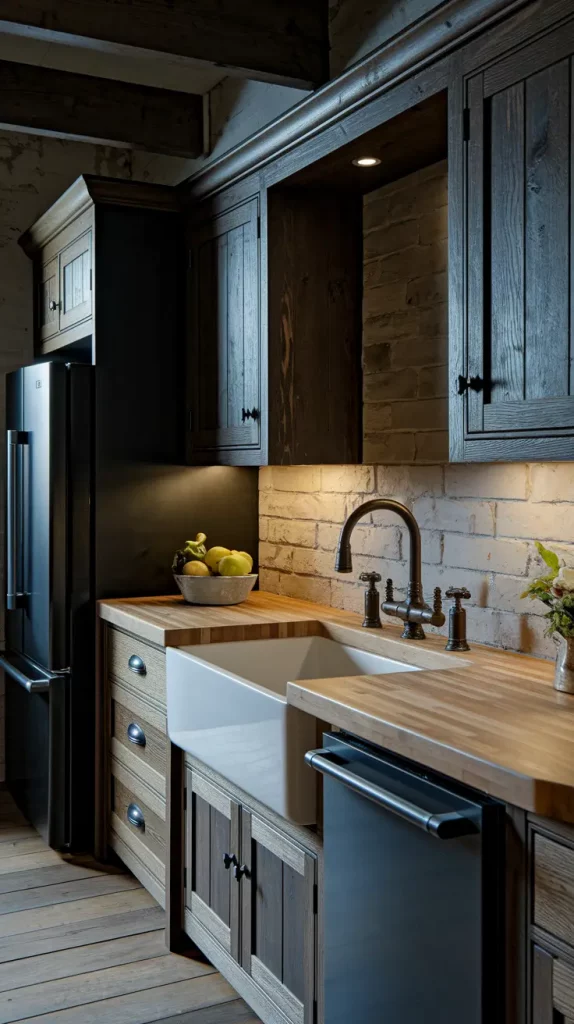
Old wood cabinets or butcher block counters paired with matte black appliances and metal fixtures create a balanced look. Rustic sinks, vintage faucets, and unfinished wood shelving complete the aesthetic. Wide-plank oak floors or brick pavers enhance the natural feel.
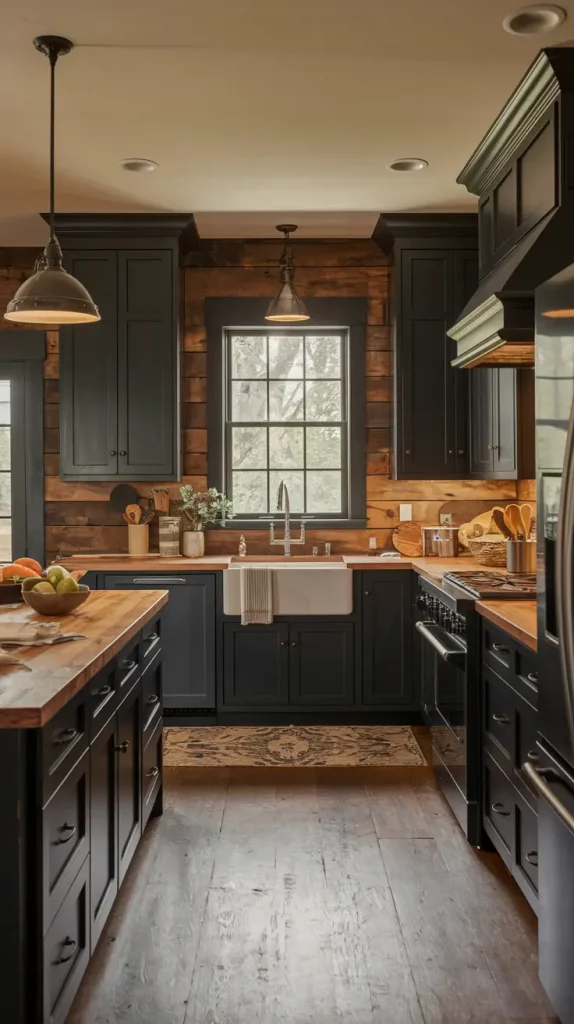
A Colorado project combined black-stained pine cabinets, quartzite counters, and antique bronze accents for a cozy yet modern kitchen. Country Living notes that new rustic styles blend old and new, brightening even the darkest palettes. Adding a wood-burning stove or timber-framed range hood enhances authenticity.
Functional and Stylish Dark Kitchen Layouts for Businesses
Whether running a catering service or a food startup, dark kitchen designs can be both practical and visually appealing. Commercial kitchens require easy maintenance, efficient workflows, and durable materials without compromising style.
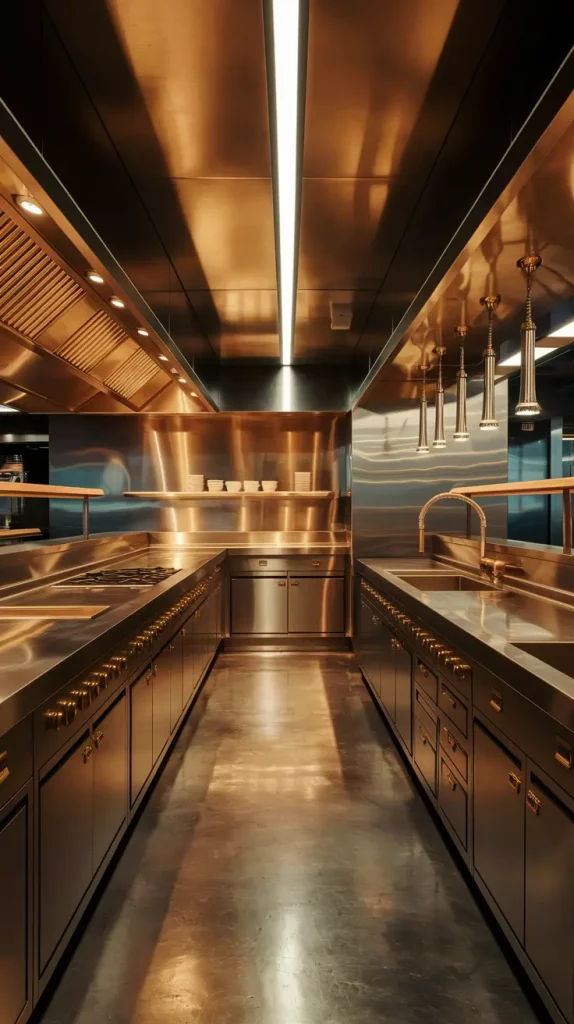
Stainless steel counters, resilient flooring, and wipe-clean dark cabinetry are ideal. Task lighting, prep zones, and bulk storage are essential. Matte tile backsplashes and dark paint add character to commercial spaces.
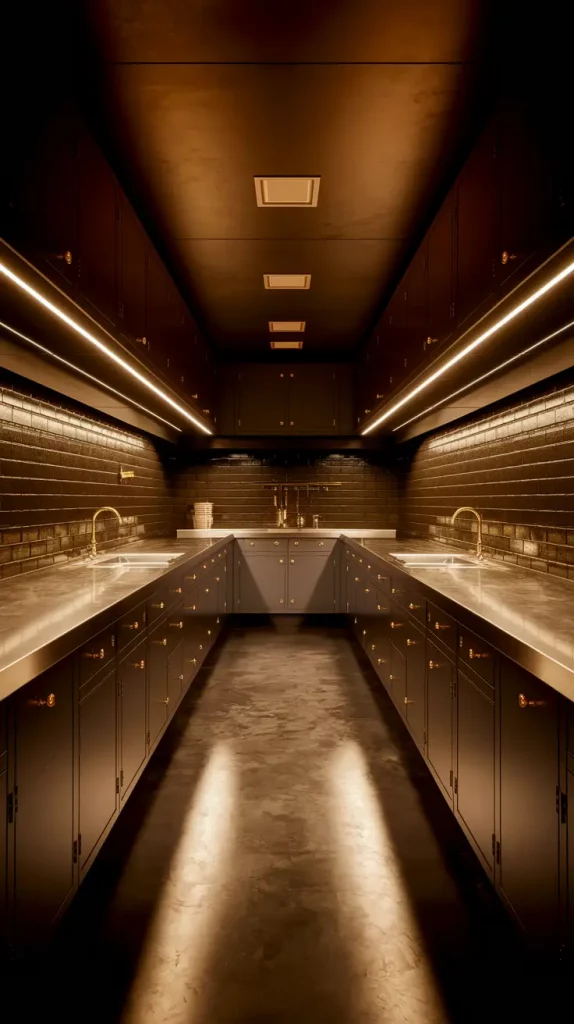
A cloud kitchen I designed featured black epoxy floors, slate gray cabinets, and brass handles, creating a sleek, upscale environment perfect for branding. Forbes highlights that design-focused ghost kitchens are now integral to restaurant identity. Acoustic panels improve noise control and employee comfort.
Maximizing Narrow Spaces: Dark Galley Kitchen Inspirations
Galley kitchens excel in narrow layouts, and dark color schemes work exceptionally well here, adding drama and intimacy that might overwhelm larger spaces.
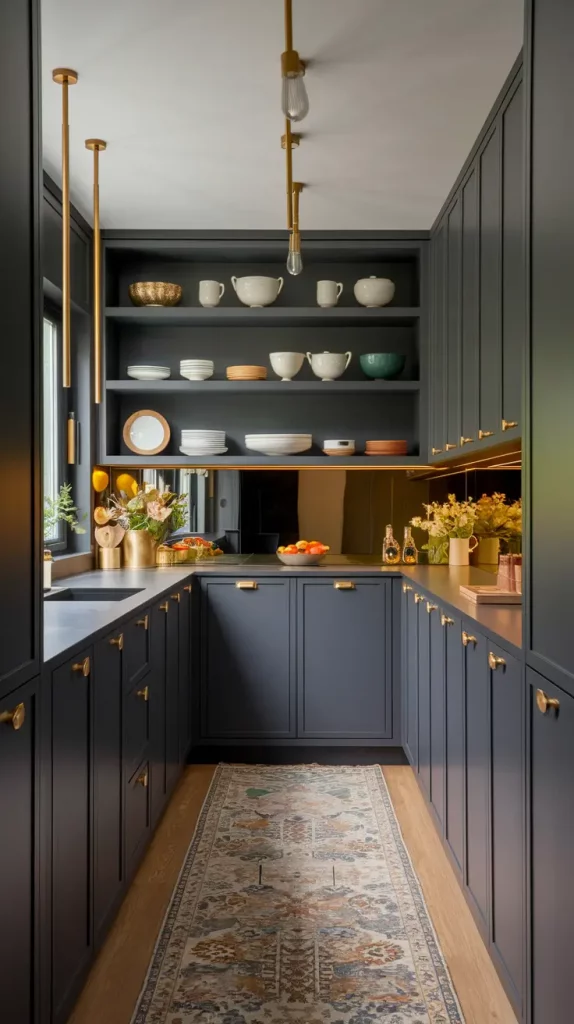
Dark lower cabinets paired with open upper shelves or mirrored walls create openness. A long runner rug adds comfort, while narrow pendant or track lighting provides sufficient illumination without crowding. Sliding pantry doors and recessed appliances free up space.
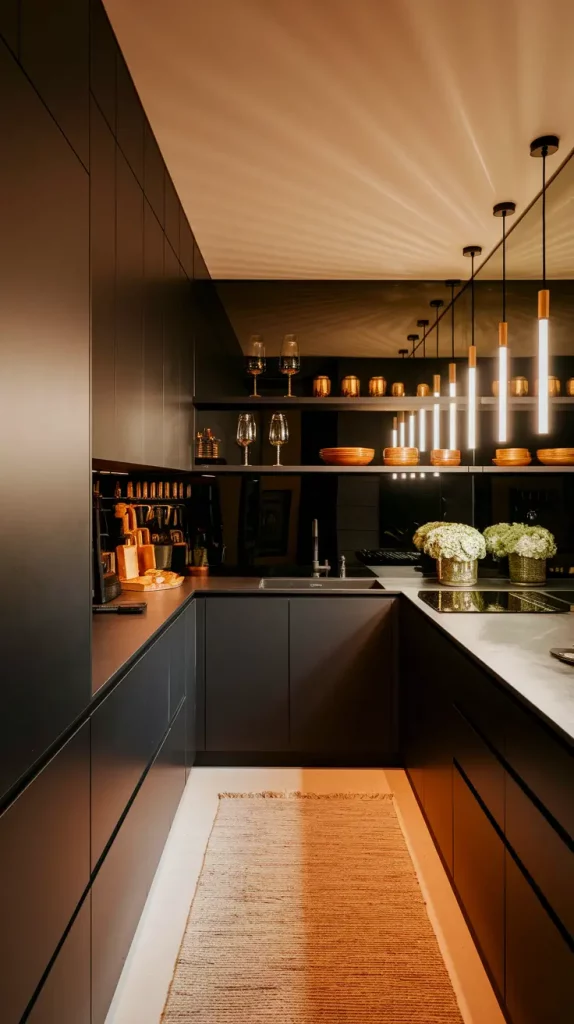
A historic brownstone galley kitchen with graphite cabinets, gold hardware, and a checkered backsplash felt luxurious despite its size. Real Homes recommends glossy cabinets in small spaces to reflect light, a technique I’ve found effective. Matching ceiling and wall colors can amplify drama and cohesion.
Hardware Choices That Elevate Dark Kitchens
Small details like hardware dramatically influence a dark kitchen’s style. Whether matte black, vintage brass, or polished chrome, cabinet handles and faucets can refresh the space instantly.
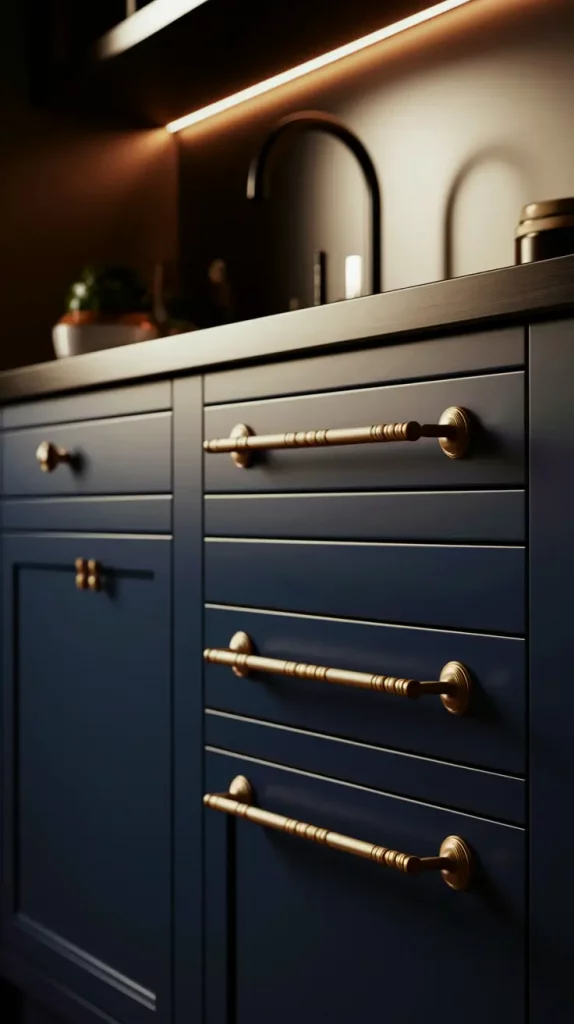
I favor unlacquered brass, antique bronze, or knurled steel for their timeless appeal and patina over time. Coordinating faucet, lighting, and cabinet hardware materials unify the design. Bold, sculptural hardware pieces can serve as artistic focal points.
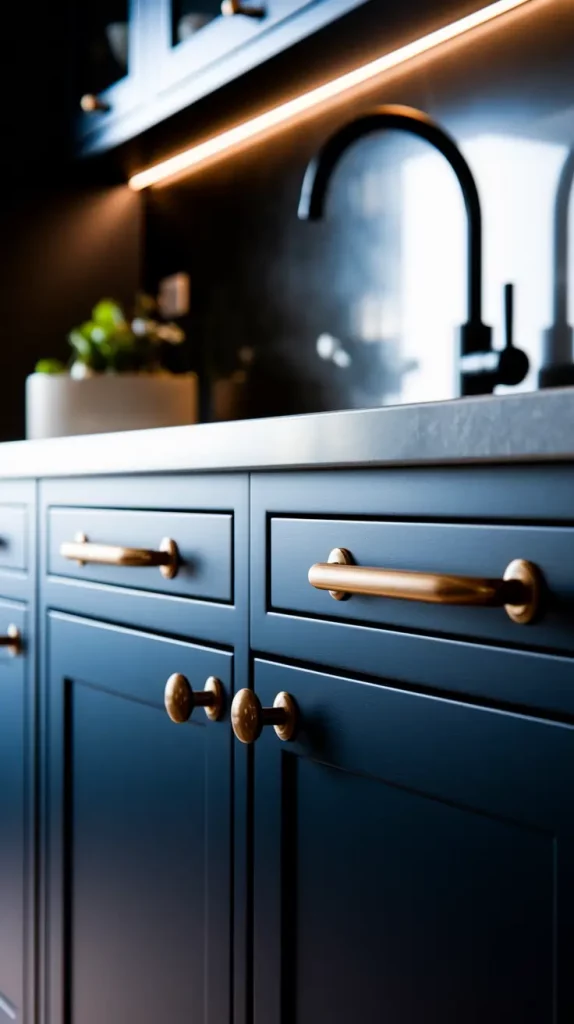
Leather-wrapped brass handles in a navy kitchen exuded luxury. Architectural Digest notes statement hardware is a rising trend, and I’ve embraced it in recent projects. Hidden finger pulls or hardware in unexpected places create sleek, minimalist designs-proof that beauty lies in the details.
Eye-Catching Faucets and Sinks for Dark Kitchens
Faucets and sinks have evolved into key design elements in dark kitchens. Large gooseneck faucets paired with matte black or colored sinks complement moody aesthetics perfectly.
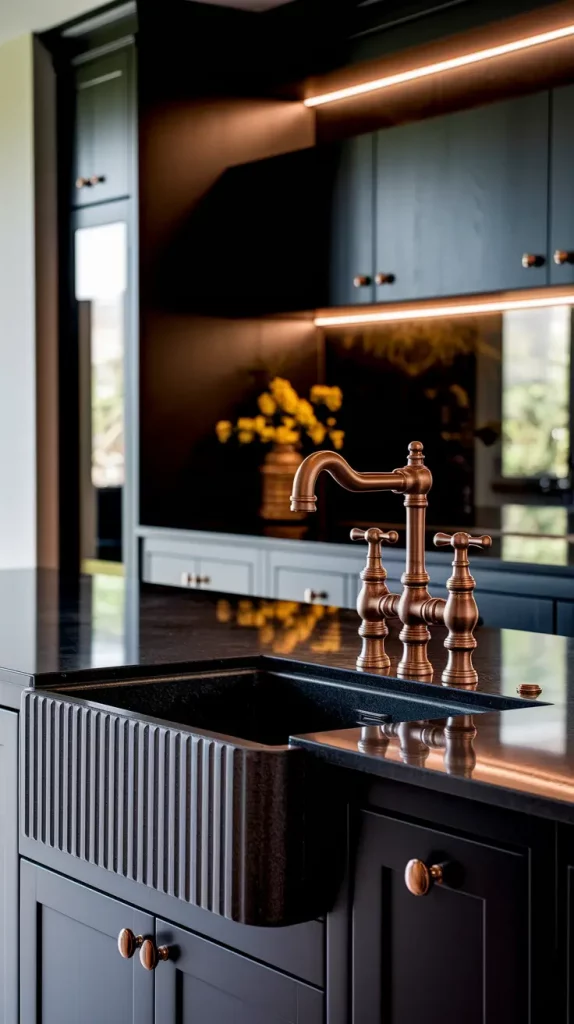
I often select black or gunmetal sinks with matching faucets or brushed brass for warmth. Apron-front sinks, industrial sprayers, and sculptural forms enhance both function and style. Dark granite or quartz composite undermount sinks keep countertops tidy and elegant.
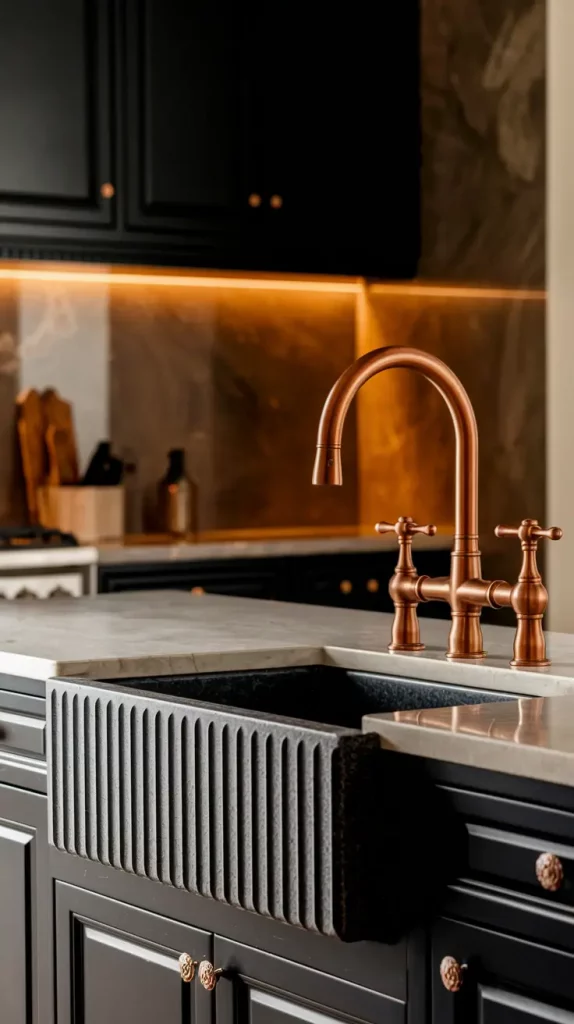
A recent project featured a fluted stone sink with a copper bridge faucet, a combination that drew admiration. Elle Decor highlights sculptural hardware as a luxury trend, underscoring its role in unifying kitchen design. Adding filtered water taps or touchless technology can further modernize the space.
Ceiling Treatments That Add Drama and Depth
Ceilings often go unnoticed but can dramatically enhance dark kitchens. Considered the “fifth wall,” ceilings offer opportunities for architectural interest, texture, and contrast, elevating the entire room.
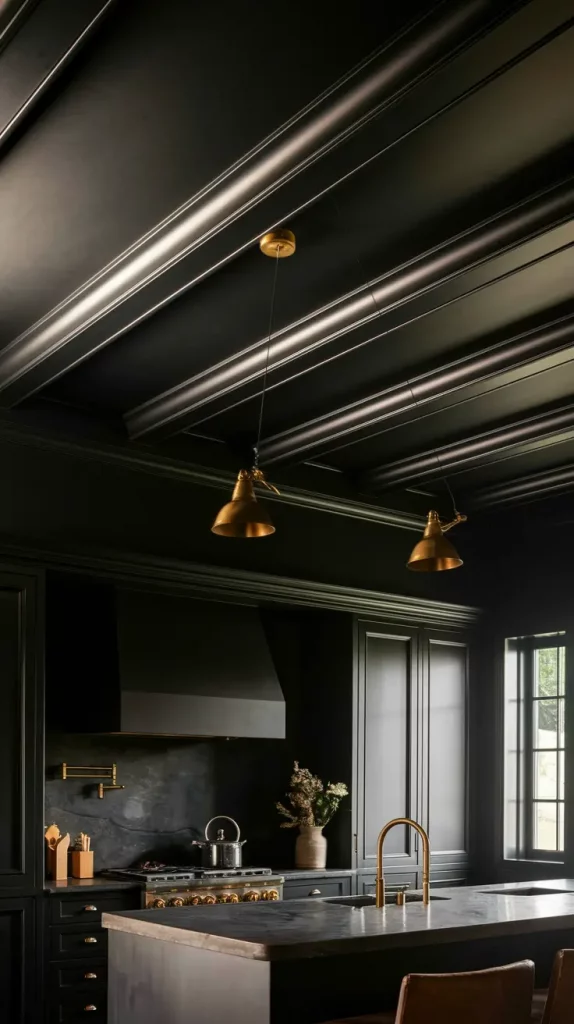
Coffered ceilings in dark tones, exposed stained beams, or tongue-and-groove panels add texture and height. Matte black ceilings with integrated lighting create a clean, modern look. Brass or black iron chandeliers and metallic ceiling tiles introduce richness from above.
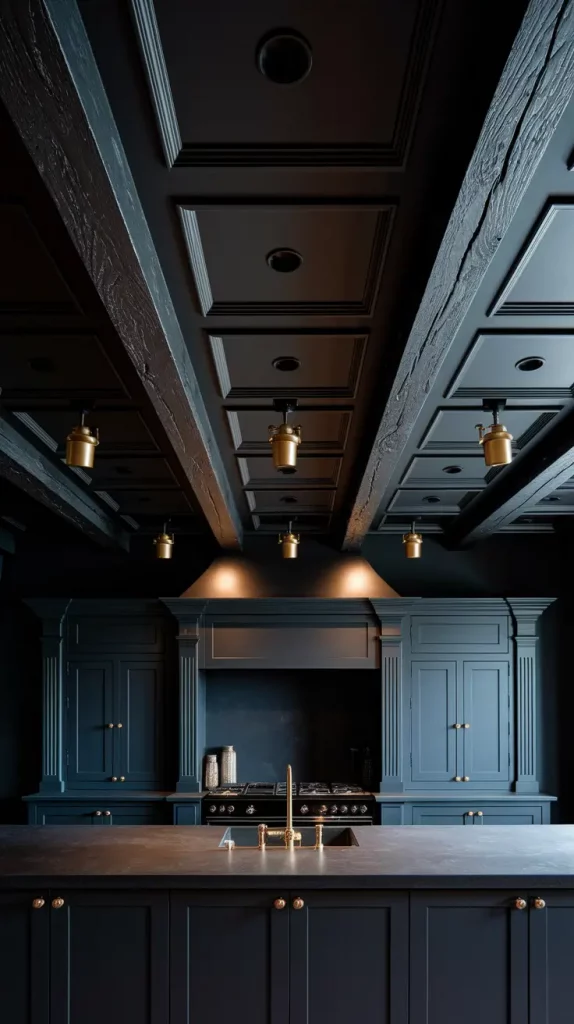
A favorite installation featured a deep green ceiling with ribbed edges and antique bronze lighting, enveloping a simple kitchen in warmth. Veranda notes ceiling treatments enhance luxury and spatial perception. In smaller, dim kitchens, dark ceilings can create cozy, unified spaces-subtle yet impactful.
Ensuring Your Dark Kitchen Stands the Test of Time
While dark kitchens are fashionable, longevity is key. I advise blending contemporary accents with timeless materials and designs to ensure your kitchen remains fresh and relevant for years.
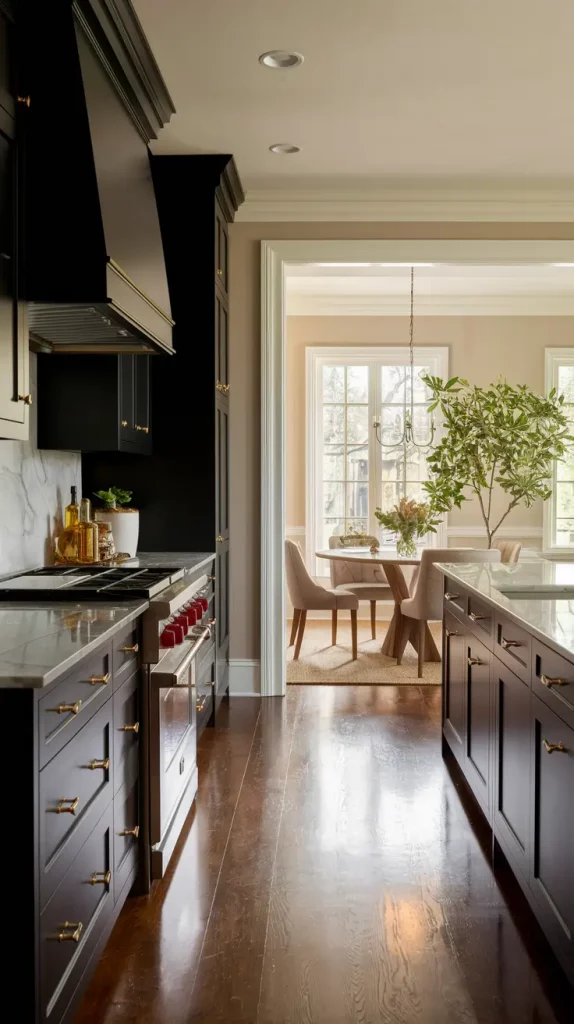
Classic elements like solid wood cabinetry, neutral stone countertops, and warm-toned hardware form a durable foundation. Avoid over-theming; instead, use bold colors sparingly, paired with simple shapes and soft backsplash patterns. Studio McGee wisely states, “Your kitchen should show your personality, not just follow the latest trends.”
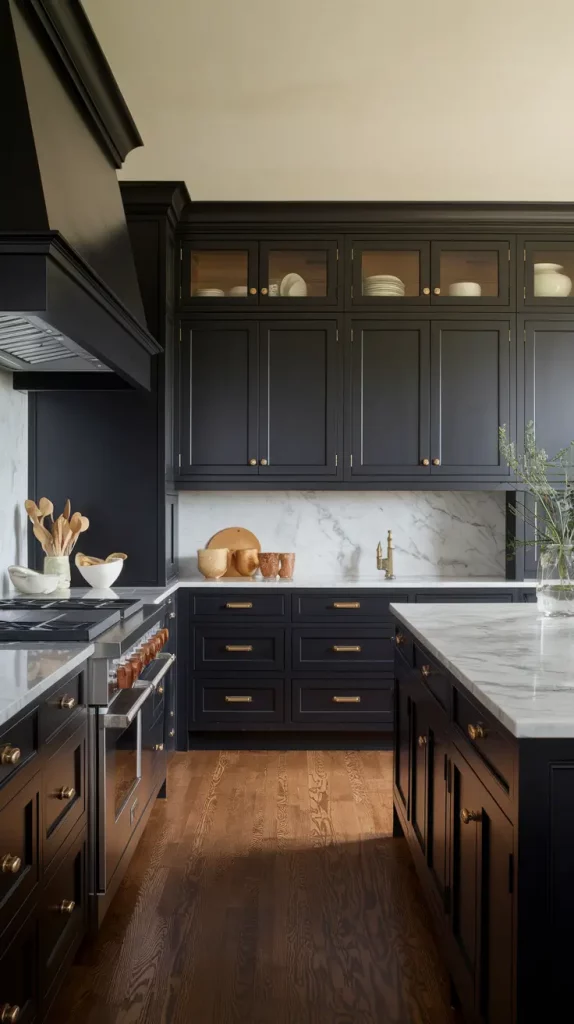
In a timeless project, black shaker cabinets, unlacquered brass pulls, and honed marble countertops continue to impress. Incorporating antique-style lighting, neutral walls, and adaptable storage ensures your kitchen remains stylish and functional.
Final Thoughts
Choosing a dark kitchen reflects confidence, creativity, and refined taste. Regardless of your style, deep hues can imbue your kitchen with warmth and individuality. I hope these ideas inspire you to select the perfect paint colors, lighting, decor, and hardware to craft a space that feels uniquely yours. Have a favorite dark kitchen style or a project to share? Leave a comment below and join the design conversation!