theFASHIONtamer Where Style Meets Space, Effortlessly
 The first time you slip into Popilush’s Shapewear V‑Neck Midi Dress, the fabric greets you — a cool, slightly dense stretch that smooths without feeling like armor. It drapes close to the body,contouring quietly as you move; the long sleeves settle flat at the wrist and the V‑neck sits open enough to feel unstudied. You notice the seams lying smooth along the sides and through the waist, the built‑in shaping offering a gentle compression rather than rigid support. As you walk,the hem keeps a steady line; when you sit the knit relaxes into soft folds,revealing a moderate visual weight that reads polished more than precious.
When you first lift it out of the bag what the silhouette and sheen tell you
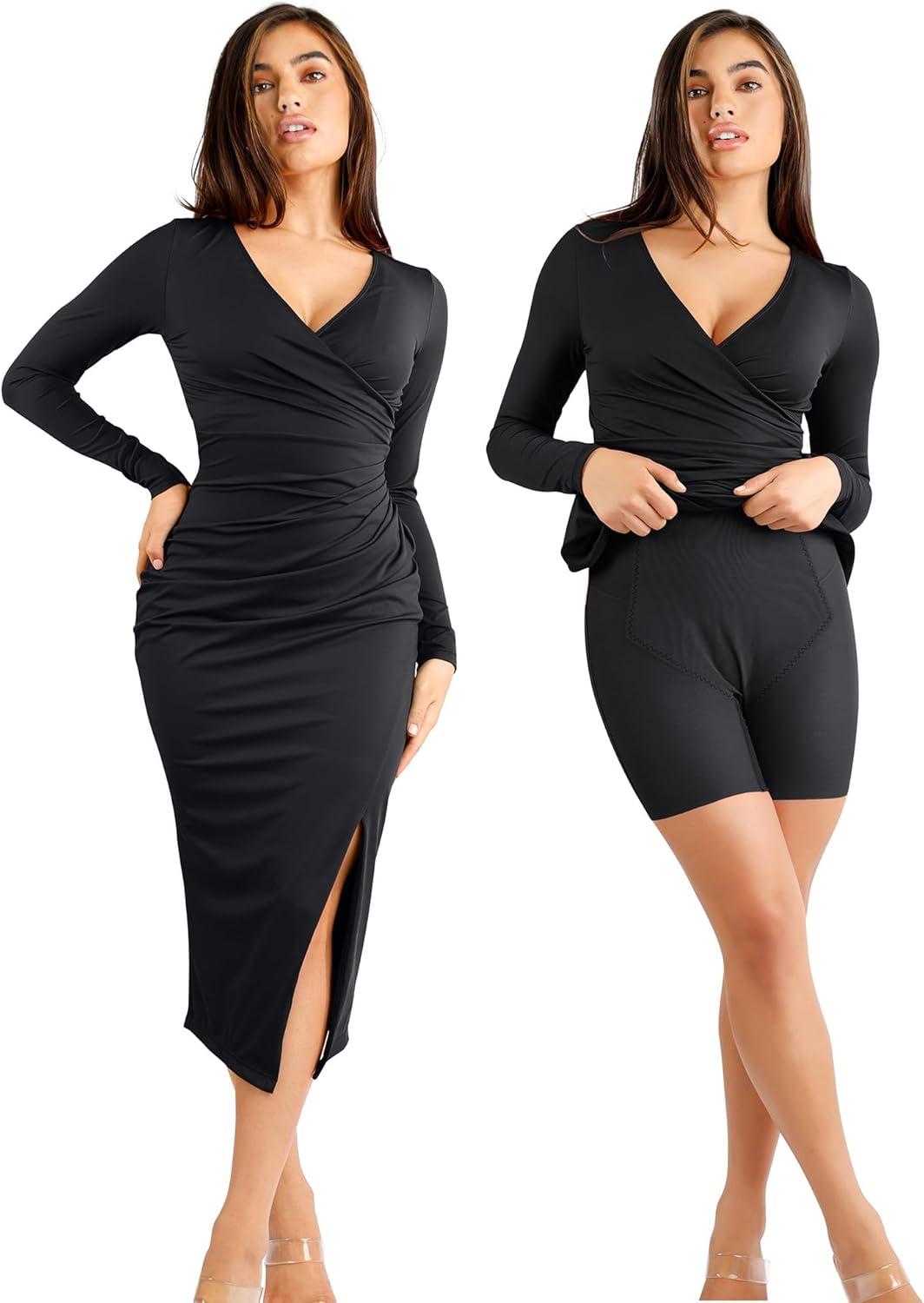
When you first lift it out of the bag you get an immediate read on shape: the dress keeps a tidy, tapered line from shoulder to hem rather than collapsing into a puddle, and the long sleeves hang straight enough to suggest a close sleeve fit. The V at the front settles into a clean point rather of folding over, and a slightly firmer band through the midsection is visible as a smoother panel against the rest of the fabric—small contouring hints that show where the garment will press and where it will drape. Seams lie flat against the surface, and the skirt drops with a steady, body-skimming fall rather than a wide sweep.
The sheen is directional and modest, catching light across curves more than across flat planes; as you tilt the dress, highlights appear along the center front and the tops of the sleeves while the sides read more matte.That play of light makes it easier to see where the fabric will reflect tension—at the bust and hips,in most cases—versus where it will lie smooth along the torso. You find yourself smoothing a sleeve or shifting a seam out of habit, and the way the fabric relaxes after those small adjustments gives a quick sense of how the dress will settle once on the body.
What the fabric feels like under your fingertips the stretch and the hidden lining
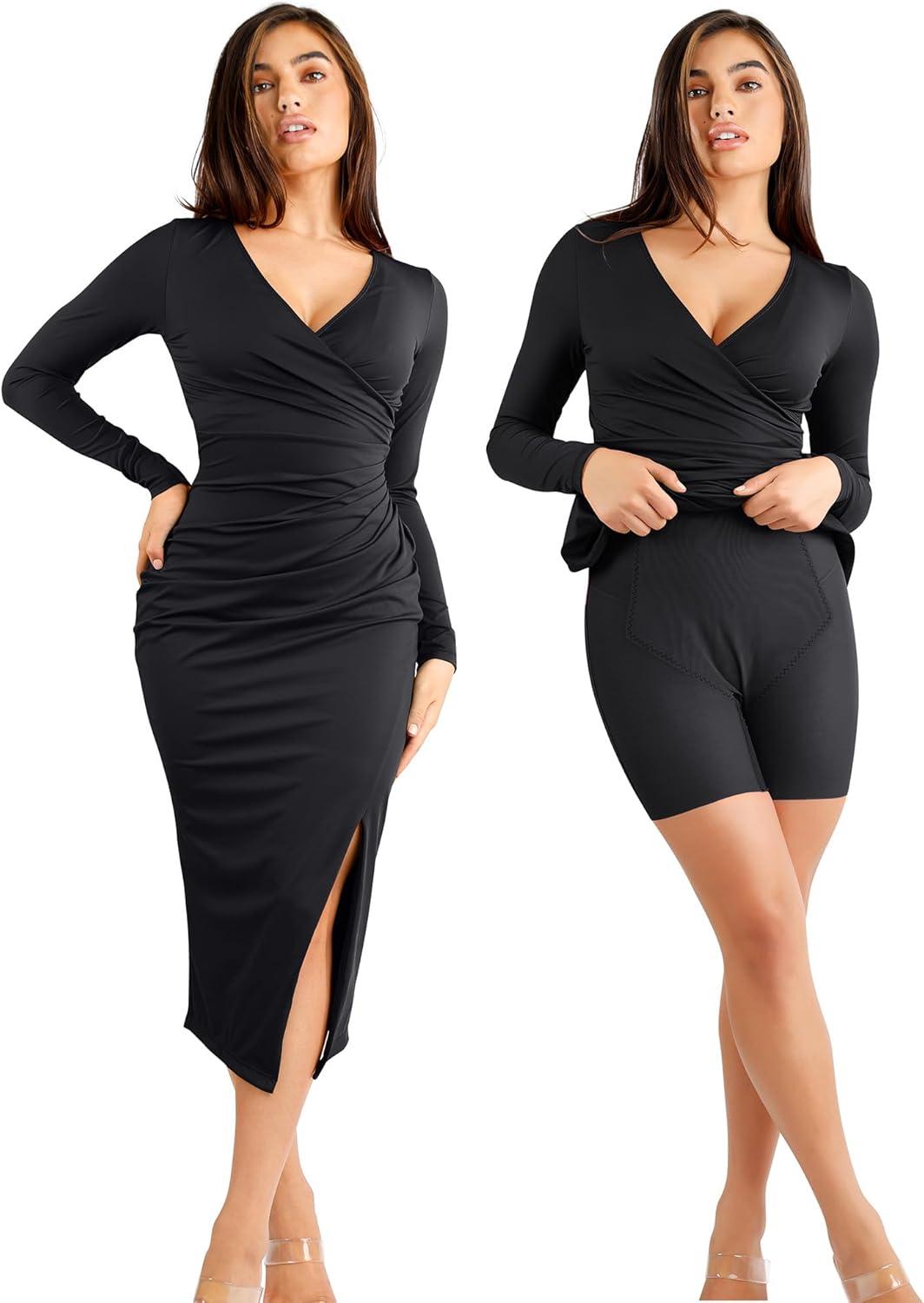
When you slide your fingertips over the dress, the first impression is of a smooth, slightly cool surface that gives under pressure.Pressing the fabric between finger and thumb meets a gentle, elastic resistance — it stretches, then retracts with a soft snap-back — and the pull is more noticeable across the bodice than along the sleeve. Running your hand along a seam or over the skirt you can feel how the knit flows; the texture is not coarse, but it isn’t completely slick either, so your fingers register both the weave and the underlying structure as you move them across the garment.
The moment you probe a little deeper you notice the hidden lining. it sits quietly under the outer layer, smoothing the surface and giving a faintly different tactile note: a sleeker, slightly more satiny glide where the lining covers the inside. In places where internal panels or reinforcement exist,your fingertips pick up a firmer,flatter plane — not a hard edge,but a subtle change in tension and thickness. As you adjust a sleeve or smooth the waistline mid‑wear (a habit you’ll find yourself doing without thinking), the lining shifts against your skin and sometimes creates a soft tug before settling back, which is most apparent when you bend or twist.
Over the course of wearing the dress for a while, the stretch evolves in small ways: it relaxes a touch where you move most, and the lining tends to stay put, maintaining that steady, slick beneath-the-surface feel.For some movements your fingers will notice the fabric warming and easing, for others the rebound remains firm enough to remind you there is a second layer working quietly inside.
how the V neck and sleeve line frame your shoulders and chest as you wear it
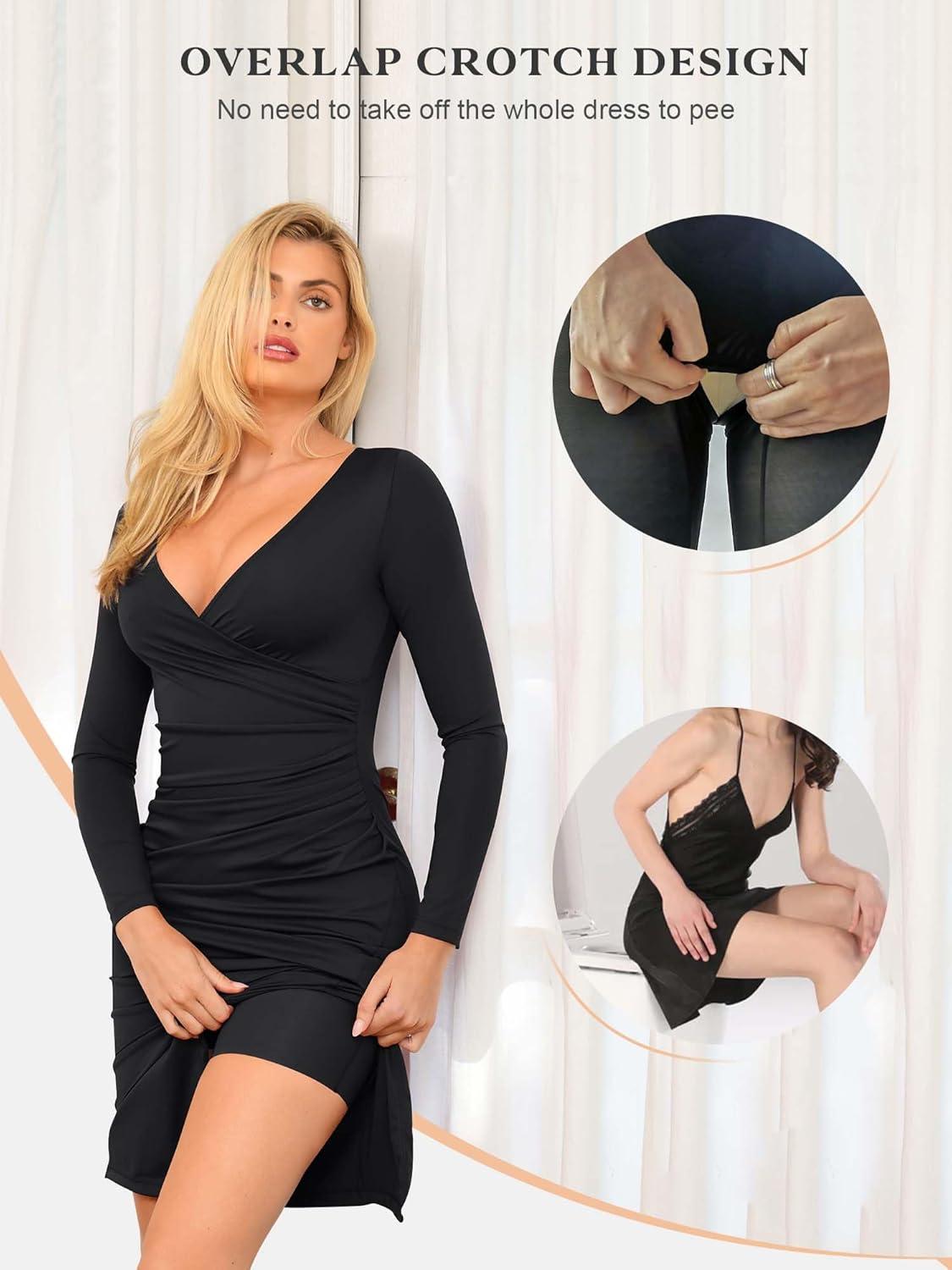
As you put the dress on, the V-neck settles against your sternum and collarbones, creating a downward visual line that centers attention on the middle of your chest. The neckline can lie flat or open a little depending on how you hold your shoulders; when you lift your arms or reach forward the V softens and the edges may gap momentarily before settling back. The built-in smoothing underneath the bust keeps the surface beneath the V relatively even, so the cut reads as a clean line rather than a series of layers as you move through a room.
The sleeve line traces from the shoulder seam down the arm, marking the shoulder edge more distinctly than an unstructured sleeve would. The seam often sits close to the shoulder joint so the sleeve frames the top of your arm and the upper chest together; when you raise your arms the fabric pulls across the upper chest and the V can narrow slightly, while lowering your shoulders tends to make the neckline appear wider. Small, habitual adjustments—smoothing the shoulder seam or tugging a sleeve into place—happen naturally as the dress responds to posture and movement.
Where the built in shaping sits on your waist and hips and how the hem falls on your legs
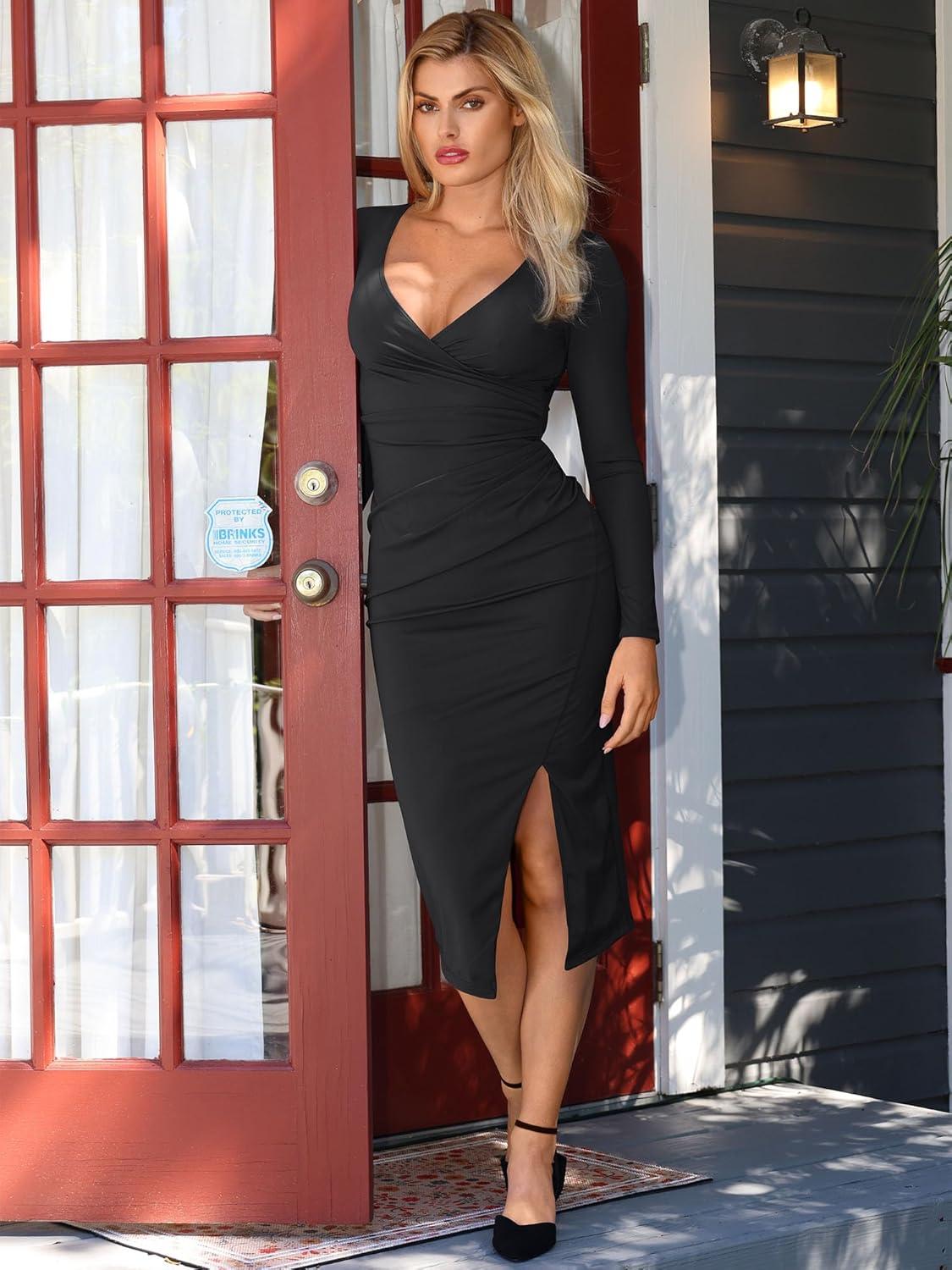
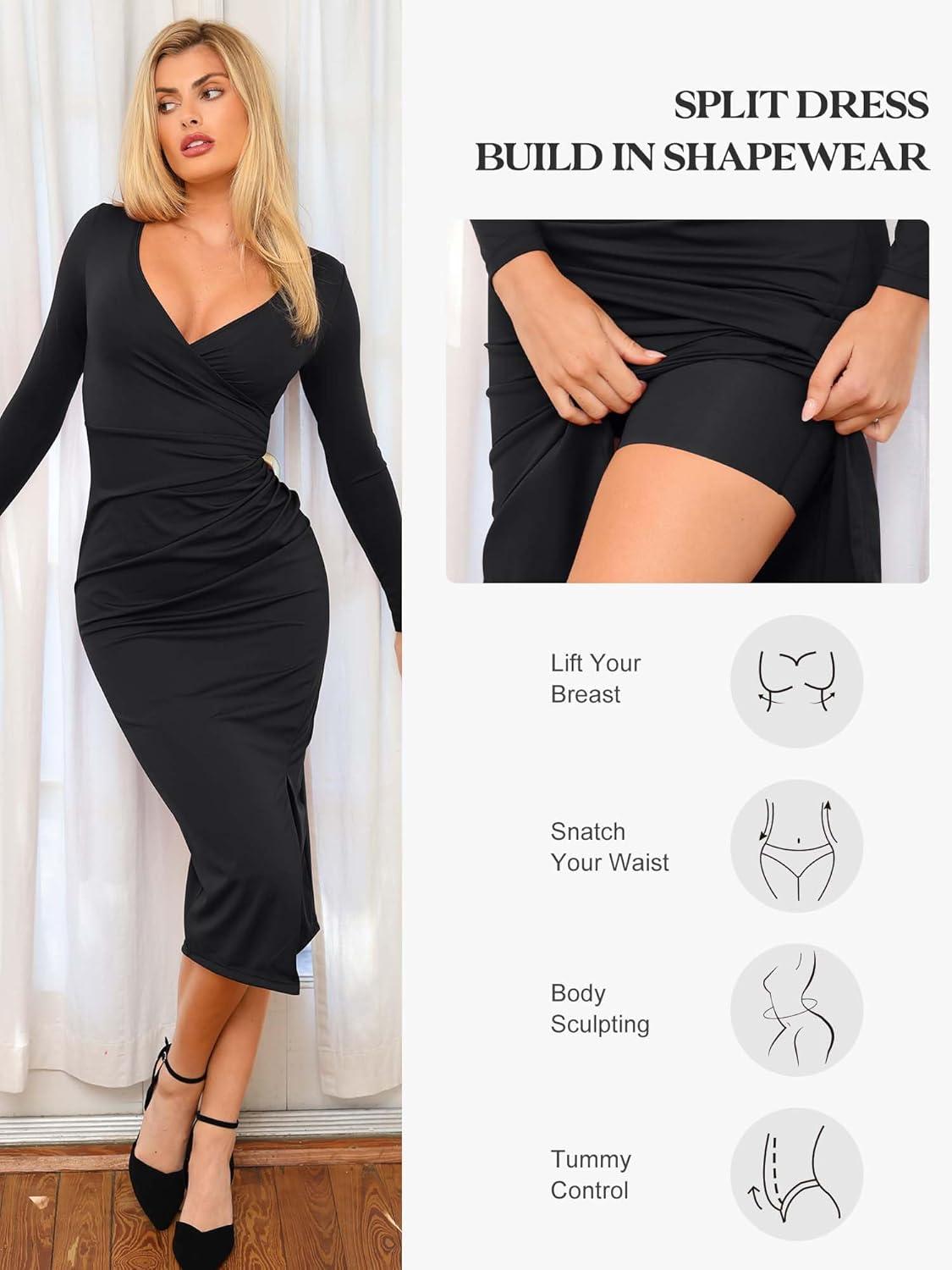
When you step into the dress the built-in shaping settles against your torso so that it cups the natural waistline rather than sitting high under the ribs.The compression feels focused around the waist and the upper part of the hips; as you stand the fabric smooths the hip shelf and the seam lines sit close to the contour where your waist transitions into your hips.You may find yourself smoothing the area with your hands after sitting, since those seams and panels shift a little as you move from standing to sitting and back again.
The midi hem typically reaches around mid-calf when you’re upright, skimming the lower part of your shin and moving away from the ankle. As you walk the hem swings and can reveal more of the calves in motion; when you sit it rides up to just below the knee and sometimes creases slightly across the front of the thighs. Over the course of wear the shaping and the hem interact — a deep breath, a long stride or a quick turn will subtly change where the shaping exerts pressure and how the skirt drapes over your legs, so you’ll notice small adjustments rather than dramatic shifts.
How it moves with you when you sit stand walk or take a turn on the dance floor
When you lower into a chair the dress settles around your hips and thighs rather than staying rigid; the skirt will frequently enough tuck slightly at the lap, and you’ll find yourself smoothing the front once or twice as seams shift. The long sleeves can ride up a little as you bend your arms, nudging the cuffs toward your forearms, and the back of the bodice may pull down a touch as you lean back. These small shifts happen quietly and tend to redistribute rather than create sharp bunching, so the silhouette reads as continuous even as the fabric rearranges itself.
As you stand and start to walk the skirt follows each step, with the hem swinging a short distance on each stride and the side seams tracking up and down with your hips. A quick turn on the dance floor makes the skirt flare outward briefly, revealing the movement in the fabric and then settling back into place; deeper or longer strides can tug at the thighs so you might hitch the hem or smooth a seam once you stop. throughout, you catch yourself doing familiar little adjustments—smoothing the torso, shifting a sleeve, arranging the hem—small, unconscious moves that re-center the dress after motion.
How this dress lines up with what you expect and the practical limits you might face
On first wear the shaping layer reads as immediate smoothing around the midsection, and the cut settles into a defined silhouette that stays put through small movements. As the hours pass the garment tends to relax slightly where the body bends — seams can shift toward high-movement zones and the hemline may rise a finger-width when sitting. Sleeves frequently need a quick smooth at the wrist or upper arm after reaching for something, and the V-neck shows a little give when leaning forward, changing how the neckline sits against the chest. Walking brings the fabric’s stretch into view; the dress moves with the stride but keeps a close profile, so steps feel measured rather than roomy.
Practical limits become most apparent over time: the interior shaping can migrate with extended wear, prompting the occasional habit of smoothing the torso or adjusting side seams, and ventilation feels reduced in periods of sustained activity, so warmth accumulates more than with looser garments.The silhouette maintains its intent but trades a degree of ease for that fitted look, producing subtle pulling at high-tension points for some wearers and gentle bunching where the body folds. Small, repeated adjustments — a sleeve tug, a hem re-fall, a seam repositioning — are common behaviors while wearing this piece.
View full specifications, sizes and color options on Amazon
what dressing bathroom breaks and packing it into a suitcase look like for you
When it comes to bathroom breaks, the dress behaves like a single unit rather than separable layers. The shaping layer stays aligned with the outer skirt as the garment is moved, so taking it off or pulling it down is usually a coordinated motion — two hands, a brief tug at the hem, and a little smoothing once it’s back on. Afterward, there is often a moment of unconscious fiddling: sleeves shifted a fraction, seams smoothed flat over the hips, the V of the neckline nudged into place. For some wearers that sequence is quick and almost automatic; for others it can interrupt the rhythm of a long event, with the built-in layer moving slightly relative to the outer fabric and needing readjustment.
packed into a suitcase, the dress shows the same tendency to behave as a single piece. It compresses predictably — sleeves and bodice flatten, and the shaping panel can pick up soft creases that usually relax once the dress is hung or worn. Rolling reduces bulk but can accentuate lines along seams; folding across the waist stores more compactly but leaves a sharper fold point that often requires a few extra passes of the hand to settle. Over short trips the garment tends to return to its worn silhouette with a little time and movement; after longer transit,there’s a small,familiar ritual of smoothing and repositioning before stepping out of it again.
Its Place in Everyday Dressing
In regular routines the Popilush Shapewear Dress V Neck Formal Wedding Midi Dress Built in Shapewear for Women Long Sleeve Bodycon Dress eases into the wardrobe, moving from something noticed to something reached for. Over time it reveals comfort rhythms: it yields a little where movement is constant, warms with the body, and softens at the edges with repeated wash and wear. In daily wear the shaping becomes an unspoken part of getting dressed and the fabric’s tone quiets into the background of outfits. Small habits form around slipping it on and folding it away, until finally it settles.