theFASHIONtamer Where Style Meets Space, Effortlessly
 You step into the Floerns Contrast Trim Tweed Mini Dress in navy and the first thing you notice is the fabric’s tactile nubbiness — more crisp than soft, with a woven weight that keeps the shape rather than draping like a slip. As you move, the bodice seams sit clean across the shoulders and the skirt swings with a measured, slightly ample motion that makes each step feel purposeful. Sitting down, the hem eases against your thighs with a gentle resistance and the pockets create a small, lived-in tug at the hips when your hands find them. Under warm indoor light the navy reads deep and the contrast trim gives the edges a neat definition, a quite structure you notice as you shift from standing to sitting.
A clear first look at the navy tweed mini and how it presents on your frame
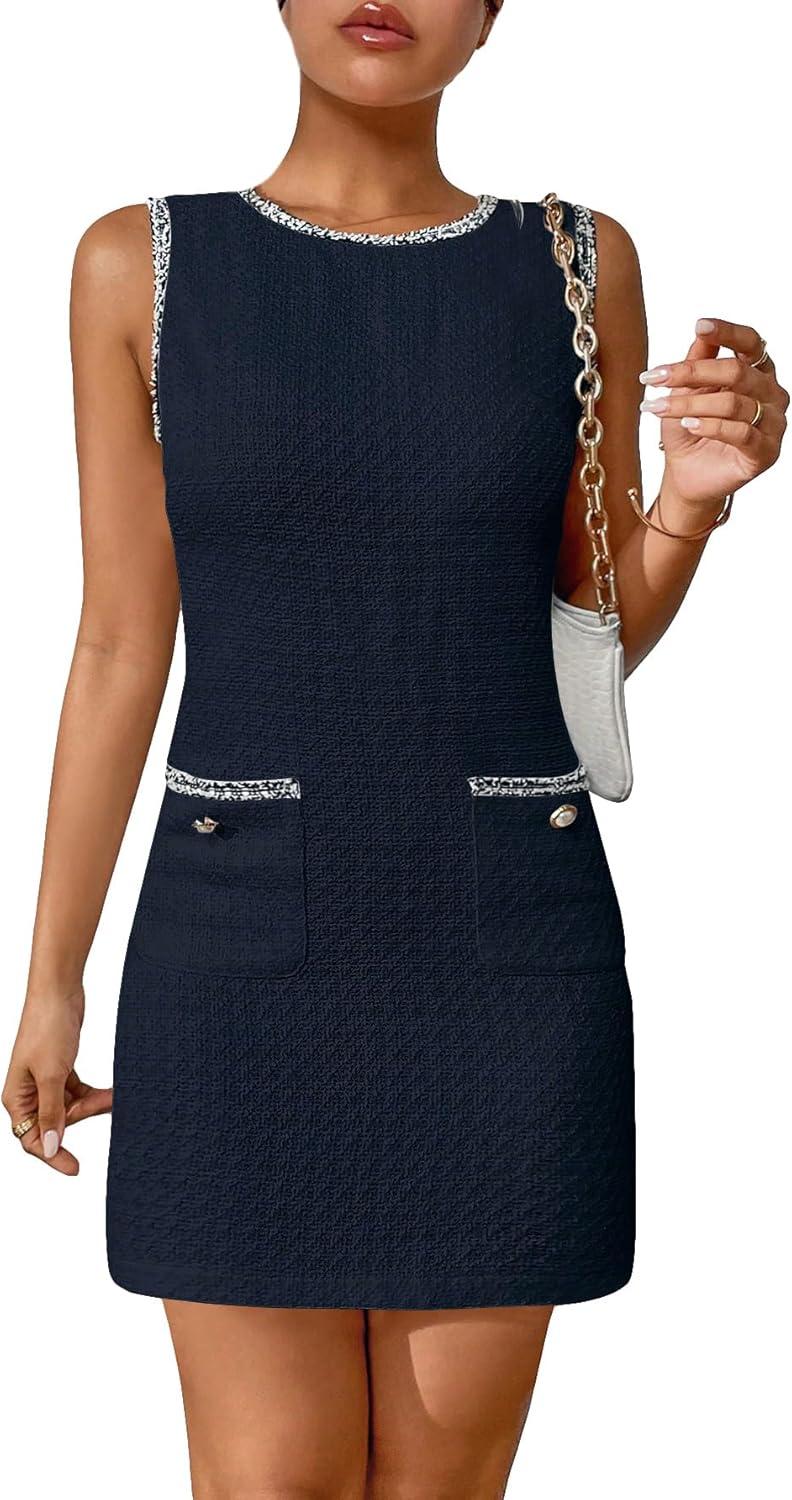
When you first step into the navy tweed mini, it settles into a tidy, slightly boxy silhouette that frames your shoulders and falls short on the thigh.The contrast trim outlines the neckline and armholes in a way that visually clips the edges, so your eye traces those lines before moving down.As you stand, the dress keeps a structured line from the bust to the hem; it doesn’t cling so much as skim, and the pockets sit as quiet bulges at the front panels — noticeable when you slide a hand in, less so when you let your arms hang.
Small habits reveal how it behaves on your body: you find yourself smoothing the hem after you sit, tugging at the armholes when you raise your arms, or shifting the shoulder seams back into place after a few steps. When you walk, the skirt moves with restrained swing rather than full flare, and the trim helps the edges resist curling. Sitting or crossing your legs can pull the hem up slightly; standing again usually restores the original line.In short moments of wear the piece reads as composed and structured, with ordinary movement and adjustments shaping how it presents on your frame.
The tweed,contrast trim,and texture you feel when it brushes your skin
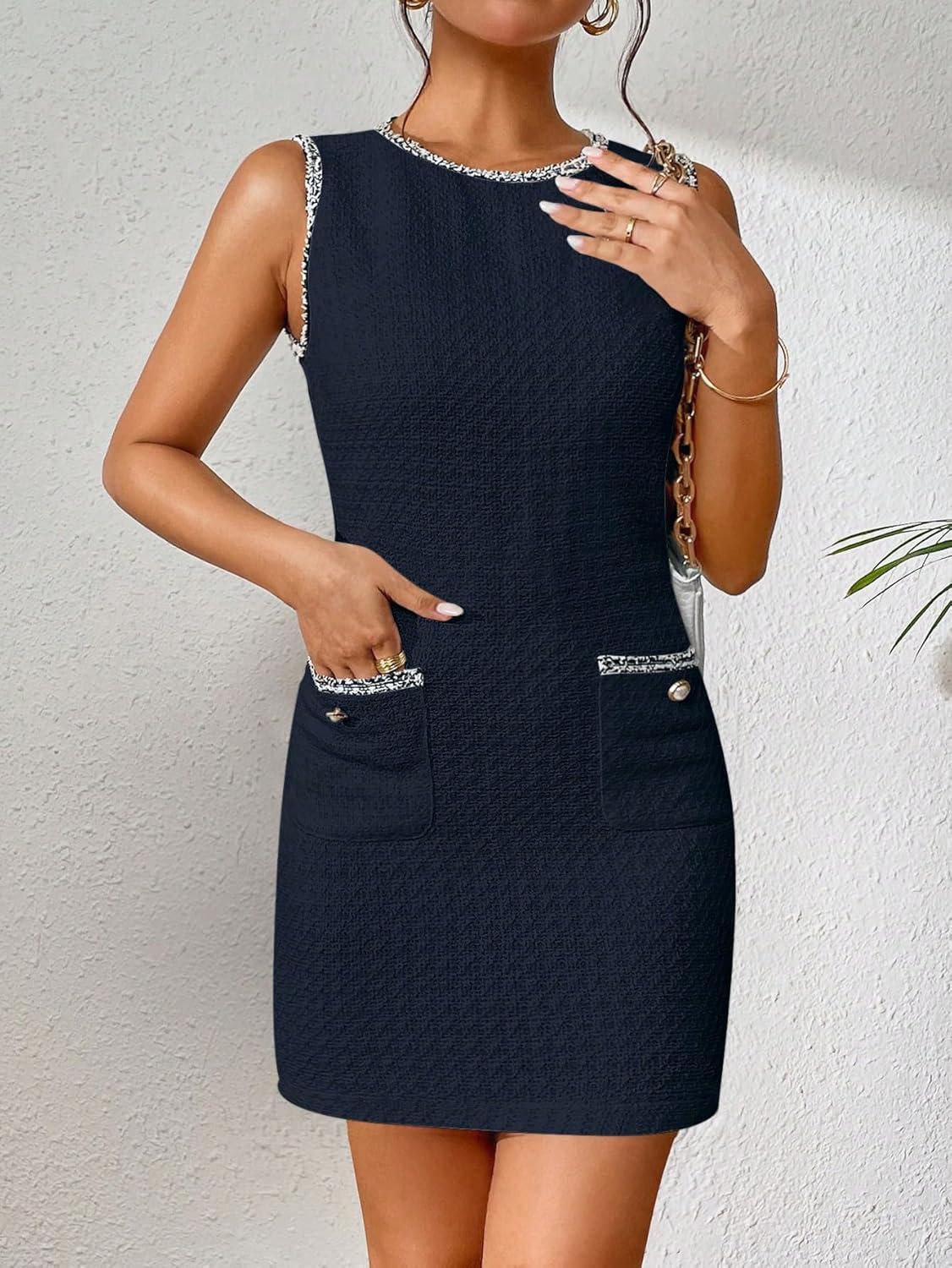
When you first slide the dress on, the tweed greets your skin with a faintly nubby weave that you notice most at the neckline and the tops of your arms. The contrast trim along the armholes and collar feels noticeably diffrent — smoother, a touch firmer — so each time the fabric shifts you sense a clear change from the woven body to that clean edge. It’s the kind of texture that makes you aware of the garment’s construction: you’ll feel the trim lay flat against your collarbone and the tweed’s little raised threads brush the curve of your shoulder.
As you move, the sensations evolve. The skirt and bodice shift with your steps and breaths, the tweed brushing the skin in short, intermittent rubs rather than a constant drag. You may find yourself smoothing the trim or adjusting the seam at your hip out of habit when it catches for a moment; over an hour or so the weave tends to settle and the initial crispness softens slightly. In cooler air the weave can feel cool against exposed skin, while after a bit of wear the fabric warms and the contrast between the trim and tweed becomes more about edge and texture than temperature.
Where the cut and pockets fall on your silhouette
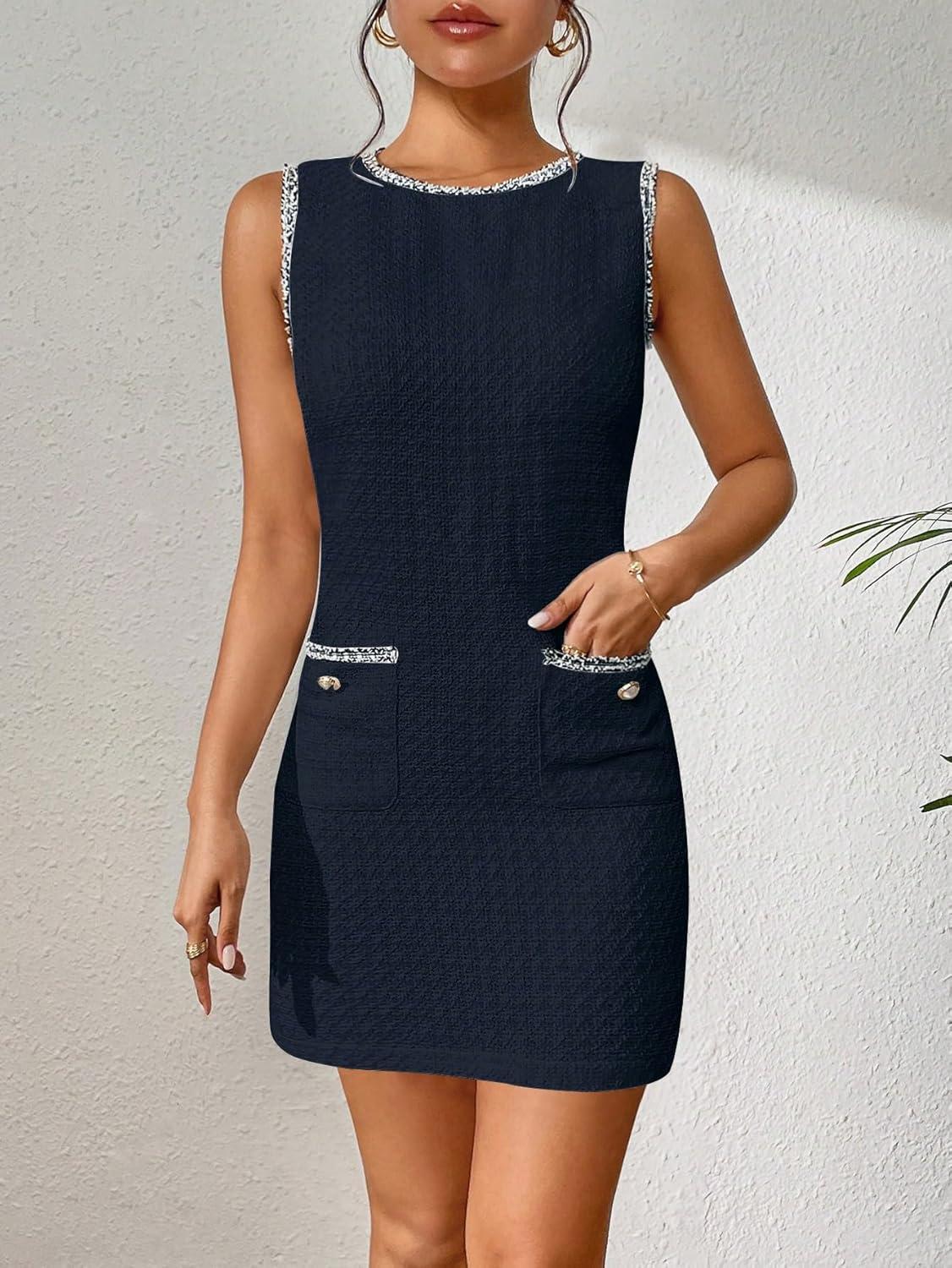
When you put the dress on, the cut settles so the hem falls well above the knee, leaving the lower thigh exposed and making the skirt portion read as a short, straight line across your legs. The waist is defined enough that the front panel where the dual pockets sit aligns roughly with your high hip to upper-thigh area; with your arms at your sides you’ll notice the pocket openings sit near where your hands naturally rest. The contrast trim follows those pocket edges, so the pockets register visually as narrow horizontal interruptions on the front of your silhouette.
Empty, the pockets lie fairly flat against the body, but they can create a subtle outward curve when you move or if you slip small items into them — the fabric will press and sometimes ripple, and you might find yourself smoothing the area or shifting seams with a fingertip. When you sit, the pockets tend to push forward slightly, changing how the front panel reads and briefly shortening the vertical line from waist to hem. These shifts happen in the moment: a speedy adjustment, a tug to flatten a seam, a habit of checking the pocket edge as you stand up.
How the XL measurements sit across your shoulders, bust, and hips when you stand
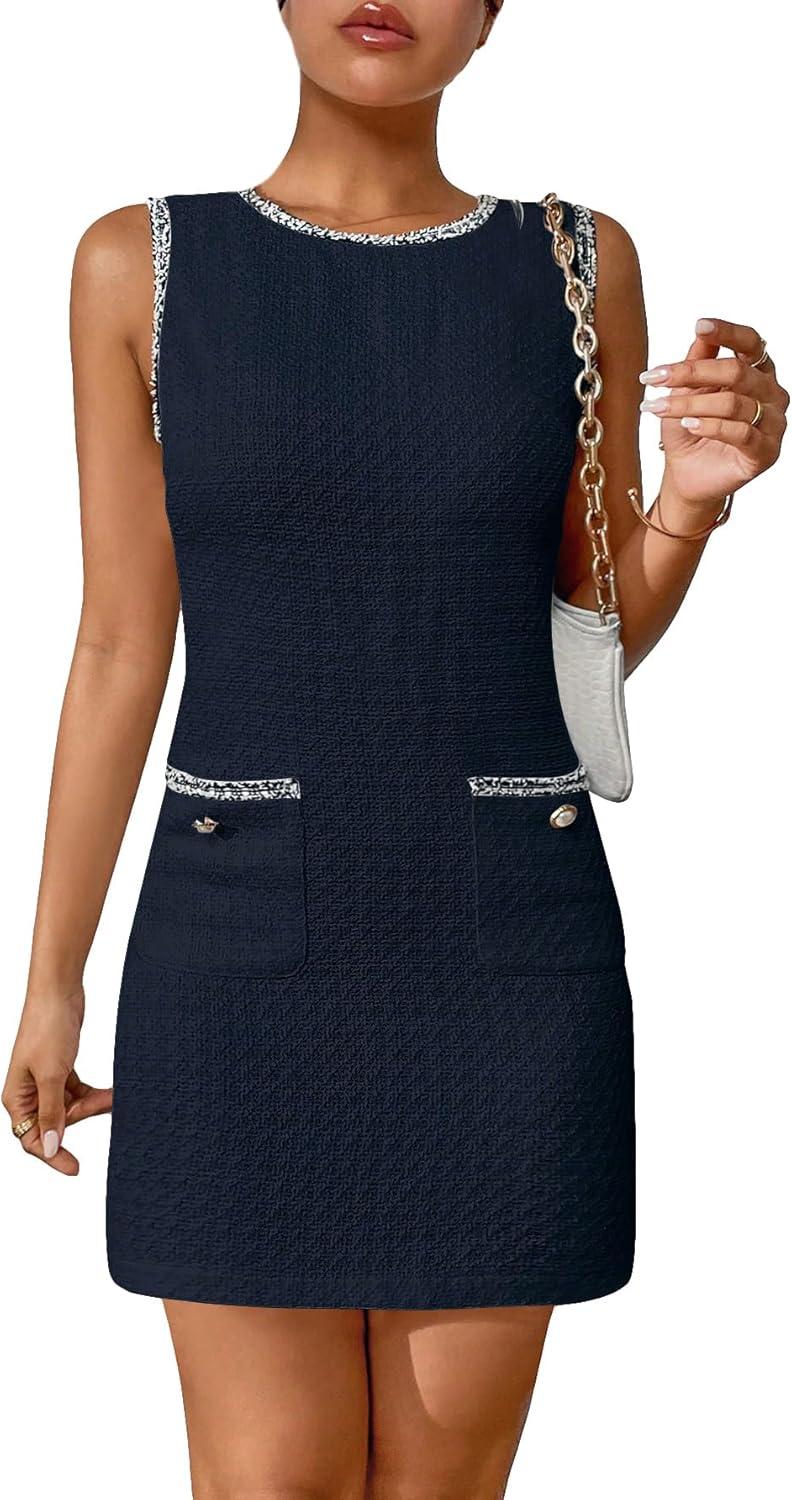
When you stand,the shoulder seams of the XL generally sit near the outer edge of your shoulders; the sleeveless armholes fall close enough that you’ll notice the trim tracing the arm opening. You may unconsciously hitch the straps or smooth the trim once or twice as you settle into a stance,and the fabric at the back can shift a little with that small movement,so the seamline doesn’t always stay perfectly still.
Across your bust the front panels usually lie relatively flat while you’re upright, with the textured weave showing minor contouring rather than sharp pulling. Vertical seams and the pocket placement influence how the material follows your shape,and you might find yourself smoothing the front from time to time as the tweed gives and relaxes. At the hips the hem and side seams hang straight when you’re still, though natural body sway or a slight step forward will cause the dress to shift a touch around the hip line — for some wearers that results in a small gap between the fabric and body on one side before settling again.
How the dress moves when you walk, sit, and reach
When you walk, the skirt section keeps a contained, rhythmic sway rather than fanning out. Each step sets the hem to follow your legs, so movement reads as a short, even swing; the textured surface gives a faint rustle as panels shift. Side seams and the contrast trim shift with your hips, and the pockets—empty or lightly filled—tend to bob a little with each stride, prompting an automatic hand-smooth now and then.
Sitting compresses the front of the dress and can pull the hem up a touch, so you’ll notice the fabric crease across the lap and the silhouette tighten where the body meets the seat.The bodice keeps its shape generally speaking, but you may find yourself smoothing the chest or adjusting the side seams after rising.Pockets lie flatter when you sit; anything carried in them becomes more conspicuous against your thigh as the fabric relaxes.
When you reach or lift your arms, the sleeveless cut lets you clear most movements without catching, though the bodice can inch upward a little and the armhole edges shift against the underarm. repeated overhead motions will cause the trim and shoulder seams to settle differently over time, and you may unconsciously tug the neckline or pat down the hem as the dress repositions itself.
How this dress lines up with your expectations and the realities of everyday use
How it lines up with expectations and everyday realities
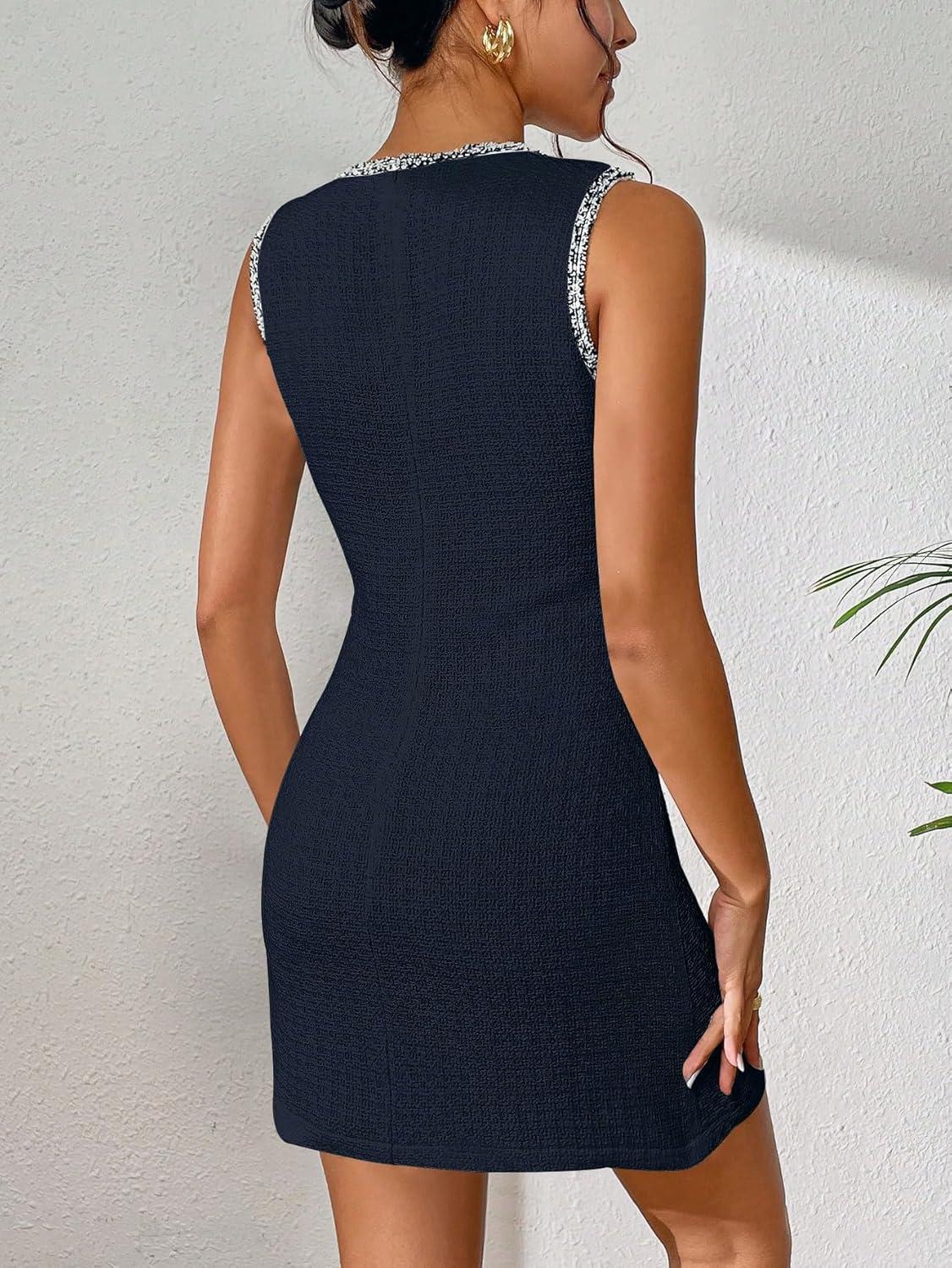
On first wear the dress reads as structured and tidy: the edges and pockets register clearly, and the silhouette holds its shape while standing.As movement enters the picture the fabric relaxes, the hem swings more freely and the fitted lines soften; shoulder seams can shift subtly, prompting an unconscious habit of smoothing the straps or shifting the armhole when reaching. The pockets sit flat when empty but tend to gape or pull at the skirt line once small items are inserted, which changes how the front falls and how the trim sits against the body.
Over the course of a day the garment displays a few predictable behaviors. Sitting flattens the front, producing gentle creases across the waistline, and the surface texture picks up lint in higher-friction areas. The lining keeps the interior from clinging at first, yet can feel warmer after extended wear in layered conditions. For some wearers the contrast edging remains crisp under artificial light but reads slightly different outdoors as the piece moves. These are tendencies rather than absolutes, appearing more in active moments than in stillness.
View full specifications, size and color options
Observed signs of wear after a day and how the pockets hold up with your belongings
After a full day of wear the tweed texture shows the kinds of, mostly subtle, changes that come with movement and contact. The weave softens where the fabric rubs against chair backs and handbag straps, and faint horizontal creases appear across the skirt at the points where hips and knees bend. The contrast trim generally keeps its shape, though edges where hands rest or smooth the dress can look slightly rubbed; a few loose fibers sometimes sit along seams near the armholes and pocket openings. There’s an occasional reflex to smooth the front or shift a seam after sitting, and the fabric responds by flattening a touch rather than puckering dramatically.
The pockets begin the day lying relatively flat against the front, but their behavior changes noticeably when filled. Small items such as a compact phone and a few coins create a visible outline and a gentle bulge that alters the mini silhouette; keys and coins can be heard faintly against the fabric when walking. Repeated hand use tends to make the pocket mouths relax slightly, so they can gape a little after several hours, yet the stitching around the pocket openings held firm in most observations. Items move within the pockets during sitting and standing, which sometimes prompts smoothing at the hip line; while the pockets keep everyday items on hand during short errands, their shallow profile means heavier or bulkier objects sit close to the outer fabric and are easily felt.
View full specifications and available sizes
How It Wears Over Time
The Floerns Women’s Contrast Trim Sleeveless Dual Pocket Elegant Tweed Mini dress Navy Blue XL has a way of easing into the corner of the wardrobe after a few wears, not dramatic, just familiar. Over time, the fit and feel loosen into movement; in daily wear the fabric relaxes and small tensions become less notable. As it’s worn, the piece shows mild signs of aging — softened edges and a quieter presence — and it slips into dressing as a routine option in regular routines. It settles into rotation and rests.