theFASHIONtamer Where Style Meets Space, Effortlessly
 Are you envisioning a kitchen that blends the cozy charm of rural living with the conveniences of modern life? This comprehensive guide explores a variety of rustic kitchen inspirations-from timeless farmhouse styles and clever DIY projects to the latest trends in rustic kitchen design. Whether you’re working with limited space, a modest budget, or simply want to refresh your kitchen’s ambiance, these ideas will spark your creativity.
Discover how to infuse your culinary space with warmth and authenticity using elements like weathered wood, inviting white cabinetry, or stylish green cupboards. Each concept is paired with a visual prompt to help you imagine your perfect rustic kitchen. Let’s dive in!
Inviting Rustic Kitchen Concepts to Revitalize Your Home
One of the most impactful ways to embrace rustic kitchen design is by grounding the space with natural textures and materials. Wide plank hardwood floors, shiplap walls, and open shelving instantly evoke a welcoming farmhouse vibe. This approach creates a sense of history and permanence, as if the kitchen has been part of the home for generations. To keep the look fresh and contemporary, pair these rustic foundations with sleek stainless steel appliances and matte black hardware.
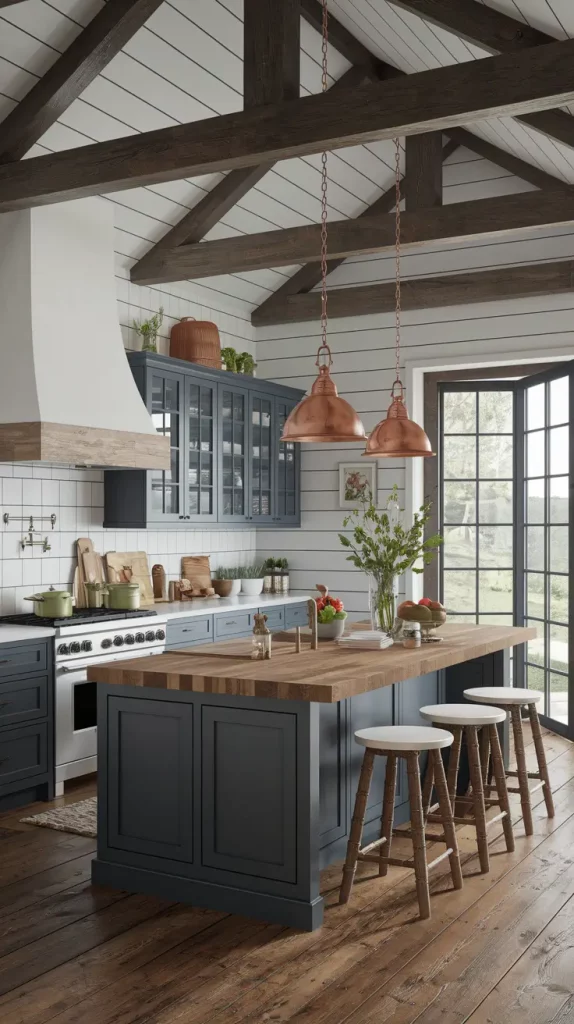
In one design, a freestanding butcher block island anchors the room, complemented by a dining table crafted from reclaimed wood and classic spindle-back chairs. Exposed wooden beams overhead highlight the rustic character, while a vintage brass chandelier and copper cookware hanging on hooks add subtle metallic accents. Glass-front cabinets reflect light and showcase cherished dishware, enhancing the kitchen’s inviting atmosphere.
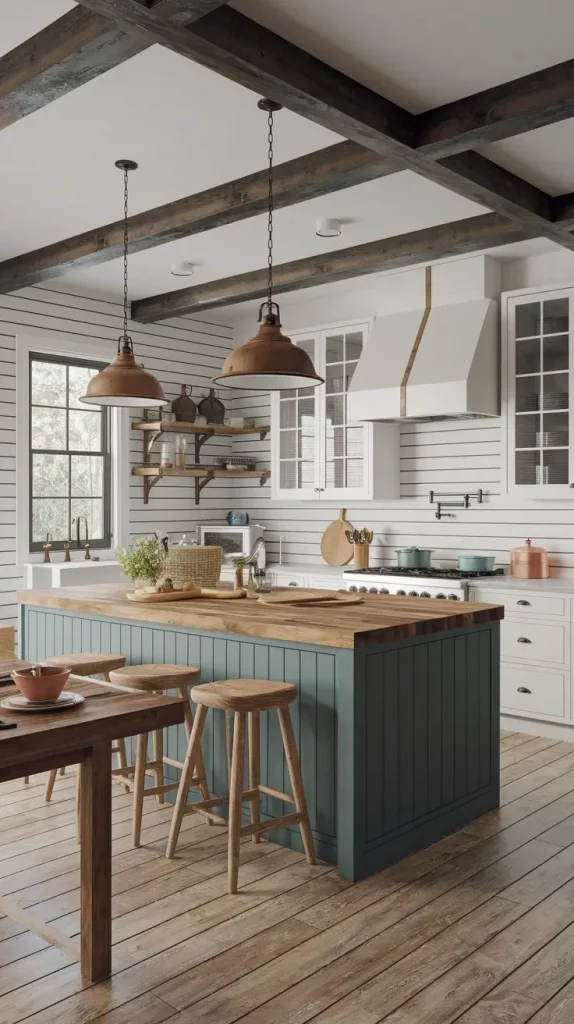
Adding tactile elements like linen curtains or handwoven rugs introduces layers of texture that enrich the space. Drawing inspiration from Southern Living’s recommendations, I favor earthy tones such as creamy whites, terracotta browns, and deep forest greens to cultivate a cozy, grounded feel.
A vintage-style stove in cream or rich green would serve as a charming focal point, balancing the rugged wood textures with a touch of nostalgic elegance.
Farmhouse Rustic Kitchens That Evoke Comfort and Tradition
For an authentic farmhouse-inspired rustic kitchen, nothing beats an apron-front sink paired with wooden countertops and beadboard cabinetry. These features conjure memories of simpler times and create a space that feels both functional and welcoming. Thoughtful layout and comfortable proportions are key to achieving this look without feeling cramped or overly formal.
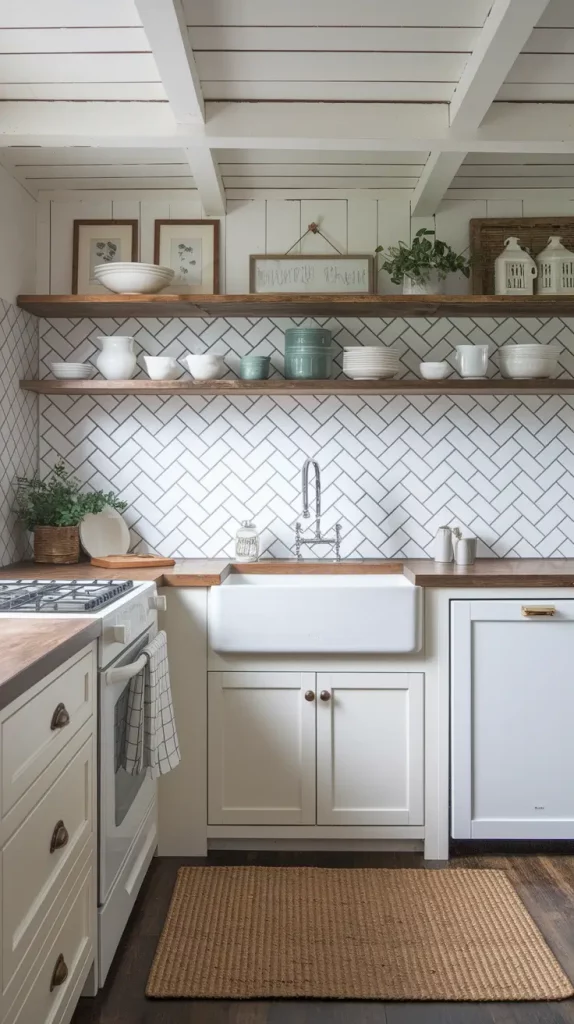
In one layout, a large farmhouse sink is flanked by soft-close drawers in an off-white finish. Above, open wooden shelves display white ceramic dishes and potted herbs, while a range hood framed in matching wood complements a white herringbone tile backsplash that keeps the space feeling fresh. A braided jute rug warms the floor, enhancing the farmhouse ambiance.
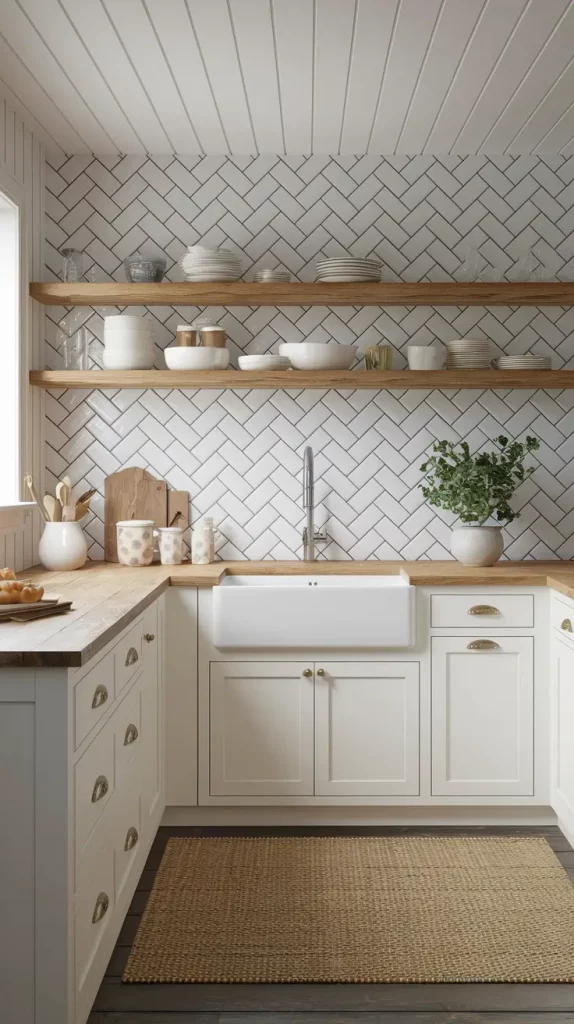
This design strikes a balance between vintage charm and modern convenience, pairing milk glass collectibles with stainless steel appliances. A vintage breadbox on the counter adds both utility and nostalgic appeal. For added practicality and style, consider installing a plate rack near the sink or stove to keep everyday dishes within easy reach.
Affordable Rustic Kitchen Ideas That Radiate Elegance
Creating a stunning rustic kitchen doesn’t require a hefty budget. With some paint, repurposed items, and a bit of ingenuity, you can craft a warm and inviting space. Focus on impactful areas like walls and lighting to maximize your investment without sacrificing style.
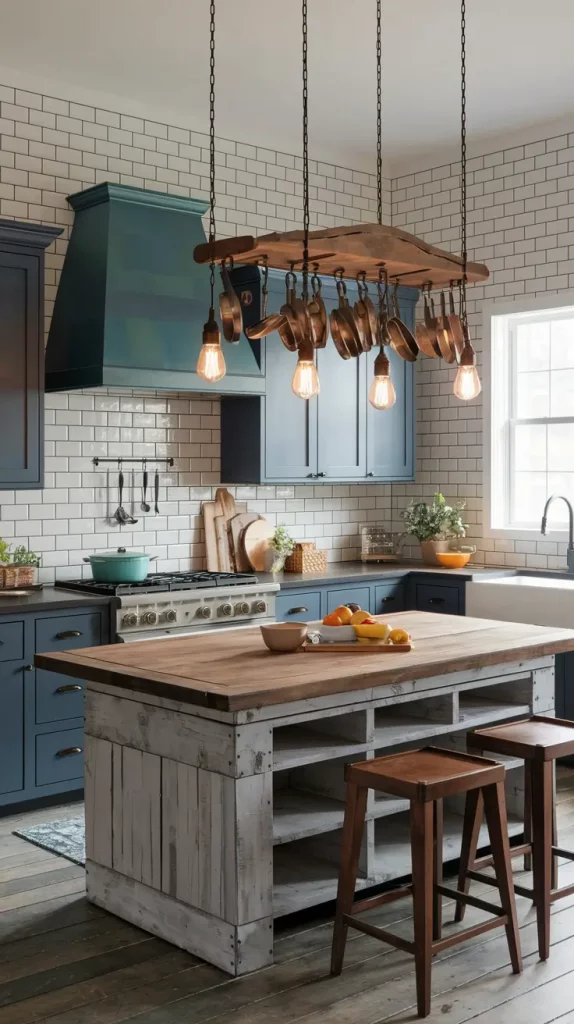
For example, painting cabinets in a soft mushroom beige and swapping hardware for oil-rubbed bronze pulls can refresh a kitchen instantly. A repurposed ladder can become a charming hanging pot rack above a DIY island made from reclaimed pallets. Peel-and-stick wood-look tiles and subway tile backsplashes offer budget-friendly alternatives that mimic authentic materials. Edison bulb pendant lights complete the look for under $100.
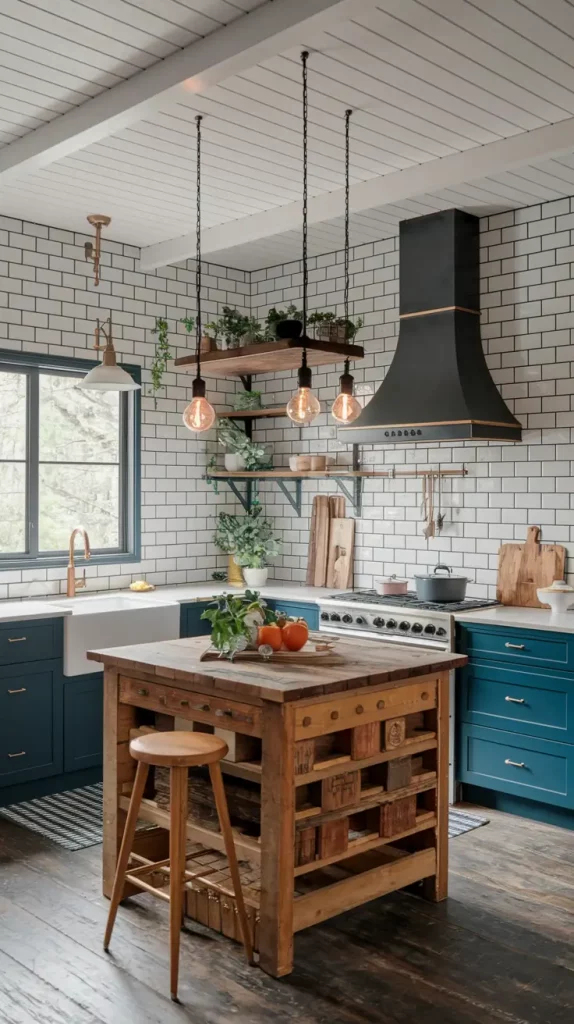
Utilizing scrap wood, flea market finds, and online tutorials can yield impressive results. For instance, applying peel-and-stick wallpaper with a faux brick texture adds depth and sophistication without the cost of real brick. To elevate the space further, invest in a standout piece like a butcher block countertop or a restored antique table to anchor the room.
Decor-Centric Rustic Kitchen Ideas for a Personalized Touch
If you love details, focusing on rustic kitchen decor can transform a simple kitchen into a warm, inviting haven. Here, the structural elements remain understated while accessories and accents take center stage. Soft ambient lighting, layered textures, and carefully chosen decor pieces infuse personality and charm.
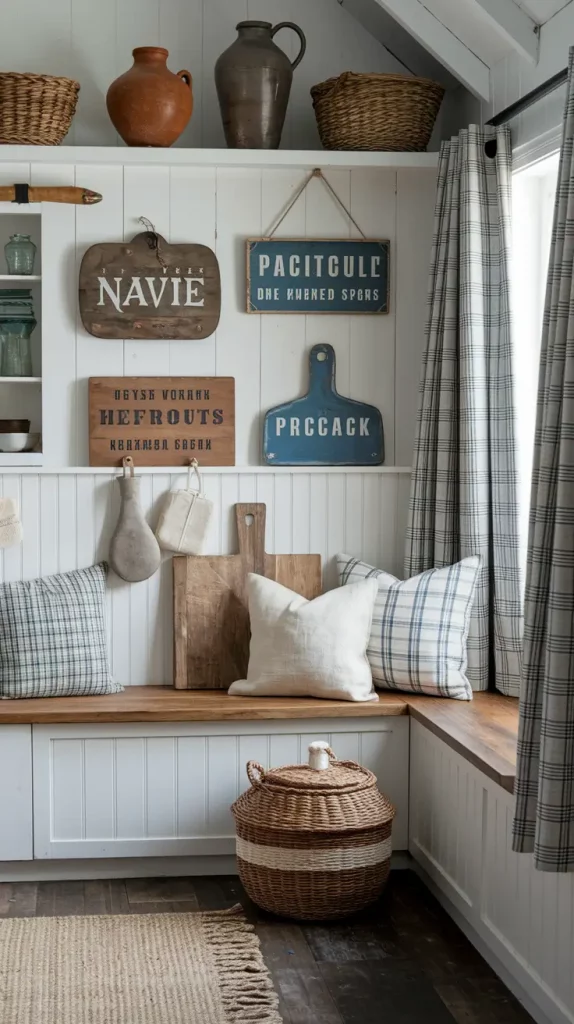
Imagine terracotta pots brimming with fresh herbs, wooden cutting boards artfully arranged on walls, and vintage signs with hand-painted lettering. Open shelves filled with woven baskets, ceramic pitchers, and well-loved cookbooks tell a story of a kitchen that’s truly lived in. Taupe walls and tongue-and-groove paneling on the island base add subtle texture, while plaid café curtains soften the windows. A cozy breakfast nook with a corner bench completes the scene.
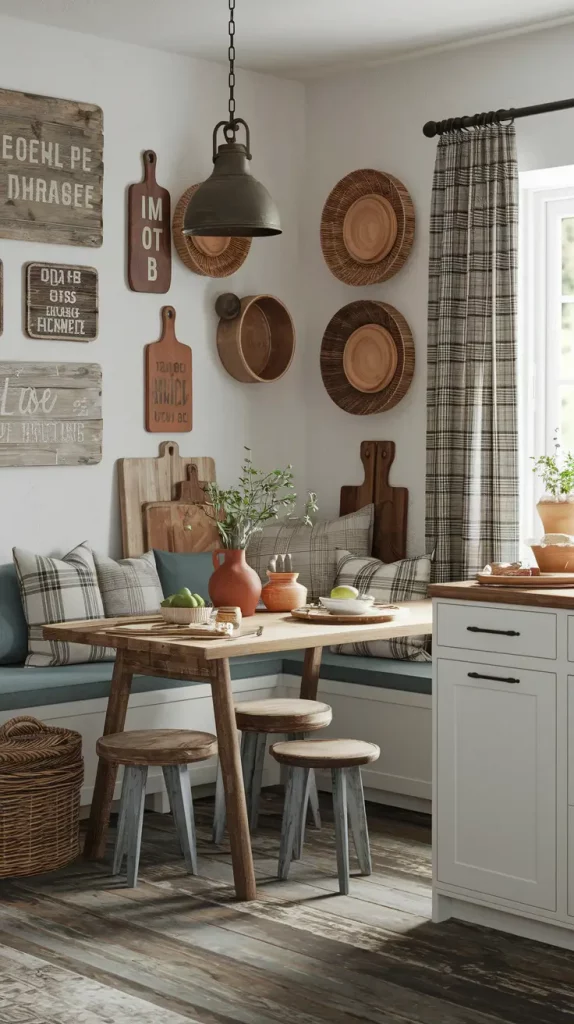
Joanna Gaines famously advocates decorating with meaningful items. Framing cherished family recipes and displaying them above the stove adds a heartfelt, personal touch. To enhance the ambiance, consider installing woven pendant lights or a trio of mini lantern-style fixtures that complement the rustic decor with architectural interest.
Maximizing Style in Compact Rustic Kitchens
Rustic charm isn’t reserved for sprawling farmhouses-small kitchens can be just as stylish and inviting. In fact, limited space often sparks the most creative solutions. I recommend utilizing vertical storage, multi-functional furniture, and open wall shelving to make the most of every inch.
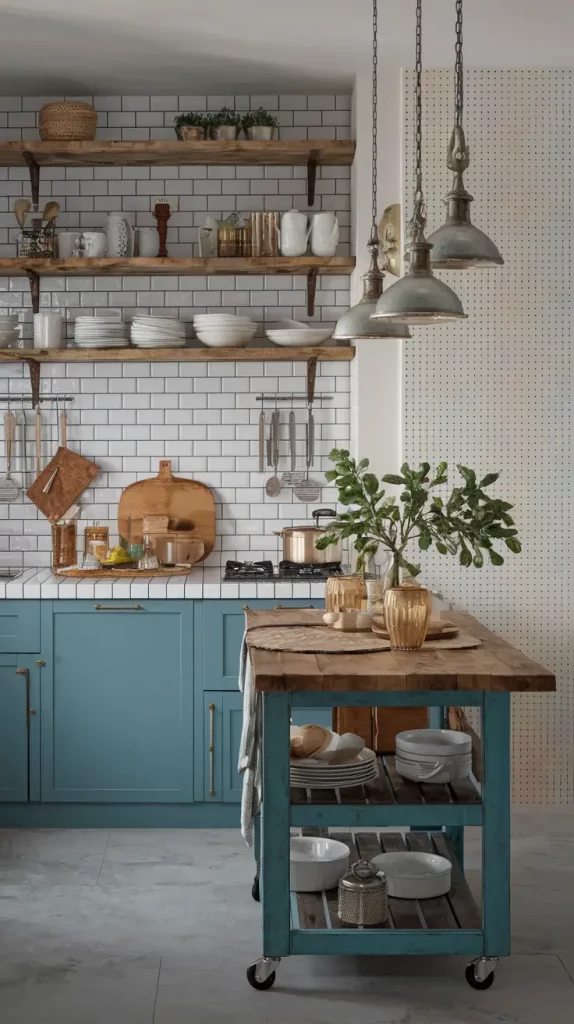
One of my favorite small kitchen designs features a fold-down wall table, open shelving, and an antique rolling cart serving as prep space. A narrow butcher block mounted above a radiator adds extra counter area, while open crates on black iron brackets replace upper cabinets. A mirror behind the stove reflects light, making the room feel larger.
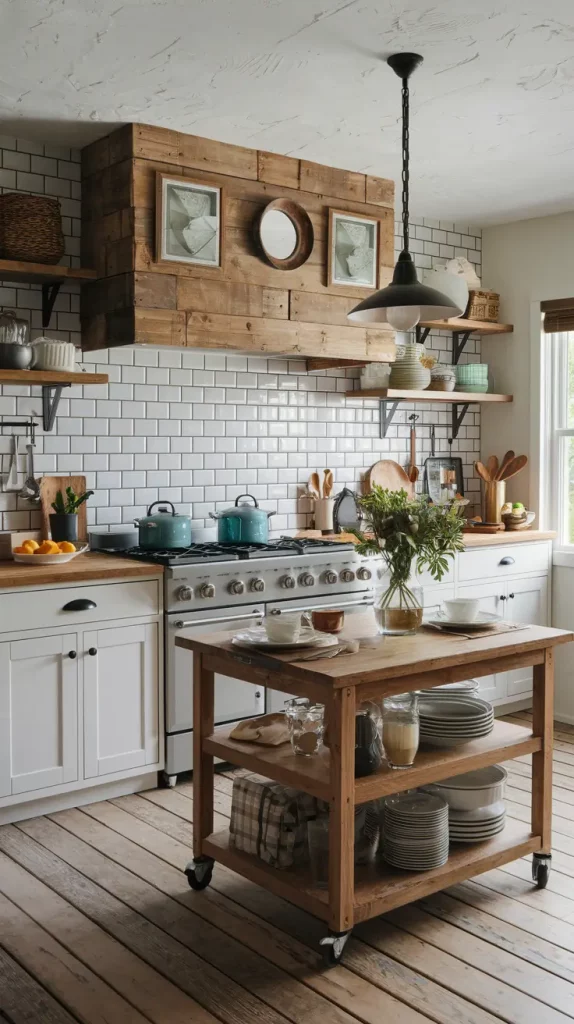
Light-reflective surfaces like glazed tile backsplashes and glass-front cabinets are essential in small spaces to enhance brightness and openness. Adding a wall-mounted spice rack or a painted pegboard in rustic green offers practical storage and visual interest without bulk.
Current Rustic Kitchen Trends to Inspire Your Next Project
Recent shifts in rustic kitchen design emphasize softer contrasts, muted green tones, and eco-conscious materials. Homeowners increasingly favor earthy palettes, vintage-inspired appliances, and abundant greenery to create spaces that feel both cozy and sophisticated.
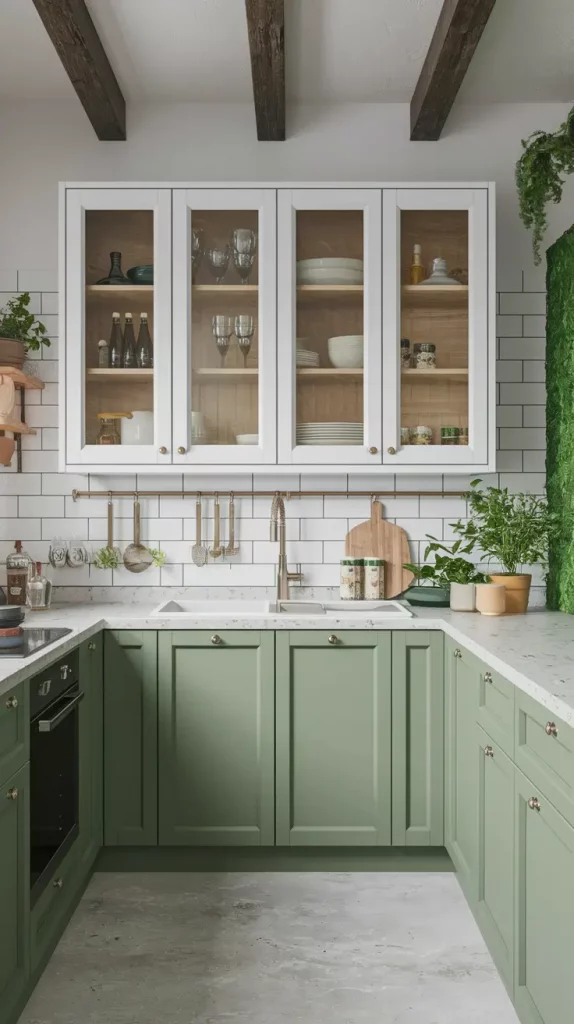
For example, sage green lower cabinets paired with white uppers and aged brass hardware create a refined rustic look. Complementing these with micro-cement floors, quartz countertops with subtle veining, and glass cabinet doors elevates the aesthetic. Smart lighting solutions, such as touch-activated vintage-style lamps or concealed LED strips, blend technology with rustic charm.
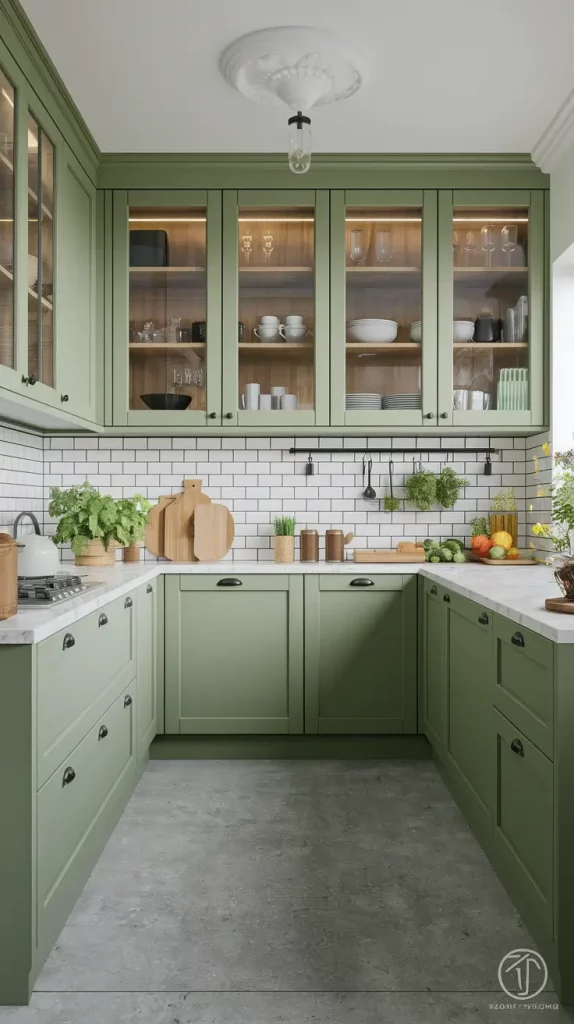
Incorporating features like an herb wall and solar-powered pendant lights reflects the growing emphasis on sustainability. As Elle Decor notes, “Green is the new white,” with shades like sage, olive, and eucalyptus dominating rustic kitchens. Adding a filtered water tap in antique bronze or a composting station with reclaimed wood facades further blends rustic style with eco-friendly living.
Weekend DIY Rustic Kitchen Projects You Can Tackle
If you enjoy hands-on projects, there are countless rustic kitchen DIY ideas that can be completed over a weekend. Simple upgrades like installing open shelving or repainting cabinets can instantly warm up your kitchen.
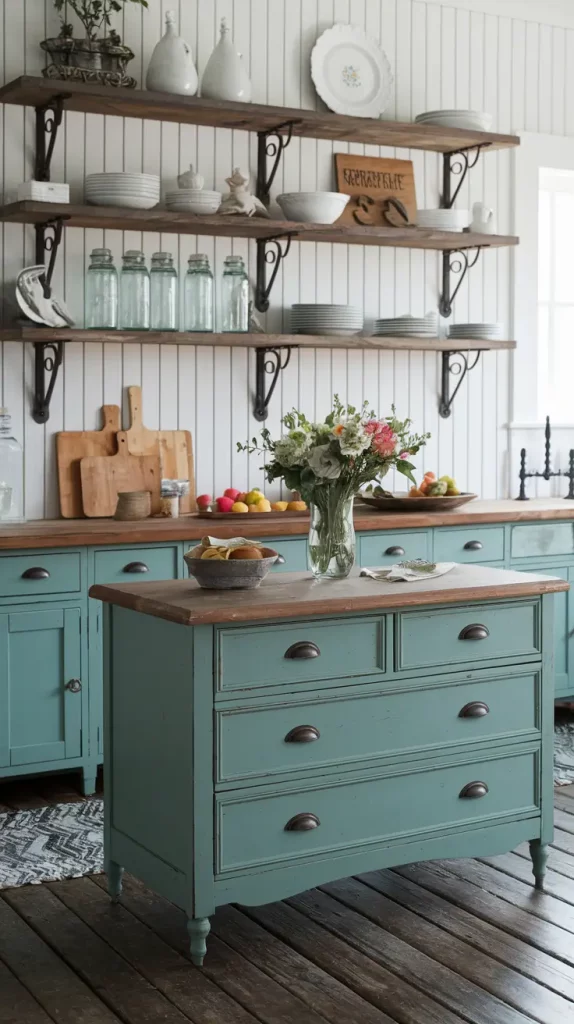
For instance, crafting floating shelves from pine planks, sanding and staining them, then mounting with wrought iron brackets creates charming display space for mason jars and vintage dishes. Painting an old dresser with milk paint and swapping hardware for matte black or aged brass pulls can transform it into a rolling kitchen island.
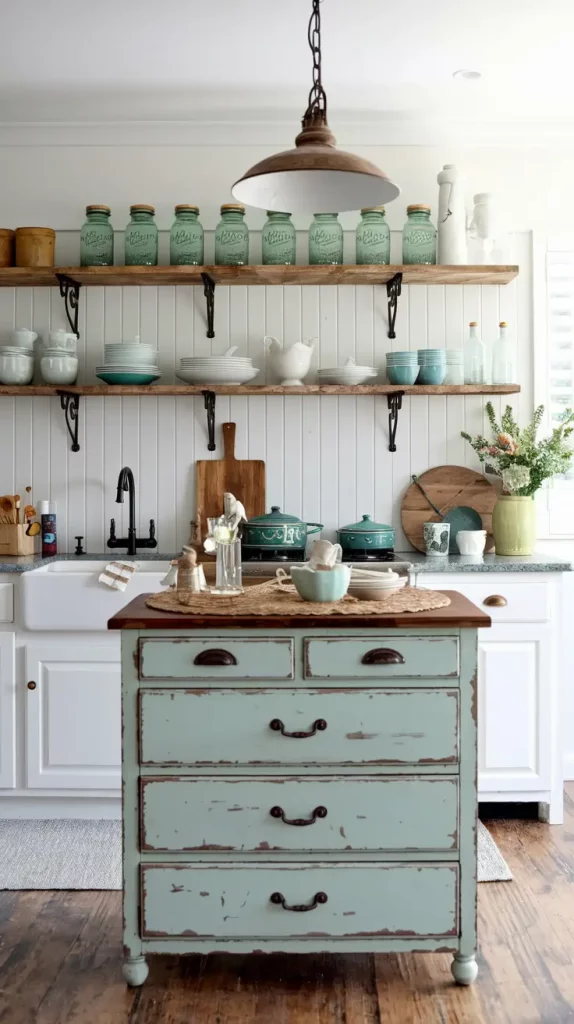
Better Homes & Gardens recommends weekend projects like installing beadboard backsplashes or peel-and-stick wood paneling-both of which add rustic charm without a full renovation. Including step-by-step tutorials or QR codes linking to instructional videos can empower you to confidently complete these upgrades.
Natural Wood Accents That Define Rustic Kitchens
Highlighting the inherent beauty and imperfections of natural wood is central to rustic kitchen design. Whether it’s distressed pine ceilings, weathered oak cabinets, or knotty alder shelves, wood brings warmth and texture. Pairing these with cooler elements like stone countertops or polished metal hardware creates a balanced, timeless look.
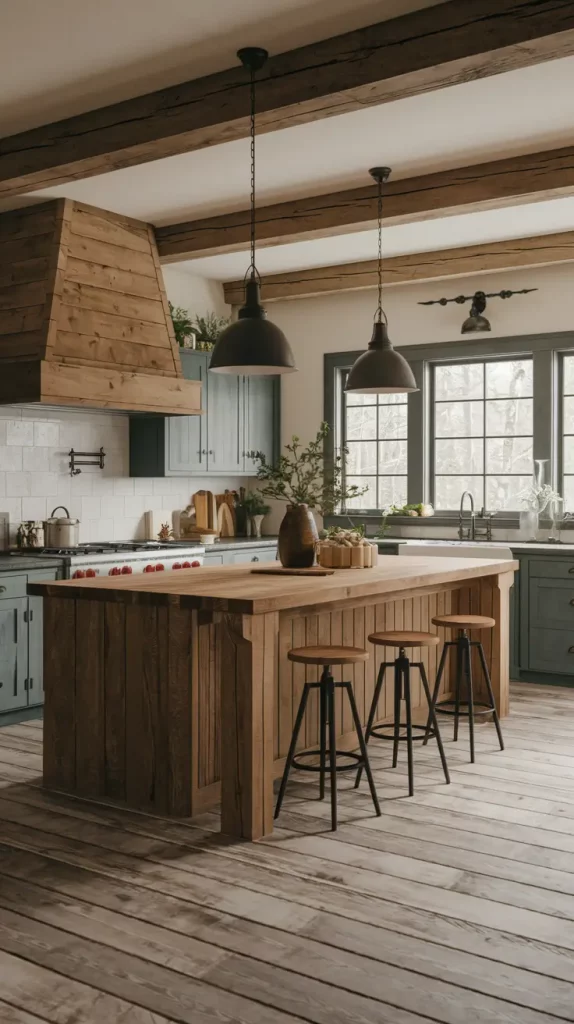
One kitchen features flat-panel walnut cabinets paired with a butcher block island that doubles as a breakfast bar. Broad oak plank flooring with a matte finish complements a range hood clad in reclaimed barnwood. Stone tile backsplashes and matte iron pendant lights complete the look, while carved wooden stools with leather seats add rustic elegance.
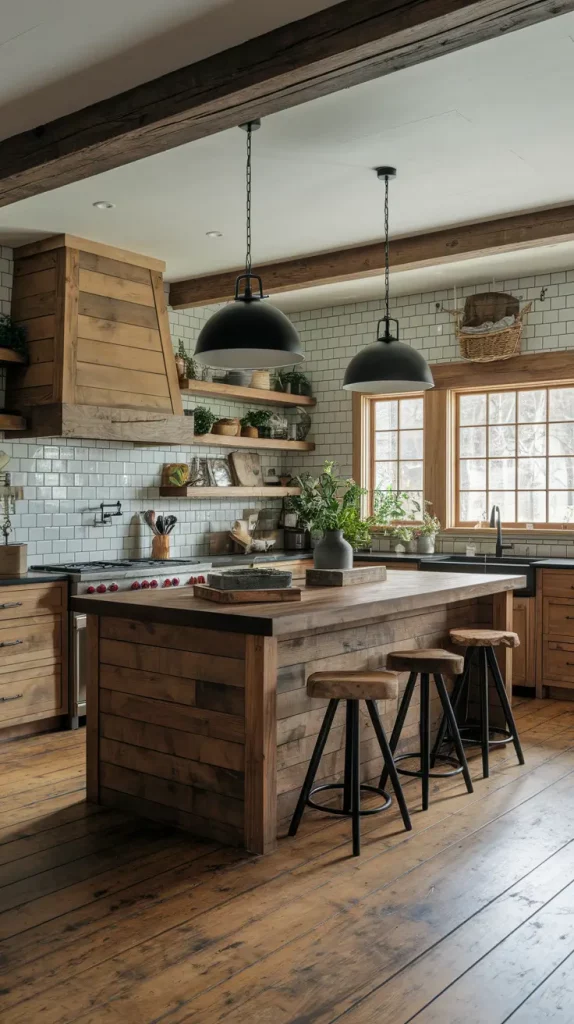
Natural wood never truly goes out of style; it simply evolves. Architectural Digest often highlights how organic textures elevate interiors. Even a small wooden feature like an open shelf or trim can dramatically enhance rustic appeal. Adding a solid wood pantry door with a sliding barn door track would further unify the organic aesthetic.
Blending Modern Efficiency with Rustic Charm
One of the most exciting design challenges is merging contemporary functionality with rustic aesthetics. When balanced well, the contrast between sleek surfaces and weathered textures creates a unique and inviting kitchen. This style suits those who appreciate the warmth of country kitchens alongside clean, modern lines.
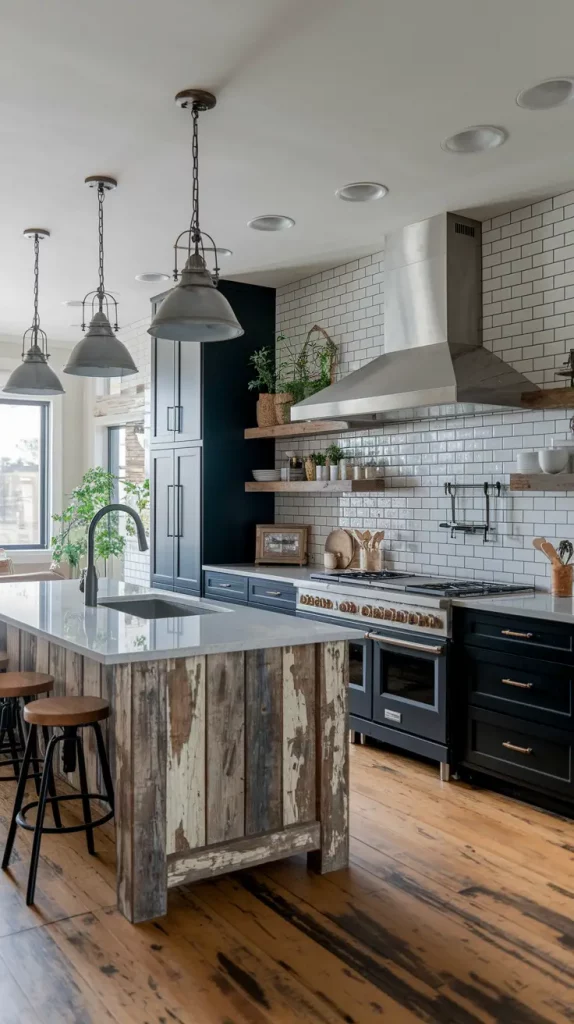
In one design, matte black cabinetry contrasts with a distressed wood island. Polished white quartz countertops with subtle veining and handmade Zellige tile backsplashes add sophistication. Touch-control appliances and a brushed nickel range hood bring modern convenience, while rustic bar stools and antique bronze industrial lighting soften the overall look.
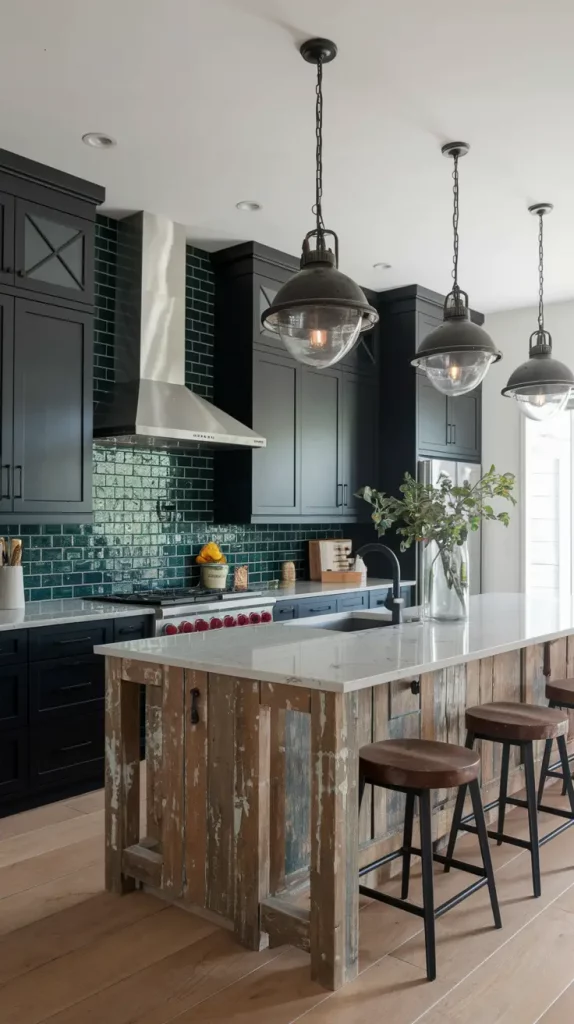
This approach exemplifies restraint-adding rustic elements thoughtfully without overwhelming the modern framework. Installing warm under-cabinet lighting can further soften contrasts and highlight rustic details.
Warmth and Brightness with White Rustic Cabinets
White cabinetry in rustic kitchens can feel inviting rather than sterile when paired with the right textures and finishes. White provides a bright, airy backdrop that highlights the patina of aged materials, especially in older homes or cottages.
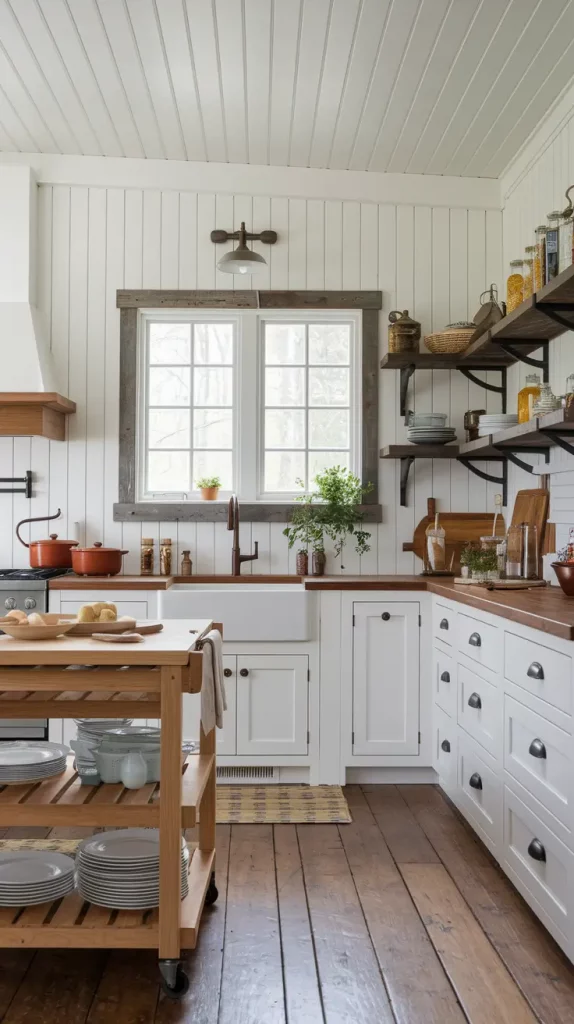
One design features shaker-style white cabinets with vintage bronze hardware, rough-edge granite countertops, and reclaimed hickory floors. A salvaged window frame with frosted glass above the sink adds privacy while letting in natural light. Wooden floating shelves, a hanging pot rack, and a butcher block on wheels contribute warmth and practicality.
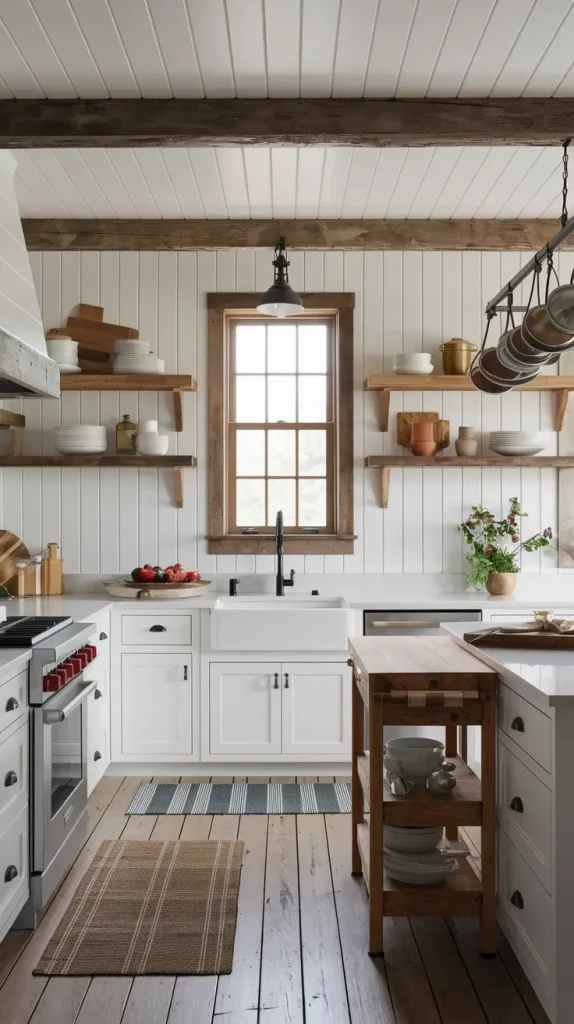
To avoid monotony, contrasting textures and finishes are essential. Distressing new white cabinets can also impart a timeworn character. Adding a cozy corner with a small bistro table and mismatched chairs enhances the lived-in feel and provides a casual dining spot.
Vintage Treasures as Rustic Kitchen Decor
Storytelling through vintage decor is a powerful way to personalize a rustic kitchen. Each antique piece adds character, history, and a sense of nostalgia that defines rustic style.
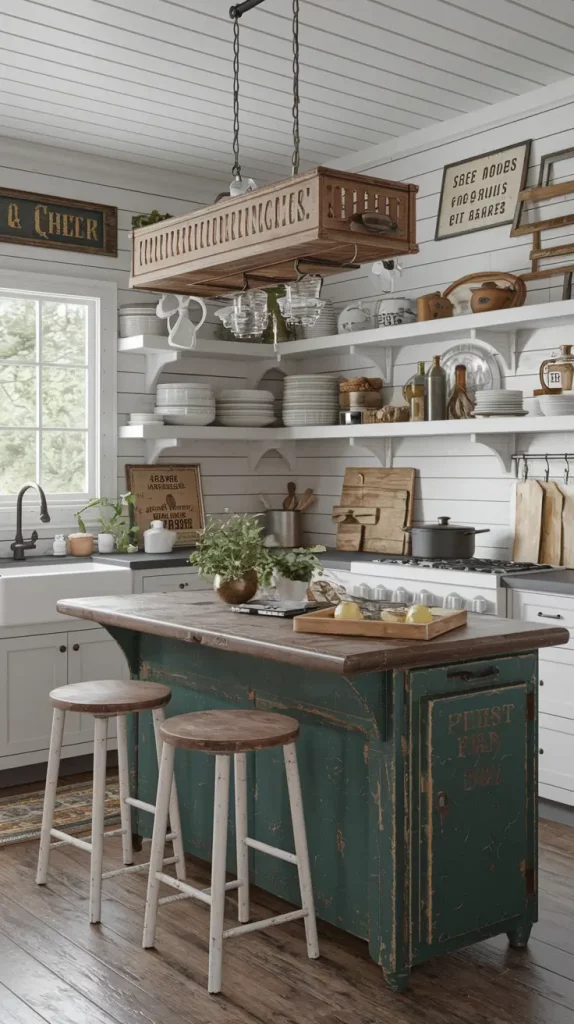
In one kitchen, an old pie safe serves as a pantry, a vintage workbench is repurposed as an island, and enamelware pitchers hang above the stove. Walls adorned with framed vintage seed packets and a barn ladder used as a pot rack complete the look. Baskets, crates, and painted signs add charm without clutter.
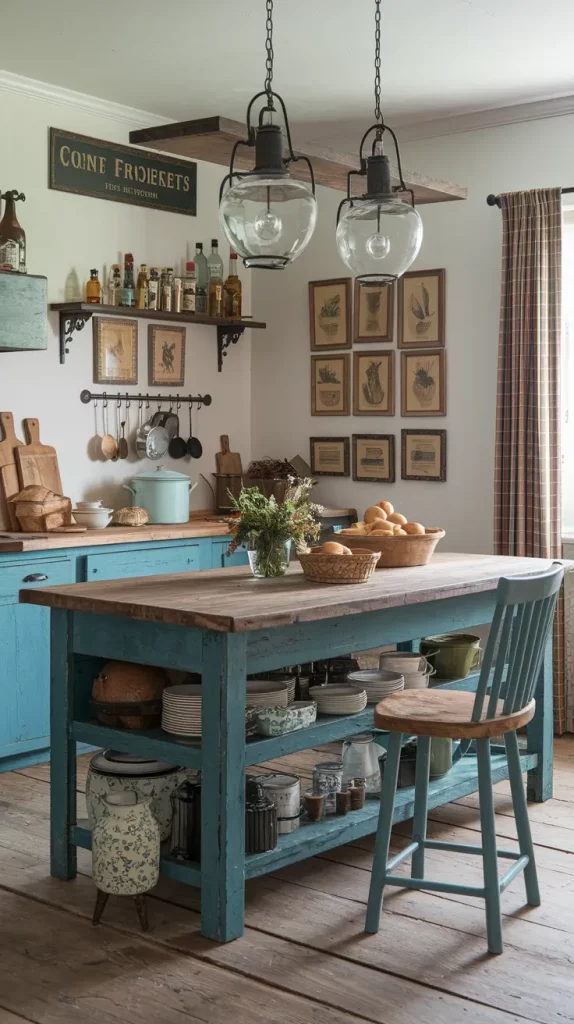
Vintage decor encourages breaking conventional rules. Thrift shopping often yields unique finds that add soul to your kitchen. Embracing imperfections, as highlighted by Elle Decor’s salvaged style trend, enhances authenticity. Consider adding a feature wall with salvaged tin ceiling panels or repurposed fireplace mantels for added character.
Refreshing Rustic Kitchens with Green Cabinets
Earthy green hues like sage, olive, and forest are increasingly popular in rustic kitchen cabinetry. These colors bring a calming natural vibe and pair beautifully with wood, jute, and stone elements. Green cabinets breathe new life into rustic spaces while maintaining an organic feel.
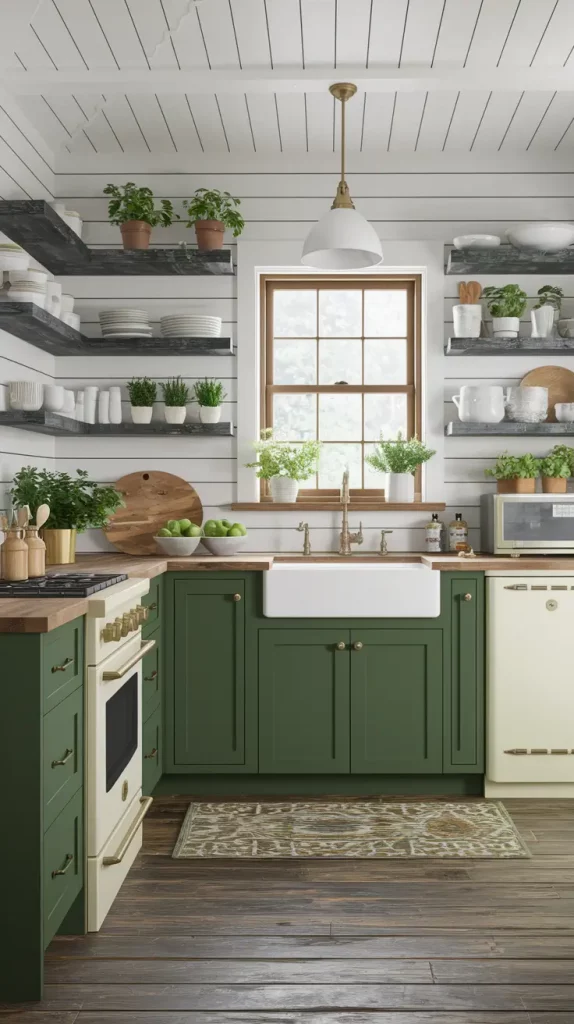
One design features deep sage green cabinets with brass cup pulls, butcher block countertops, and a contrasting light olive island. Creamy white vertical shiplap walls and vintage-style cream appliances add warmth. Open shelves display rustic dishes and potted herbs, enhancing the natural aesthetic.
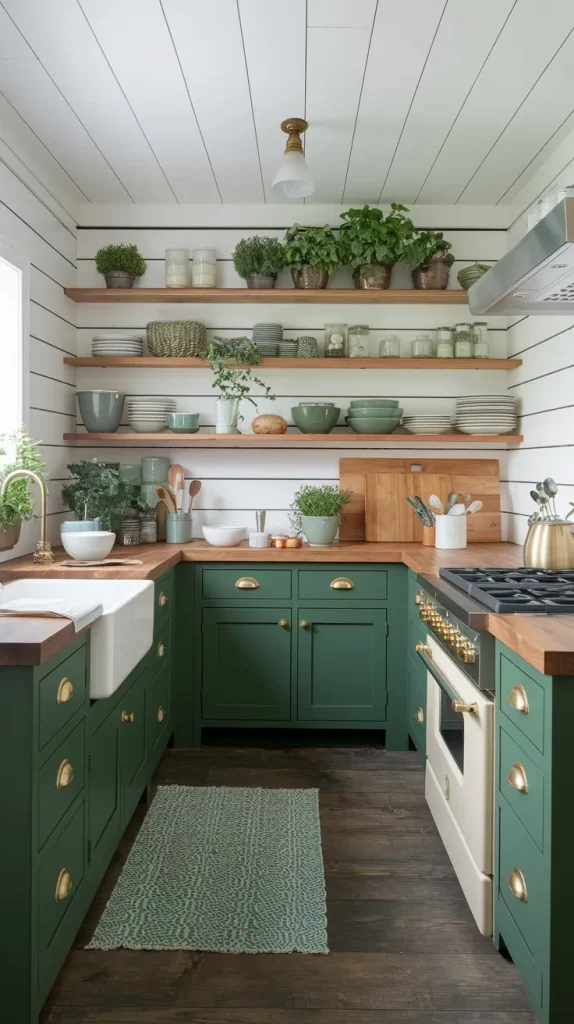
As Veranda Magazine notes, green acts as a stabilizing color in transitional interiors-bold yet approachable, trendy yet timeless. Adding a dark green pantry door or moss-colored tile backsplash can unify the theme without overwhelming the space.
Effortless Style with Open Shelving
Open shelving is a simple yet stylish way to incorporate rustic charm while maintaining functionality. It fosters openness, showcases your favorite dishes and decor, and encourages a pared-down approach.
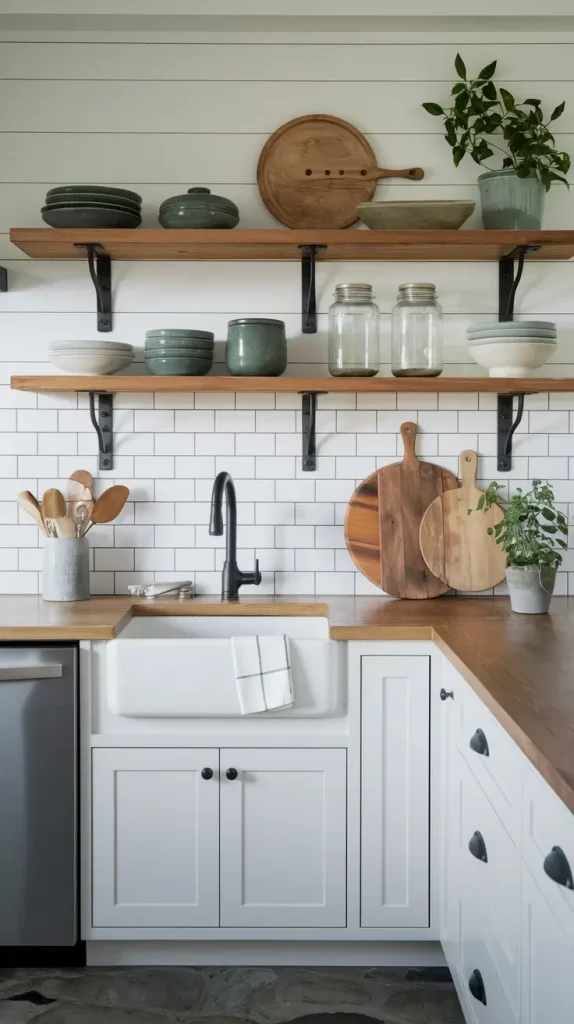
In a recent project, raw wood floating shelves mounted on wrought iron brackets were paired with white shiplap walls for contrast. Stoneware bowls, wooden cutting boards, and glass jars filled with dried goods add texture and warmth. Subway tile extends beneath the shelves to the countertop, creating a polished look.
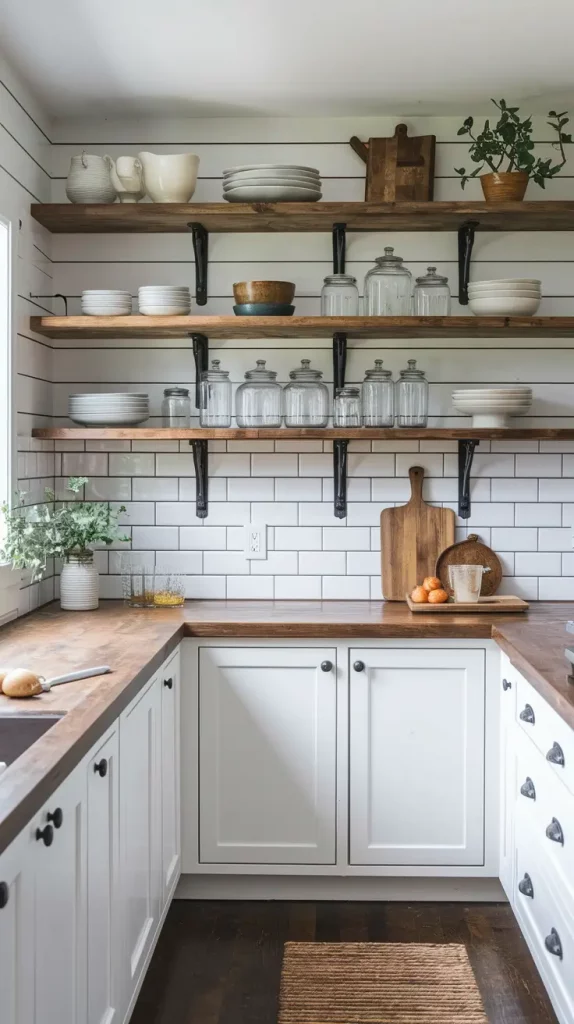
Curating open shelves with a limited color palette and repeated textures prevents clutter and maintains harmony. Adding under-shelf hooks for mugs or utensils and wall sconces for evening illumination enhances both utility and ambiance.
Incorporating Stone for Earthy Rustic Appeal
Stone elements-whether as walls, backsplashes, or chimney surrounds-introduce a grounded, tactile quality to rustic kitchens. They help define spaces naturally, especially in open-plan layouts.
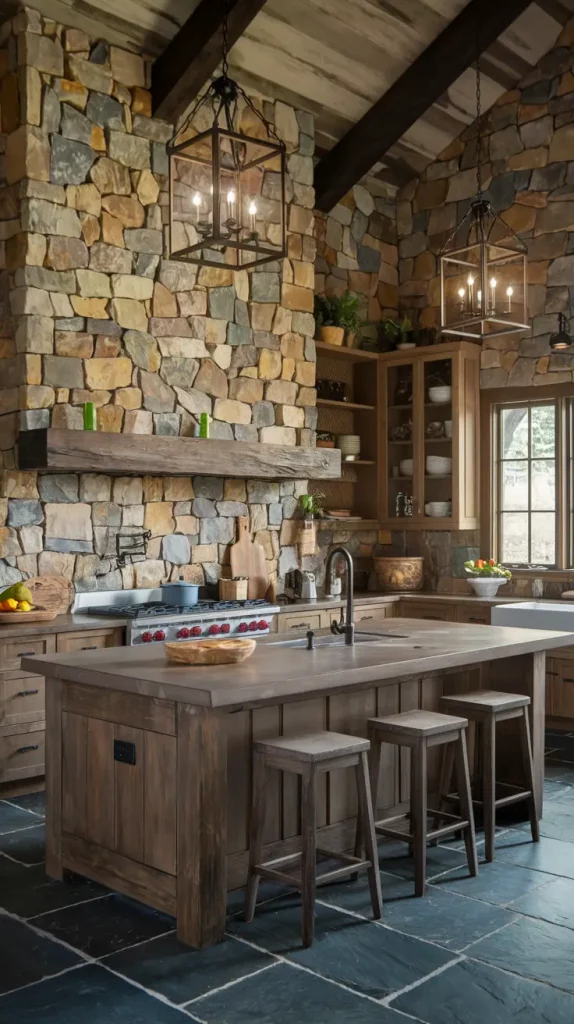
One favorite design features a stacked fieldstone wall behind the stove with a floating wood mantel shelf. Limestone tiles extend the backsplash behind the sink, balanced by wood cabinetry, black hardware, and slate flooring. Rough-hewn beams and lantern-style pendant lights complete the rustic atmosphere.
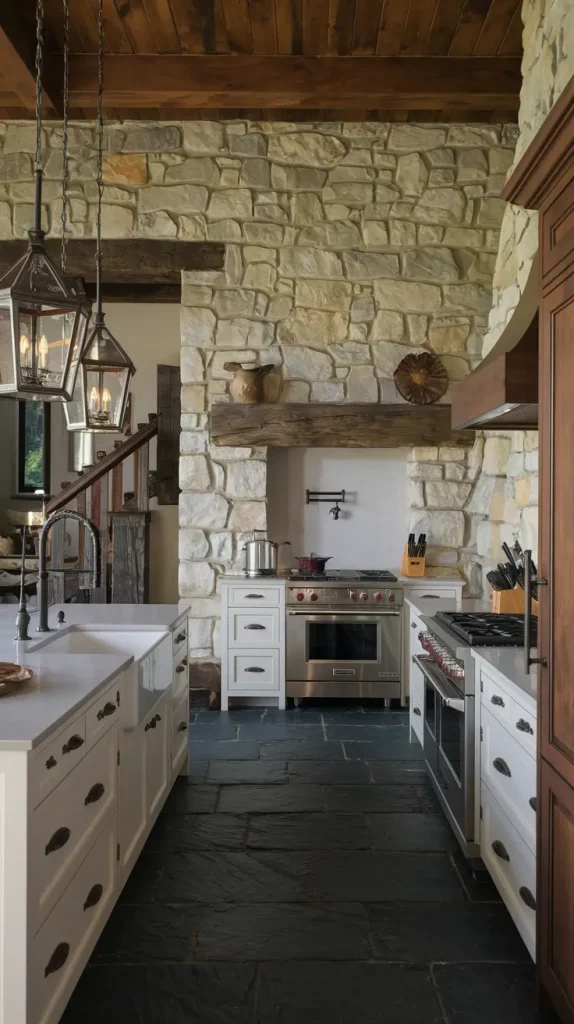
Stone’s hardness can be softened with color and light-linen curtains or whitewashed furniture work well. Faux stone panels offer a lightweight alternative without sacrificing visual appeal. Adding stone window sills or a built-in stone bench can tie the theme together subtly.
Reclaimed Materials: The Heart of Rustic Design
Reclaimed wood, stone, and metal bring authenticity and history to rustic kitchens. The aged character of these materials adds depth and soul that new materials often lack.
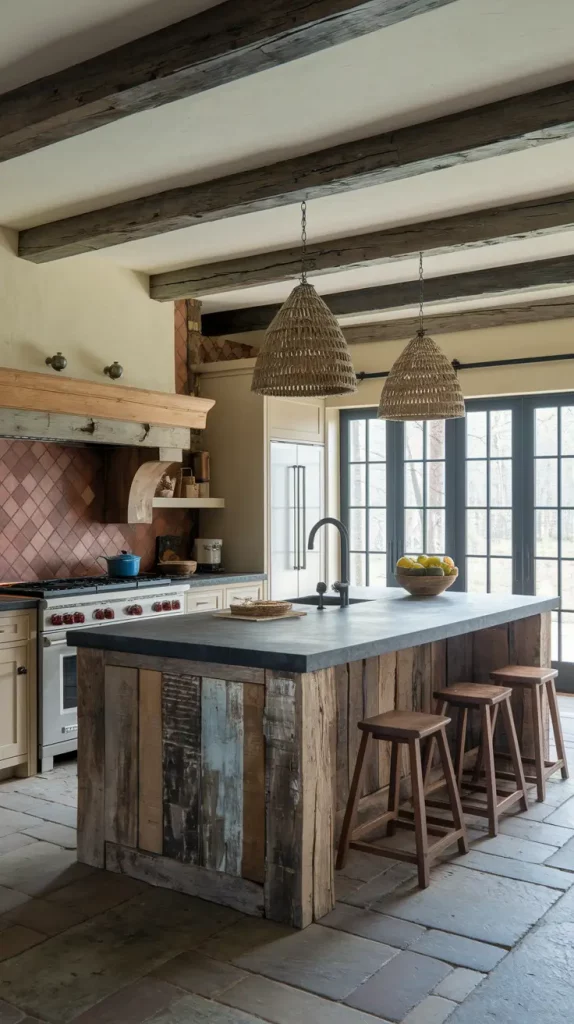
In one kitchen, salvaged beams span the ceiling, and barnwood forms the island base. Soapstone countertops repurposed from a former science lab add unique character. Antique terracotta tiles in a herringbone pattern create the backsplash, while open shelving made from leftover floor joists adds rustic charm. A sliding barn door conceals the pantry.
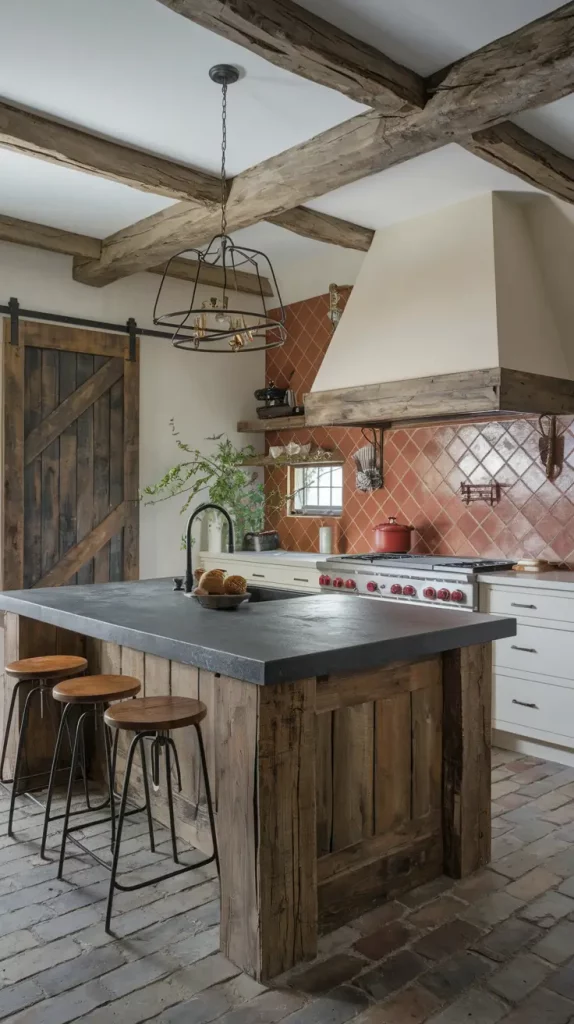
Architectural salvage yards offer a treasure trove of materials that are often more durable and sustainable than new options. Adding reclaimed metal light fixtures or vintage industrial ceiling fans can enhance the rustic-industrial vibe and unify the design.
French Country Elegance Meets Rustic Warmth
Rustic kitchens can also exude sophistication when blended with French country style. This fusion balances casual comfort with curated elegance, combining linen slipcovers, antique ceramics, raw wood, and warm stone.
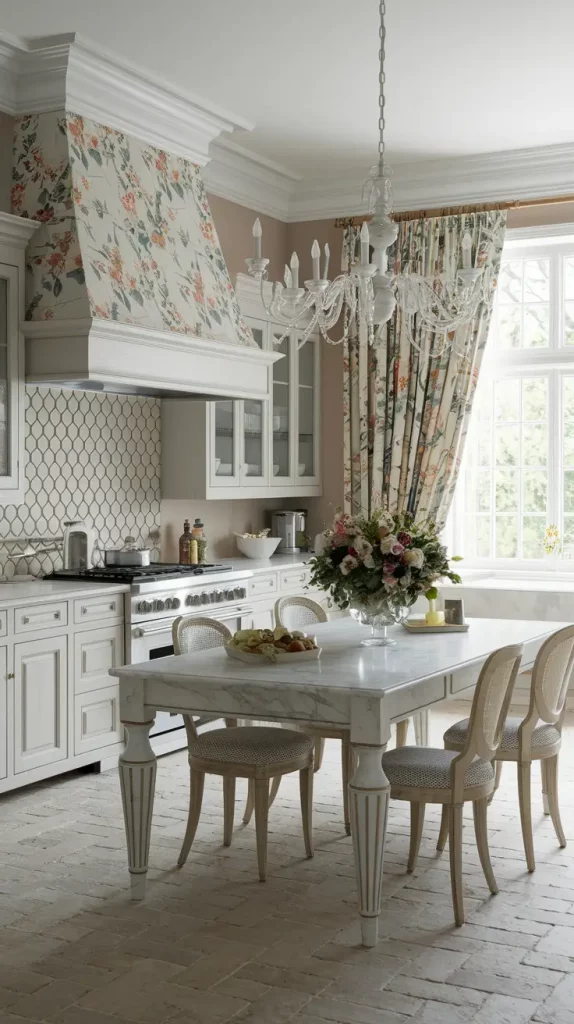
One design features off-white distressed cabinets with carved wood-trimmed open shelves, a soft cream ceramic tile backsplash, and warm limestone floors. A freestanding range with brass knobs sits under a wood-arched niche, while a marble-topped island with fluted legs anchors the room. Upholstered stools, floral drapery, and a vintage chandelier soften the rustic base.
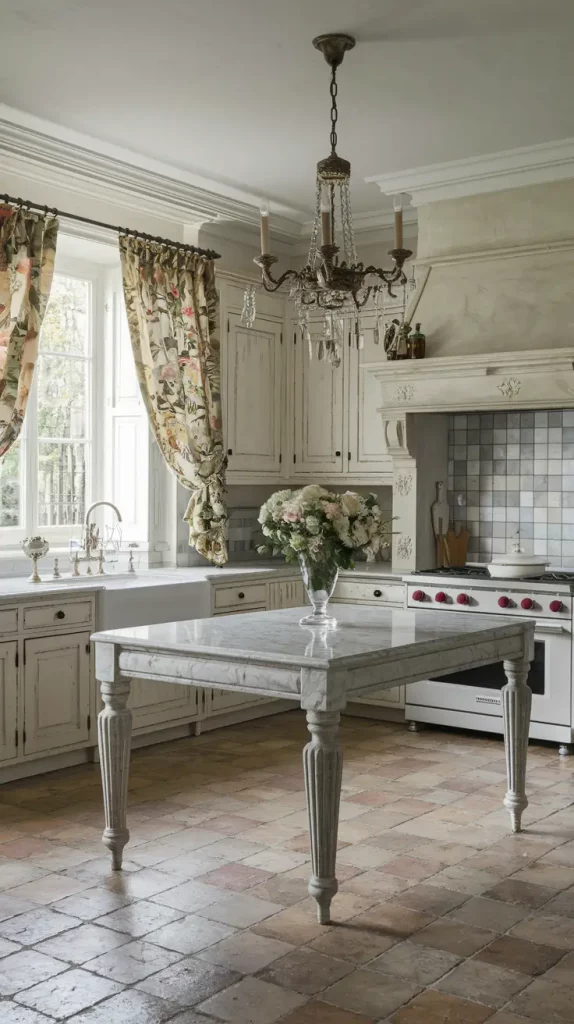
French country kitchens thrive on subtle layering. Combining glass-front hutches, rustic beams, and unlacquered brass creates a harmonious blend. Fresh herbs or dried lavender on rods add a provincial touch. Adding an old framed picture or mirror above the stove can make the space feel more lived-in and personal.
Exposed Beams: Architectural Anchors in Rustic Kitchens
Exposed ceiling beams are a striking feature that instantly adds depth and character to rustic kitchens. They create a sense of permanence and intimacy, especially when left in their natural, unpainted state.
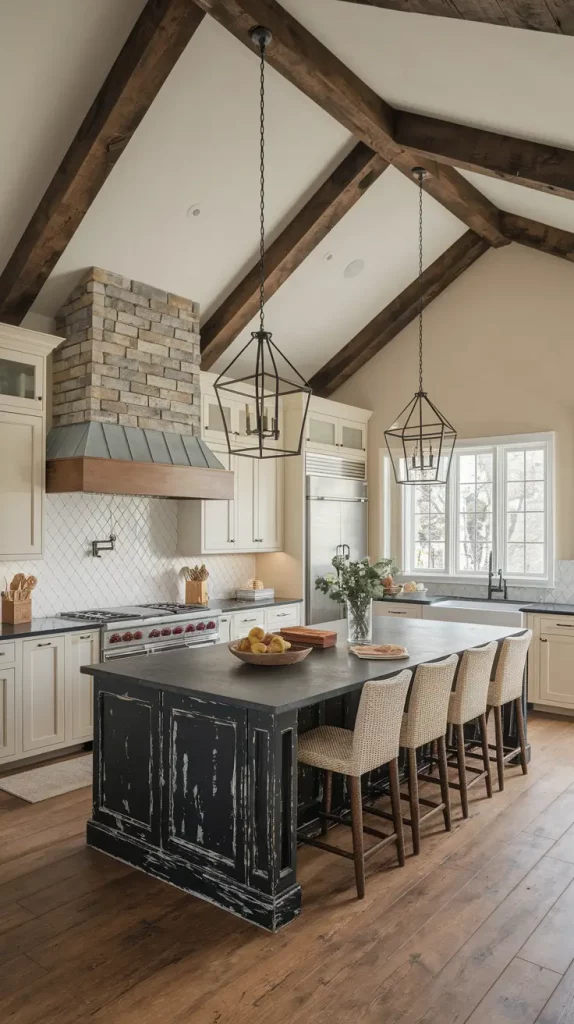
One layout features reclaimed pine beams arranged in a cross pattern on a vaulted ceiling. Ivory cabinetry and a distressed black island sit below, with a stone chimney hood as a focal point flanked by symmetrical open shelves. Transom windows flood the space with light, reflecting off pale wood floors and taupe walls. Large wrought-iron pendant lights balance the vertical space.
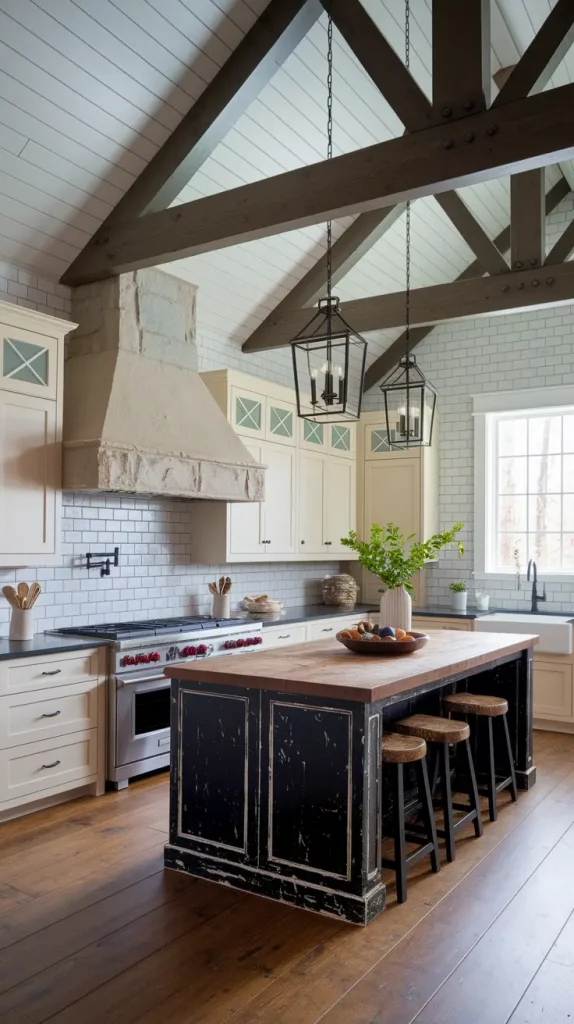
Beams are especially effective in open-concept kitchens, helping to define zones without walls. Incorporating recessed lighting around beams highlights their texture. Adding skylights or clerestory windows above beams can enhance natural light and draw the eye upward.
Rustic Kitchen Inspiration for Virtual Bloxburg Builds
The appeal of rustic kitchens extends into virtual spaces like Bloxburg, where players recreate cozy, charming kitchens within the game’s blocky framework. Layering textures, colors, and design details helps achieve a realistic rustic feel.
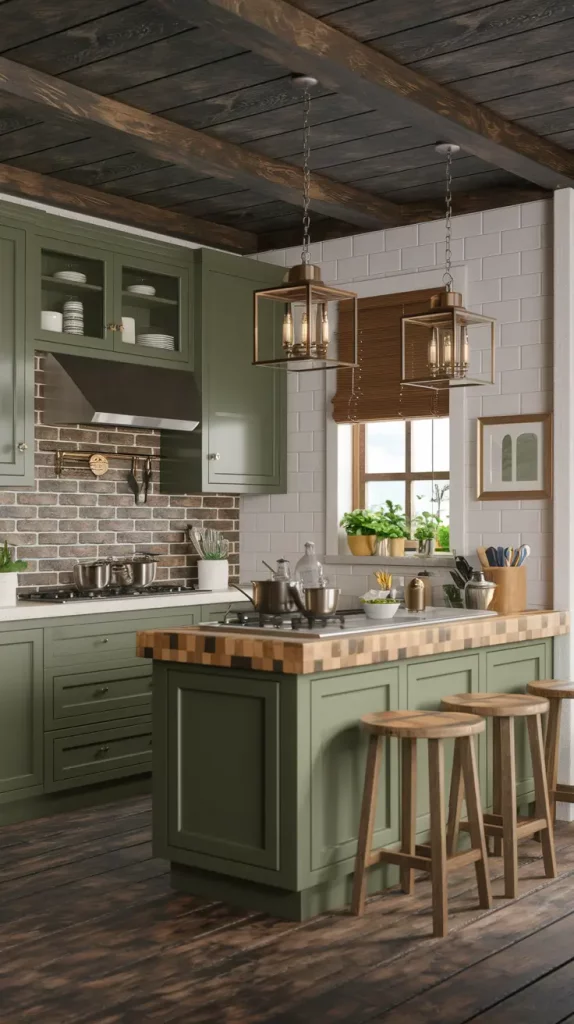
My favorite virtual design includes wood-planked flooring, warm white shaker cabinets, and a faux butcher block island with bar seating. Open shelves display dishware, while faux plants and vintage-style signs add character. Lantern-style pendant lights and a brick-look backsplash complete the look, with a color palette of light browns, muted greens, and matte black for balance.
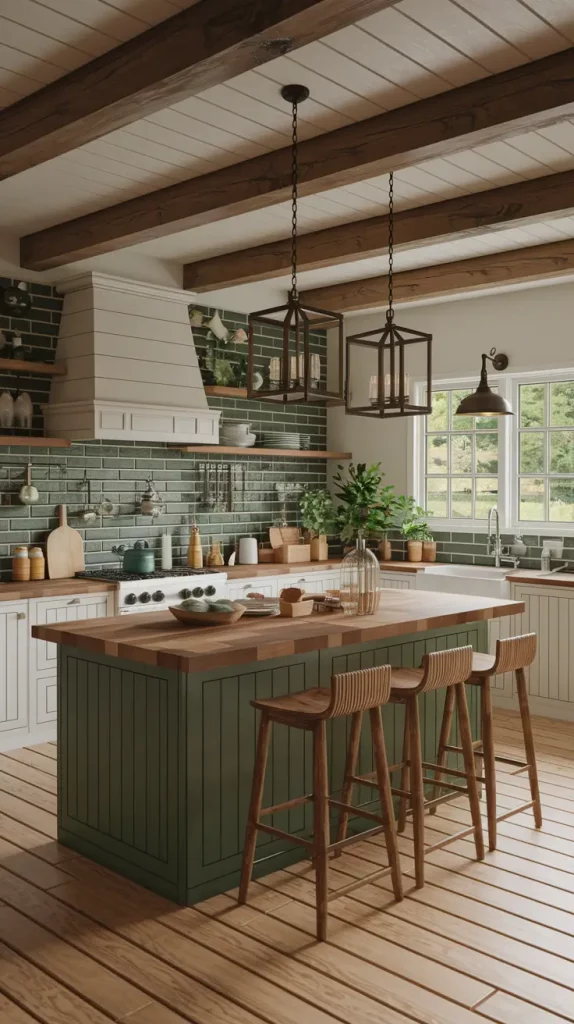
To enhance realism, maintain proper proportions and mix materials thoughtfully. Popular YouTube creators like Anix and Frenchrxses offer excellent rustic build tutorials that can inspire your own virtual projects. Adding a virtual fireplace or chimney wall can create a warm focal point reminiscent of real-world rustic kitchens.
Statement Lighting to Elevate Rustic Kitchens
Lighting plays a pivotal role in rustic kitchen decor. A bold fixture-whether a grand chandelier, vintage lantern, or industrial cage light-can transform the mood and become a centerpiece. I love placing statement lighting above islands or dining areas for maximum impact.
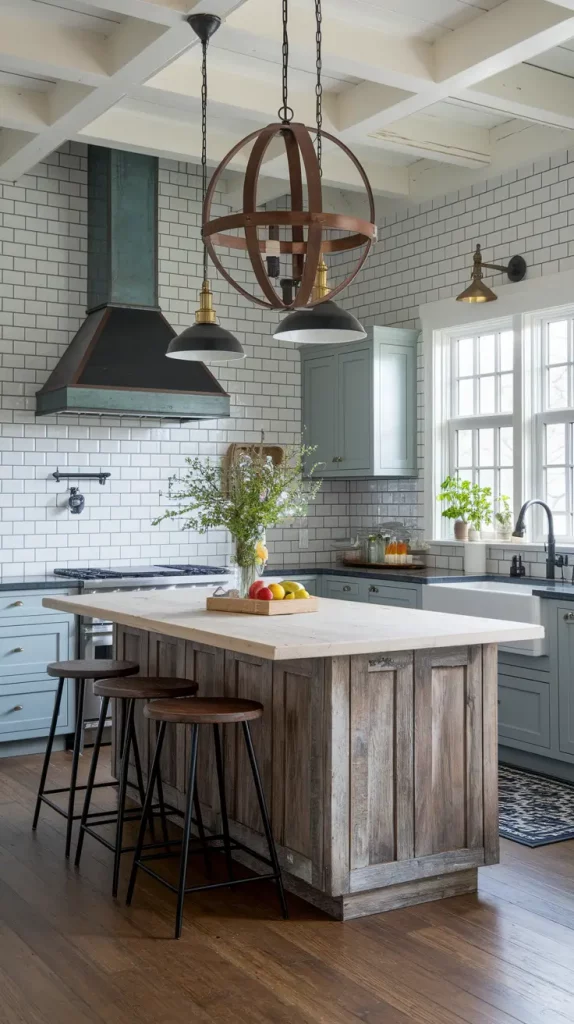
One kitchen features a large orb chandelier with distressed wood rings and exposed Edison bulbs suspended over a reclaimed wood island. Metal pendant lights hang above the sink, while vintage brass sconces provide ambient lighting. A dimmer system allows for adjustable lighting from task to cozy evening settings.
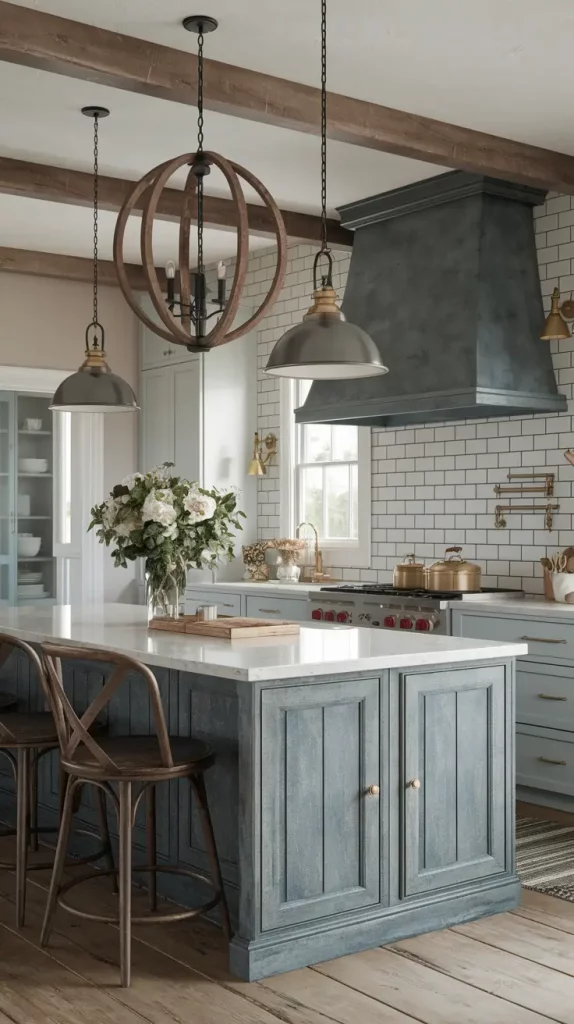
House & Home highlights oversized lighting as a trend that injects modern energy without sacrificing rustic character. To complement statement fixtures, consider adding sconces beside open shelves or under-cabinet lights with vintage switch plates to maintain the rustic vibe.
Rustic Kitchen Islands That Command Attention
The kitchen island often serves as the heart of rustic design. Constructed from reclaimed wood, vintage furniture, or custom stone, it provides both visual interest and practical workspace. I recommend choosing an island in a contrasting material or color to make it stand out.
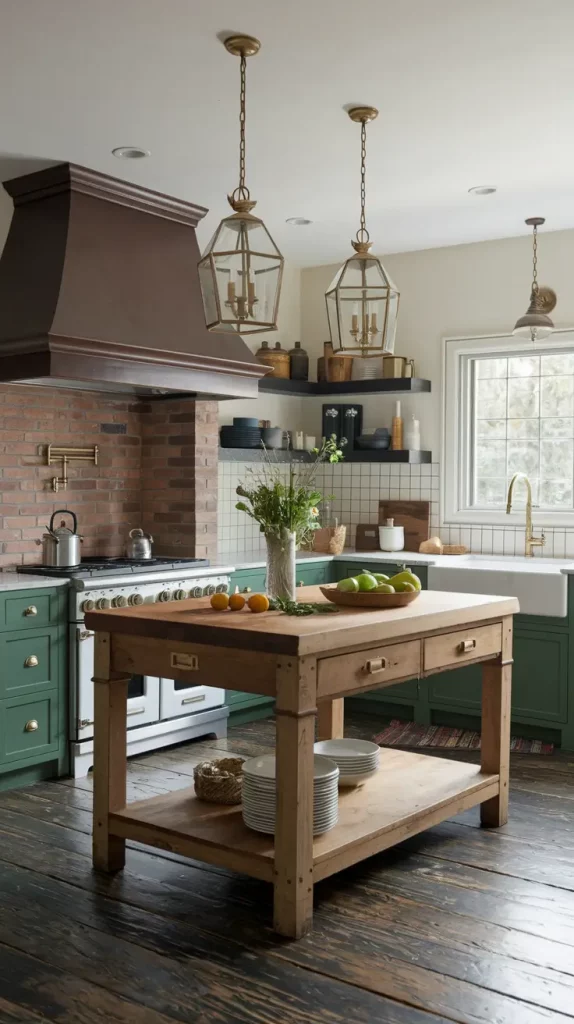
One design repurposes a 19th-century carpenter’s workbench as an island, featuring brass cup pulls, a thick butcher block top, and an antique vice converted into a towel rack. Three pendant lanterns suspended by chains cast soft shadows on hand-scraped wood floors. Moss green cabinets and a brick alcove stove complete the scene.
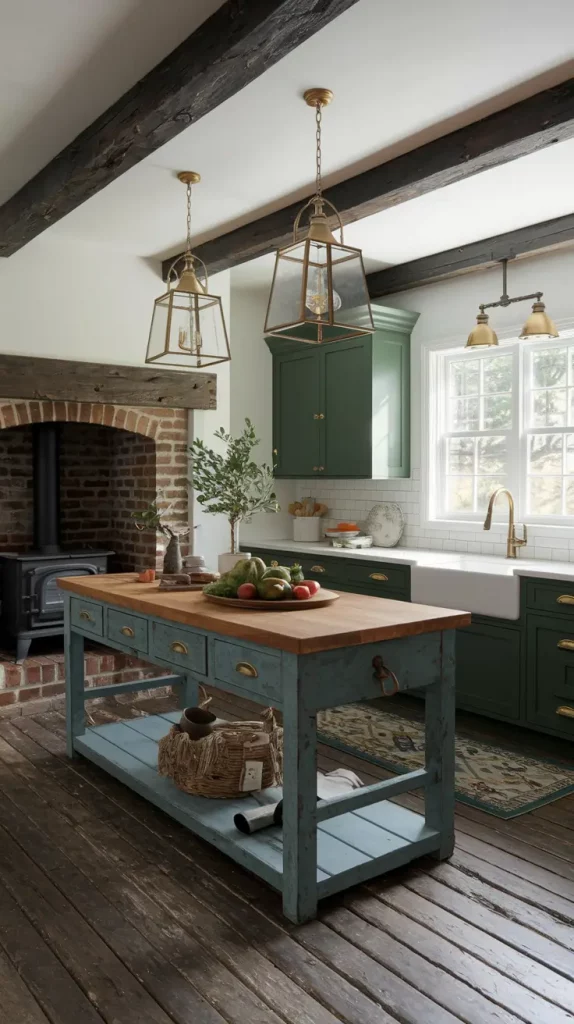
Rustic islands can be intimate and inventive-old doors or repurposed pianos have been transformed into islands. Adding open cubbies or wine racks enhances both style and storage.
Flooring Ideas That Add Texture and Character
Flooring is often overlooked but is crucial in rustic kitchens. Materials like wood, brick, or painted concrete provide texture and charm. The key is choosing surfaces that look naturally worn, even if new.
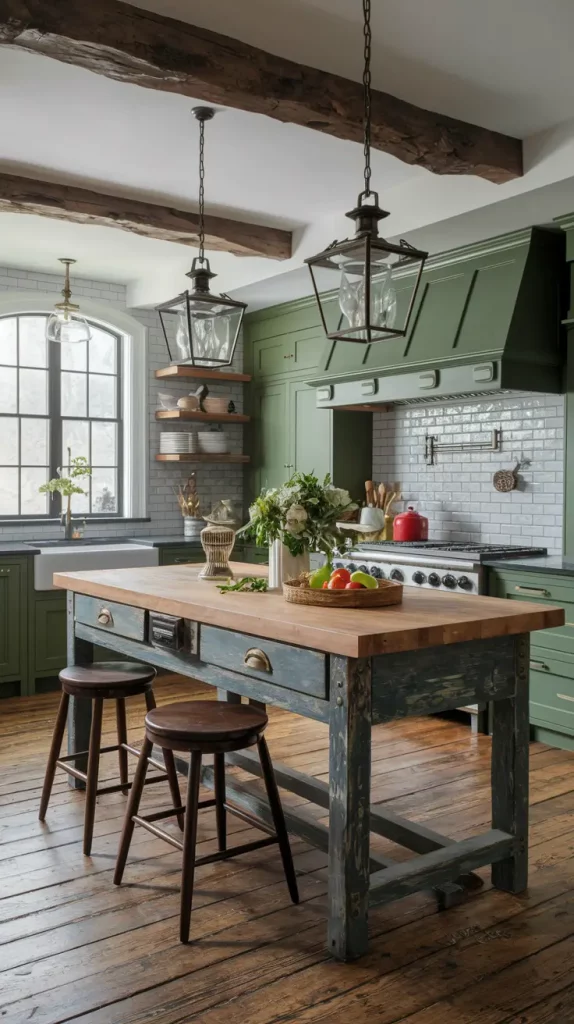
One kitchen features antique brick laid in a herringbone pattern with a matte, easy-to-clean finish. Another uses hand-scraped hickory planks with natural knots and wide seams. For budget-conscious projects, peel-and-stick vinyl mimicking weathered barnwood offers a convincing alternative. Textured jute runners add softness underfoot.
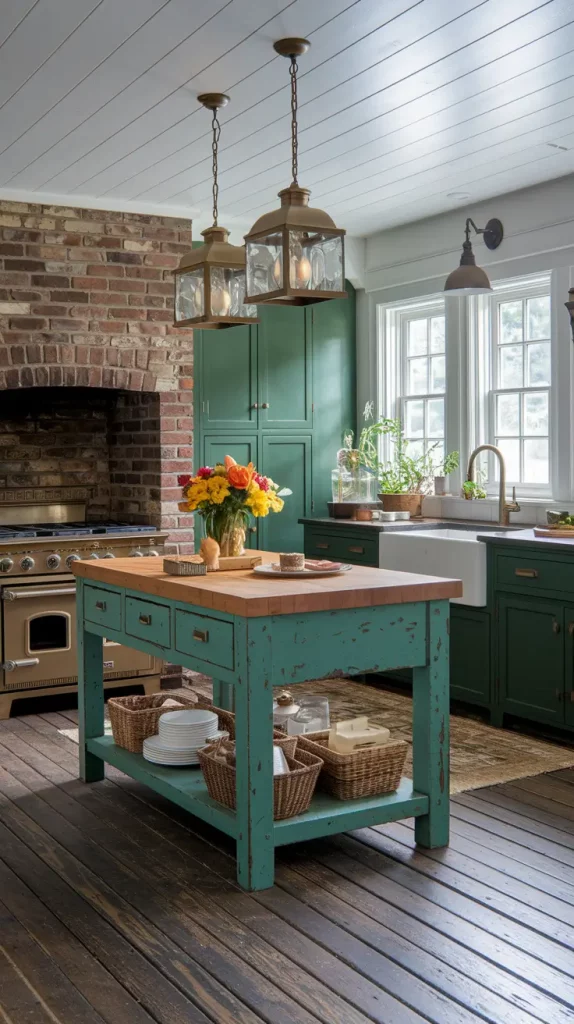
Remodelista recommends coordinating wood tones across floors, cabinetry, and ceilings for a cohesive look. Adding radiant floor heating beneath brick or tile brings quiet luxury and comfort without disrupting rustic aesthetics.
Mixing Metal Finishes for Depth and Interest
Combining different metal finishes-such as brushed brass, matte black, aged bronze, and antique nickel-adds sophistication and visual rhythm to rustic kitchens. This layering creates subtle contrasts that guide the eye without clashing.
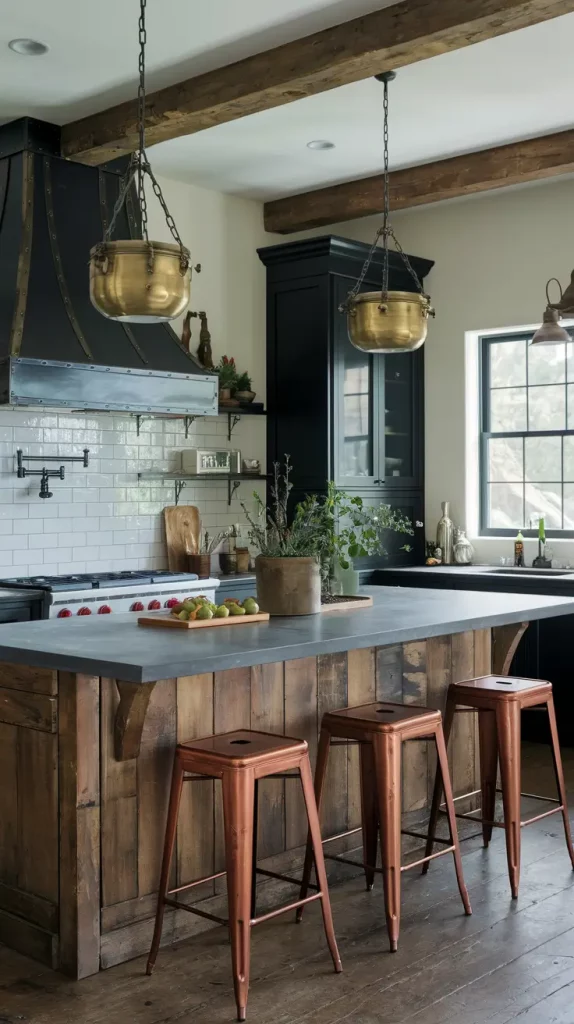
In one kitchen, matte black cabinet hardware pairs with antique brass sconces and a brushed nickel faucet. A custom brass trim on the range hood reflects light, while a wrought iron pot rack and aged copper bar stool legs add rustic-industrial flair. Soapstone countertops and reclaimed barnwood island bases complete the look.
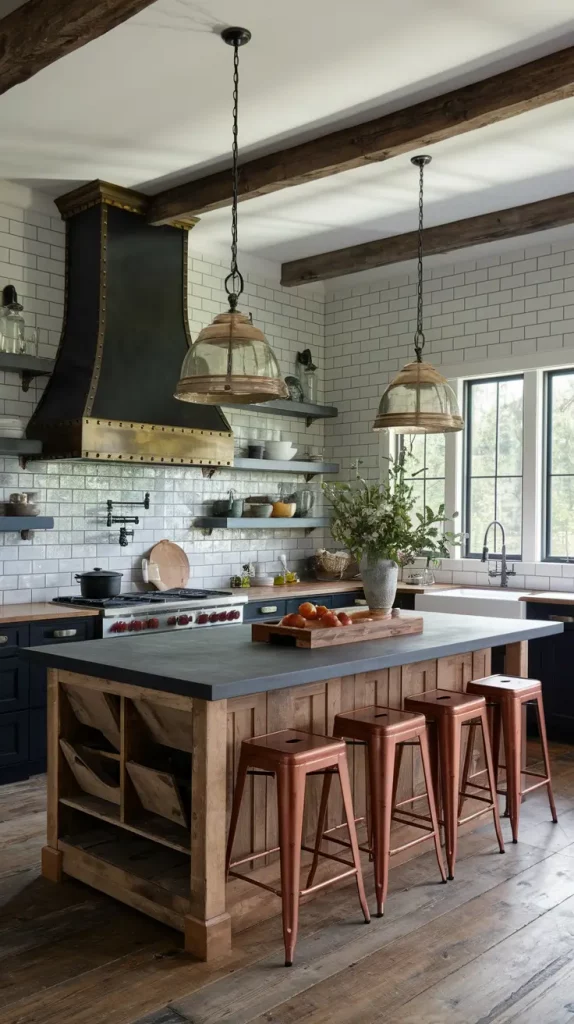
Studio McGee emphasizes balancing warmth and contrast in metal finishes. I recommend selecting a dominant metal tone and using others sparingly as accents. Adding a hammered copper bowl or vintage silver tray on open shelves can unify the palette naturally.
Exploring Rustic Color Palettes Beyond Traditional Browns
While rustic kitchens often feature browns and beiges, experimenting with colors like slate blue, warm gray, mustard yellow, and eucalyptus green can refresh the look while maintaining authenticity.
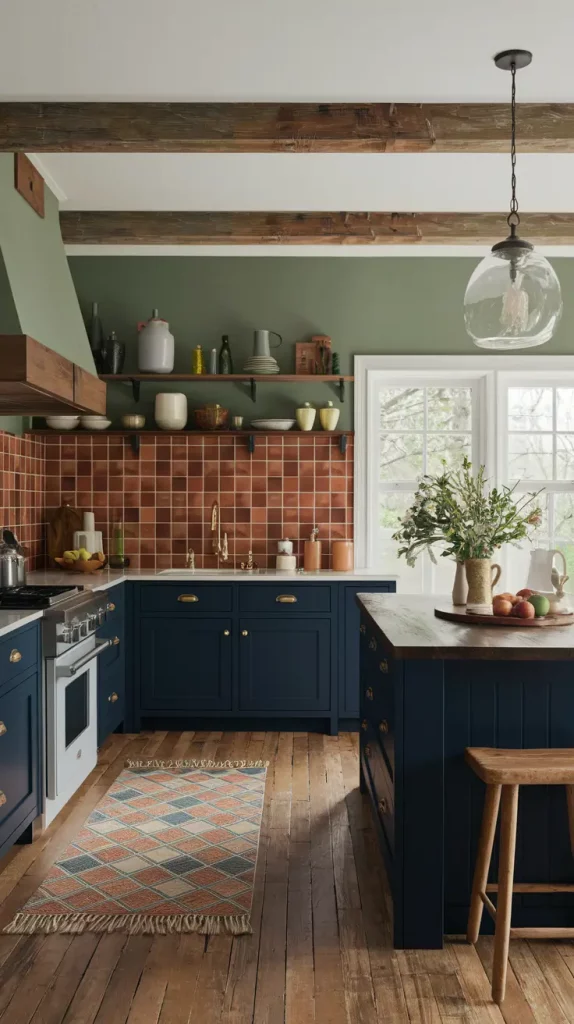
One project combined light sage walls with navy cabinets and light oak floors. Matte terracotta tiles formed the backsplash, while a soft black island with a walnut top added contrast. Brass hardware and a farmhouse sink with a linen curtain skirt brought warmth, complemented by muted teal bar stools and rust-colored dishware.
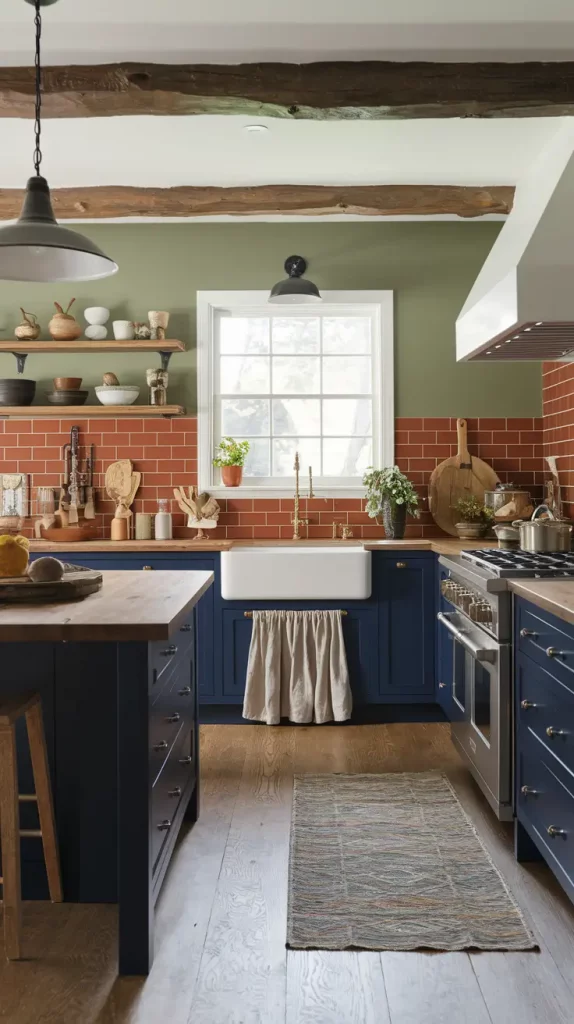
Better Homes & Gardens notes a shift toward nature-inspired muted tones in rustic homes, especially among younger homeowners. To anchor such palettes, consider painting an accent pantry door in deep clay or chalk painting a sideboard for added style.
Seasonal Rustic Kitchen Decor for Year-Round Coziness
Updating rustic kitchen decor seasonally is a subtle yet effective way to keep the space feeling fresh and relevant. Swapping textiles, colors, florals, and lighting tones can create a welcoming atmosphere throughout the year.
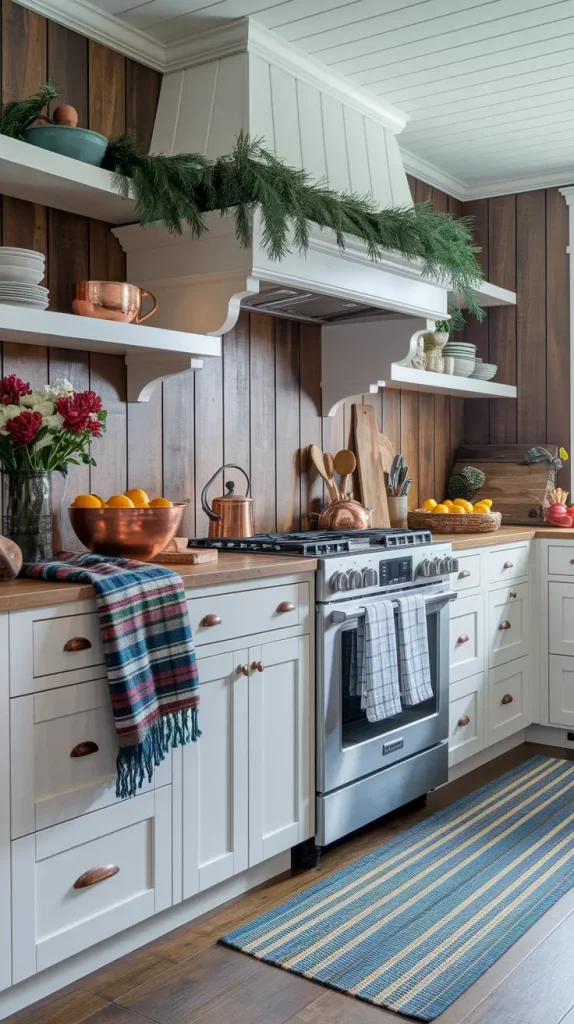
In autumn, I favor plaid throws, copper mugs, and dried wheat stalks in ceramic jugs. Winter calls for evergreen garlands, twinkle lights, and sheepskin chair pads. Spring brings fresh flowers, citrus hues, and glass accents, while summer welcomes light linens, blue pottery, and rustic fruit bowls. The kitchen’s core elements-wood tones, white cabinets, and aged metals-remain constant, with decor shifting to reflect the seasons.
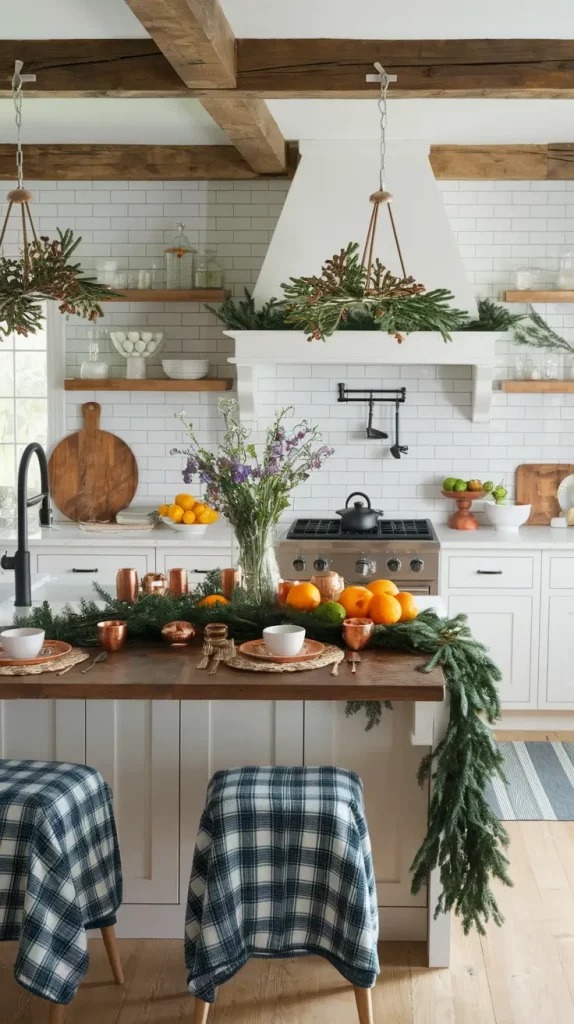
Southern Living’s seasonal stylists recommend quick, intuitive decor swaps rather than major overhauls. Creating dedicated storage-like lift-top benches or labeled baskets-makes rotating decorations easy and keeps the kitchen feeling vibrant year-round.
Industrial Accents for a Modern Rustic Edge
Combining rustic warmth with industrial grit is a growing trend that balances softness with urban edge. Think barn meets loft: natural wood alongside steel and concrete.
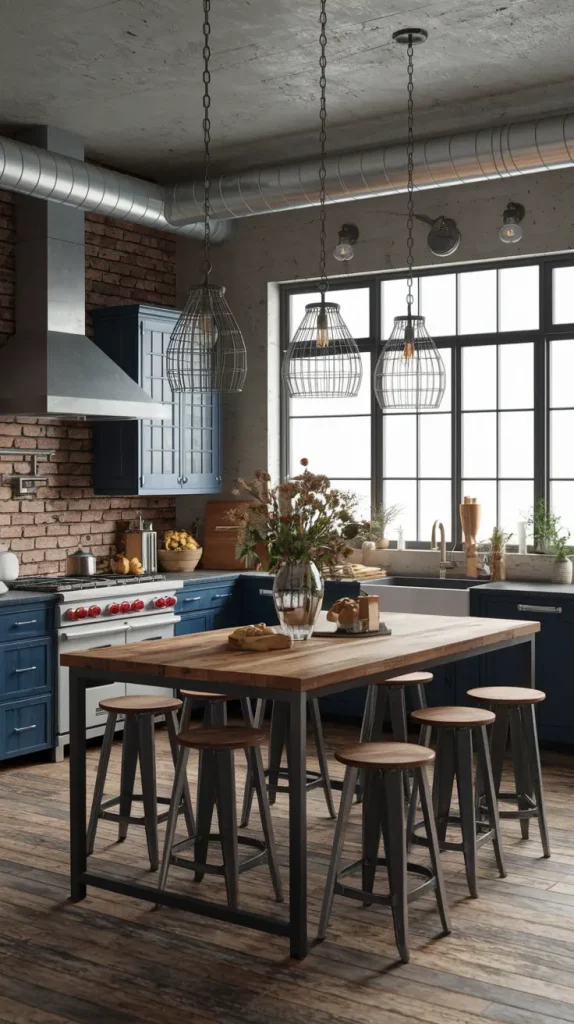
One design features exposed ductwork and concrete-look walls paired with reclaimed wood cabinets. The island has black metal framing and a concrete countertop. Industrial cage pendant lights hang above the bar, while pipe shelving and raw brick frame the stove. Factory-style windows flood the space with natural light, softening the industrial elements.
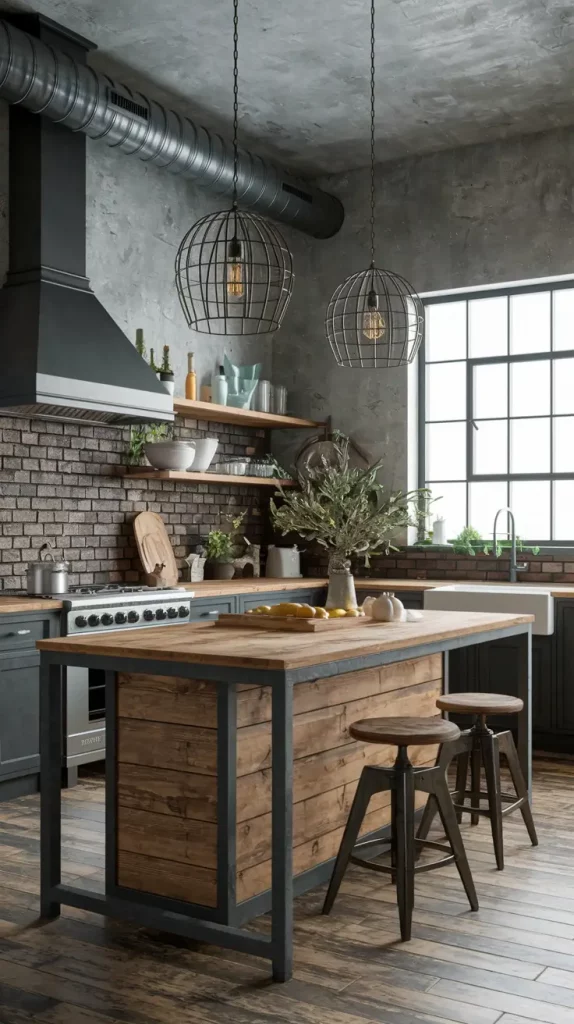
Architectural Digest calls this style modern farmhouse industrial. The key is moderation-too much metal feels cold, too much wood feels dated. A 60/40 wood-to-metal ratio based on room size and lighting works best. Adding vintage steel stools or wire-frame chairs introduces urban flair without sacrificing coziness.
Open-Concept Rustic Kitchens That Define Space Without Walls
In open-plan homes, rustic kitchen design can visually separate the kitchen from living areas without physical barriers. Architectural elements, ceiling treatments, and flooring changes create distinct zones while maintaining flow.
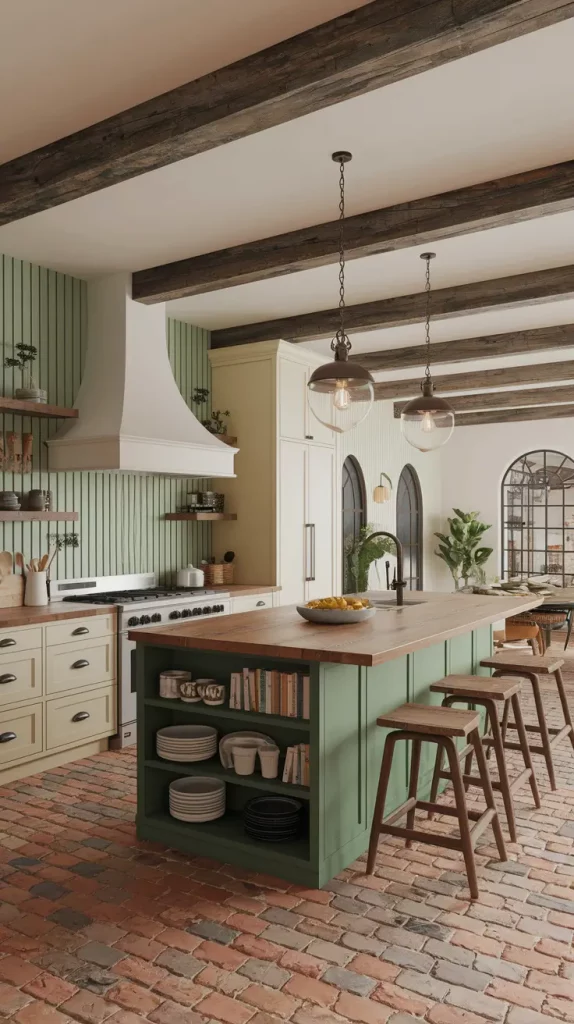
In a recent project, reclaimed wood beams mark the kitchen area, with brick flooring contrasting hardwood in the adjacent living room. A deep green island with open shelves doubles as a bookcase. Creamy white cabinetry and whitewashed vertical plank backsplashes unify the space. Varied pendant lighting defines zones while maintaining cohesion.
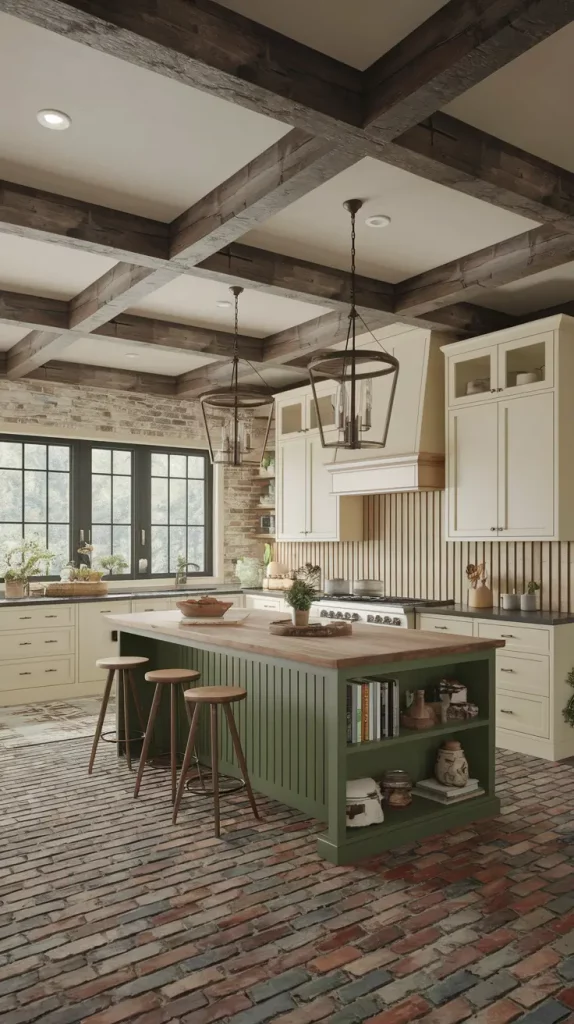
Elle Decor emphasizes visual zoning through texture and color rather than walls, a principle especially effective in rustic designs. Adding a half-wall bar or open shelving with trailing plants can create separation without disrupting openness.
Personalized Rustic Kitchen Wall Decor
Walls are often overlooked but offer a prime opportunity to add character in rustic kitchens. Treat them like a living room with art, texture, and functional decor to make the space feel alive and personal.
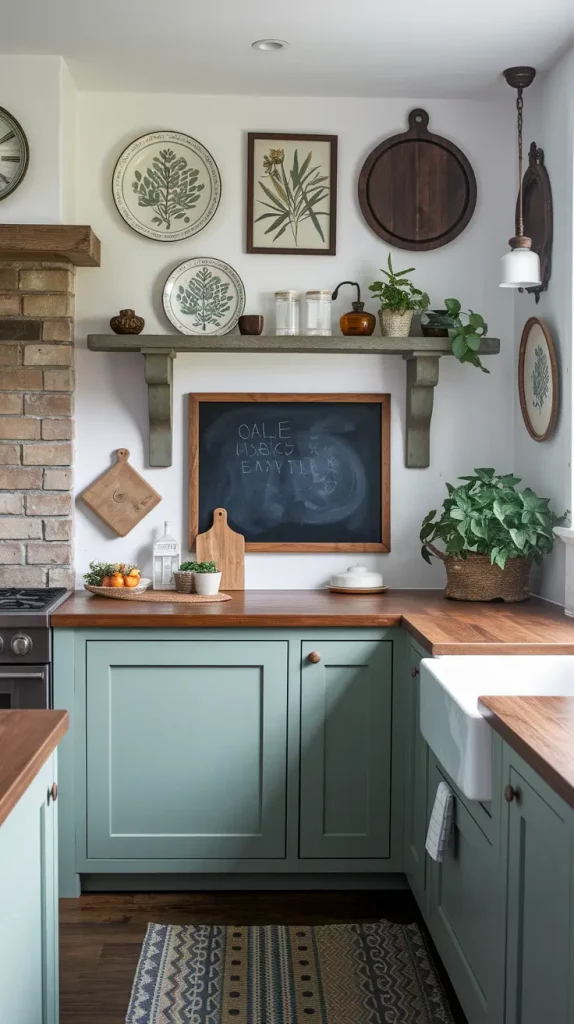
One design features a wooden plate rack with white ceramic dishes, framed botanical prints, and stacked wooden cutting boards. A chalkboard pantry wall adds charm and function. Above the stove, a carved wood corbel shelf holds antique oil bottles. Dull oat-colored walls provide a neutral backdrop that highlights these elements.
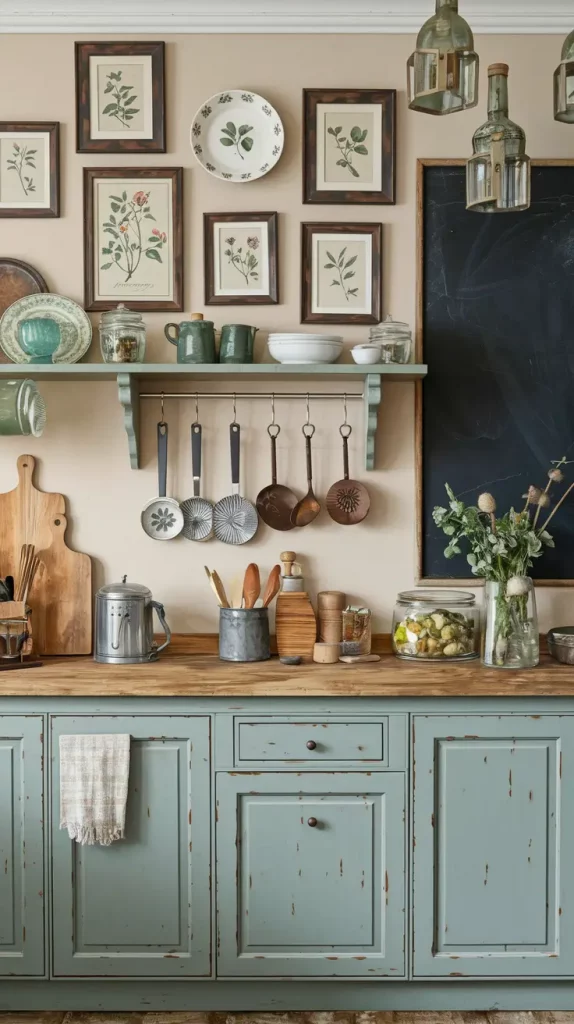
Domino magazine suggests filling kitchen walls with meaningful art, family recipes, antique utensils, or woven baskets. Installing a gallery rail or peg rail along a wall allows for easy seasonal decor changes, combining beauty and flexibility.
Smart Hidden Storage Solutions for Rustic Kitchens
Functionality is crucial, especially in rustic kitchens where space may be limited. Clever concealed storage behind classic finishes keeps the kitchen organized without compromising style.
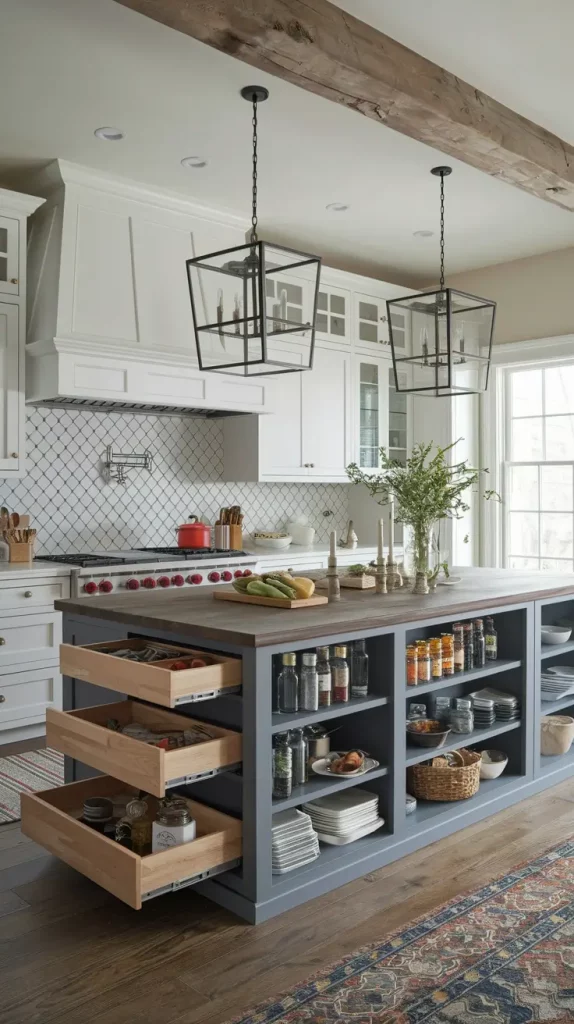
Examples include toe-kick drawers for baking sheets, slide-out pantries hidden behind beadboard panels, deep island drawers housing trash bins, and disguised lazy Susans in corner cabinets. Open shelves can be designed to reveal spice containers, and even apron-front sinks can include tilt-out scrub brush trays.
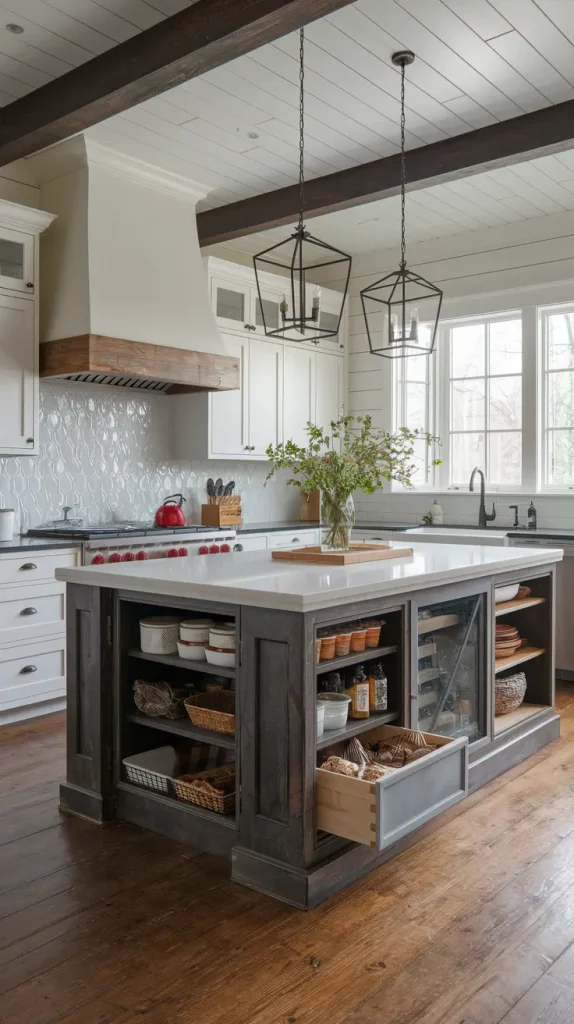
Apartment Therapy champions invisible storage that maximizes every detail for dual purposes. Rustic kitchens should feel intentional and uncluttered. Adding hidden charging stations or magnetic knife strips behind cabinet doors can keep counters clear and functional.
Eco-Conscious Rustic Kitchens for Sustainable Living
With growing environmental awareness, many rustic kitchen designs now incorporate sustainable materials and energy-efficient features without sacrificing style. The rustic aesthetic naturally aligns with reuse, repurposing, and conservation.
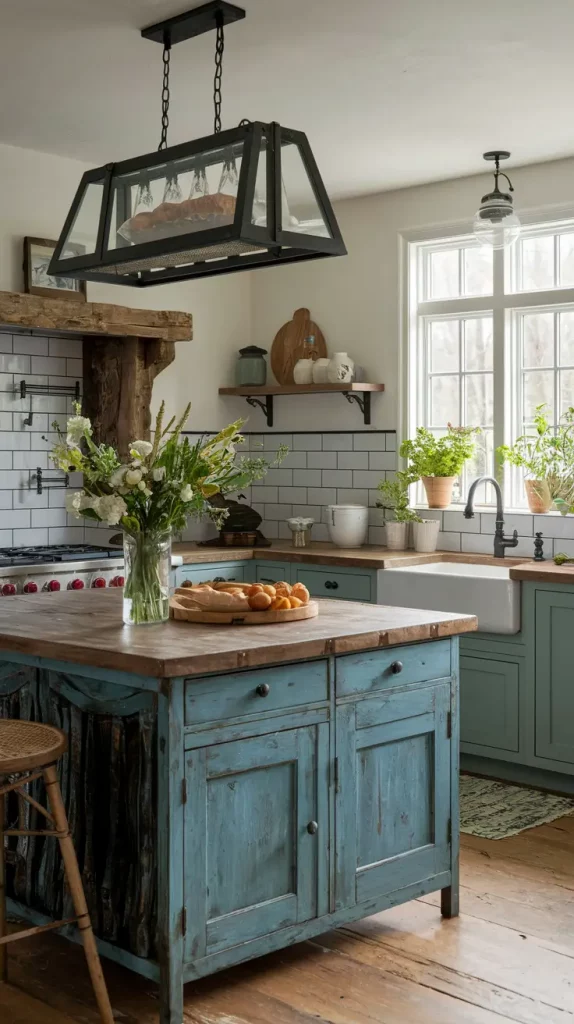
One kitchen features FSC-certified reclaimed wood cabinetry, bamboo flooring, and recycled glass countertops with warm amber flecks. Energy-saving appliances and a concealed compost station promote eco-friendliness. Large windows maximize natural light, while VOC-free stone-gray paint enhances indoor air quality. The island repurposes an old library desk with storage baskets below.
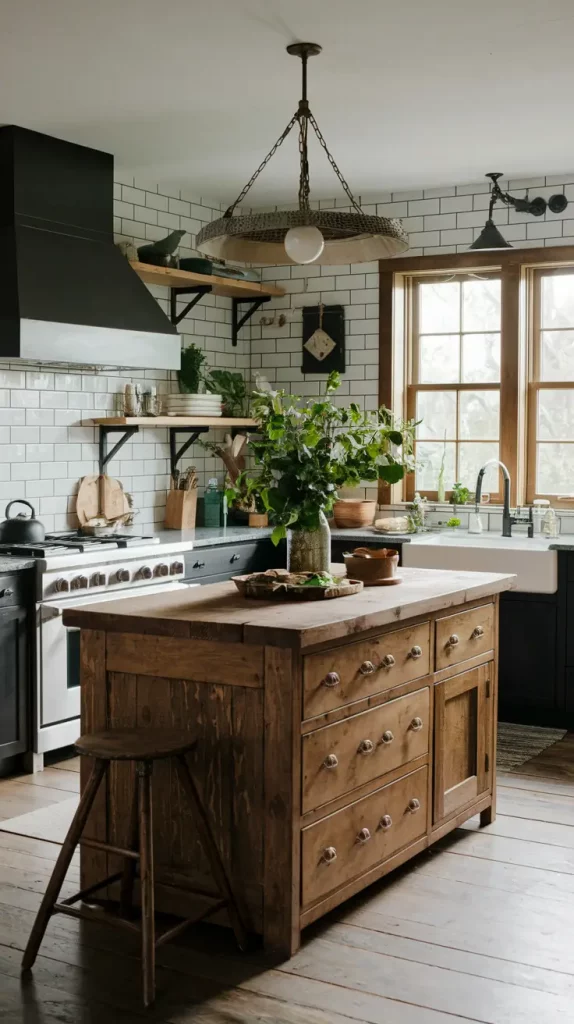
Sustainability is becoming the norm rather than a trend. Dwell Magazine frequently features rustic designs embracing eco-friendly materials and methods. Incorporating LED Edison bulbs and refurbishing vintage furniture supports this ethos. Adding an indoor herb garden with grow lights or an under-sink water filtration system enhances both function and environmental responsibility.
Minimalist Rustic Kitchens That Radiate Warmth
Minimalism and rustic style may seem at odds, but together they create serene, inviting kitchens. Emphasizing negative space, soft textures, and neutral tones allows natural materials to shine.
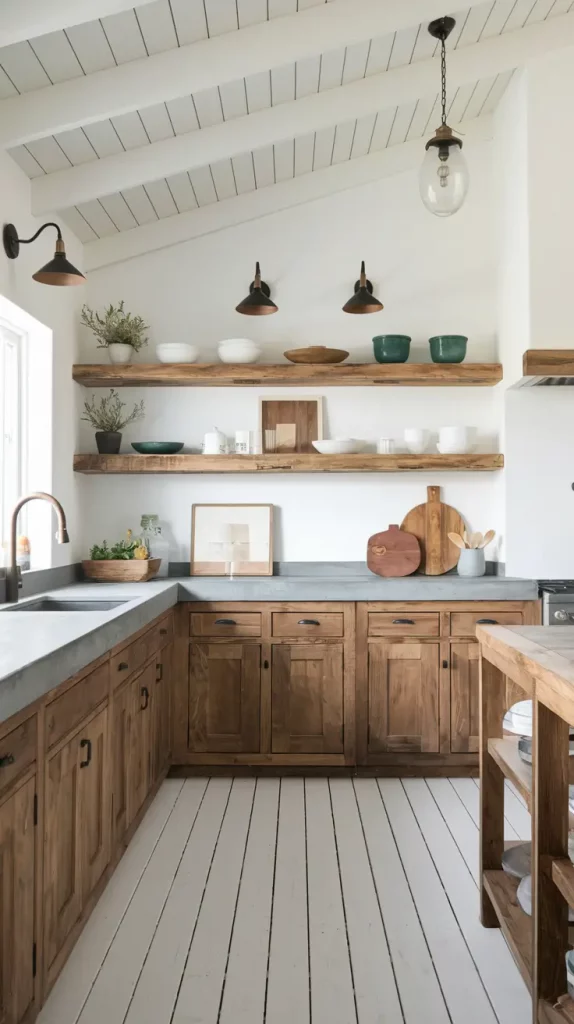
This project features slab-front oak cabinets with hidden handles, thin concrete countertops, and a single driftwood open shelf. Whitewashed pine floors and warm linen walls create a calm backdrop. Sleek brass sconces and a vintage pendant light provide subtle illumination. Accessories are minimal-wooden utensils in a ceramic crock and a small stack of antique breadboards.
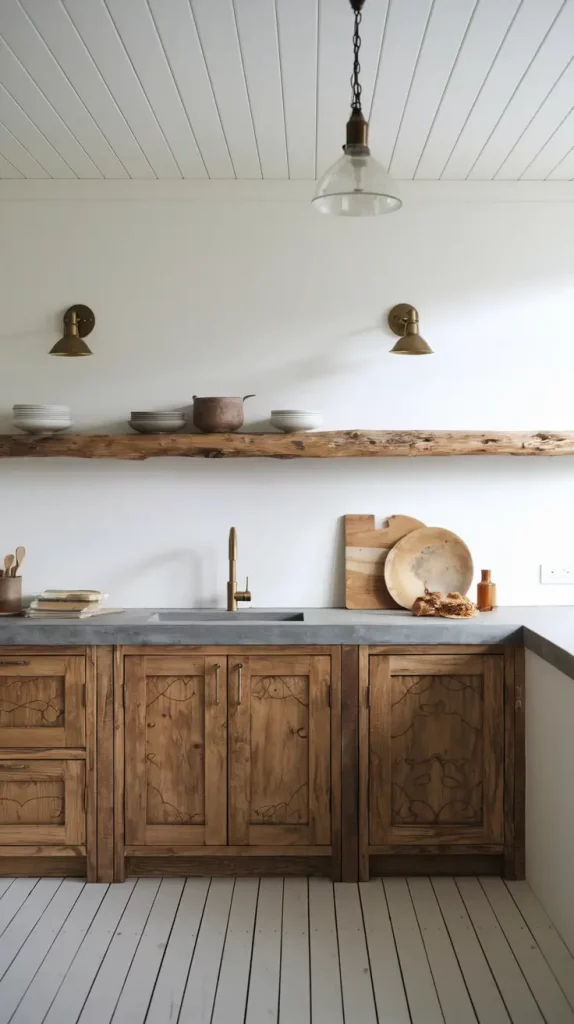
Architectural Digest describes minimalism as thoughtful restraint-prioritizing quality over quantity. In rustic kitchens, this means letting wood grain, stone, and natural light take center stage without clutter. Adding a live-edge wood stool or bench introduces subtle organic texture that complements clean lines.
Built-In Pantry Ideas for Rustic Kitchens
For avid cooks, a well-designed pantry is essential. Rustic kitchens can feature built-in pantries with charming doors, tiered shelving, and natural materials that blend beauty with practicality.
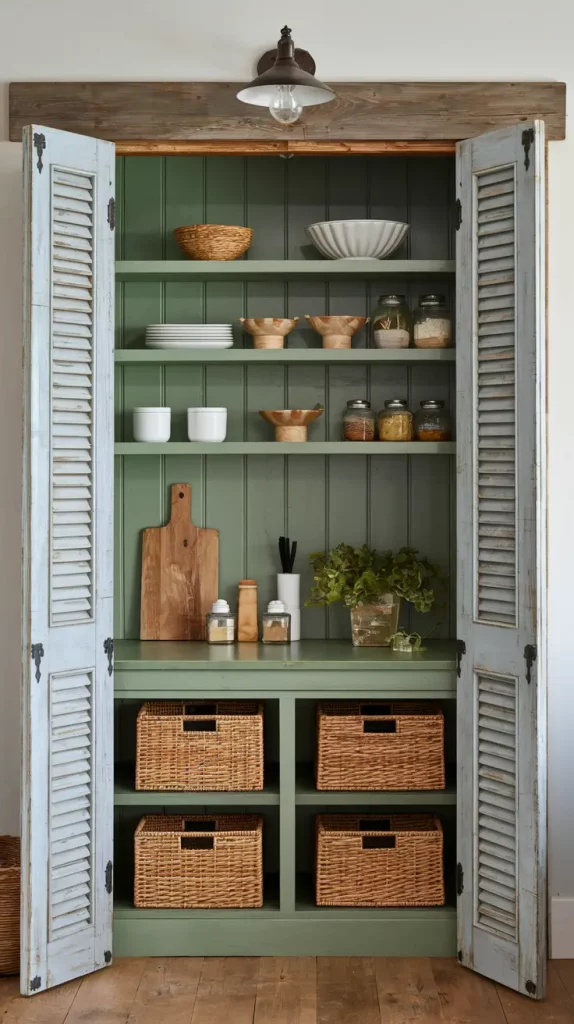
One favorite design includes a tall recessed pantry framed with old barnwood, adjustable shelves, and wicker baskets. Antique shutter doors painted soft green and lightly distressed add character. Inside, clear glass jars, ceramic canisters, and vintage labels organize ingredients. A small ladder on a rail provides access and visual interest.
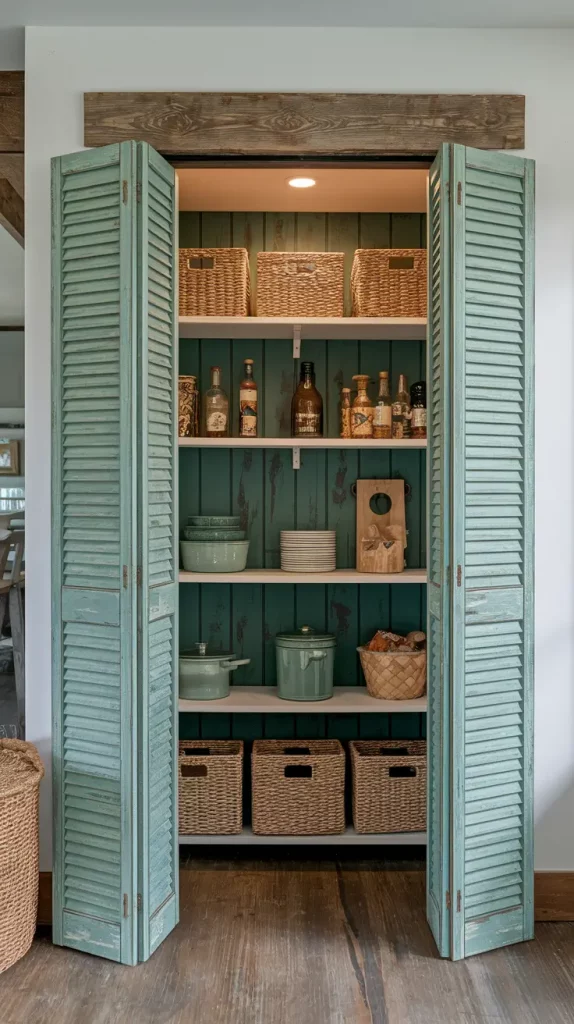
Country Living highlights the balance between practicality and warmth in pantry design. A rustic pantry should feel like a blend of a general store and grandma’s baking cabinet. Adding built-in motion-sensor LED lighting can illuminate labels and maintain ambiance.
Final Flourishes: Making Your Rustic Kitchen Truly Yours
The magic of rustic kitchen design lies in layering. Once the main elements-cabinets, layout, materials-are in place, it’s the finishing touches that bring personality and soul.
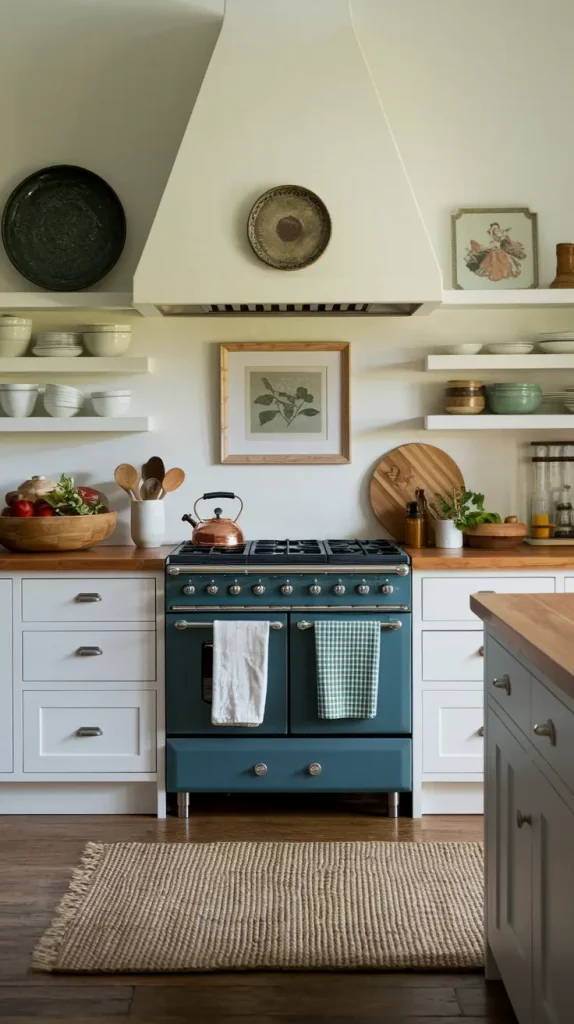
Handmade pottery on open shelves, handwoven rugs under the sink, and linen towels with vintage embroidery add texture and warmth. Antique drawer pulls, small framed art above the stove, and a copper kettle on the range soften the space visually. A row of dried herbs by a window or a carved wooden bowl filled with seasonal produce can express more than any modern appliance.
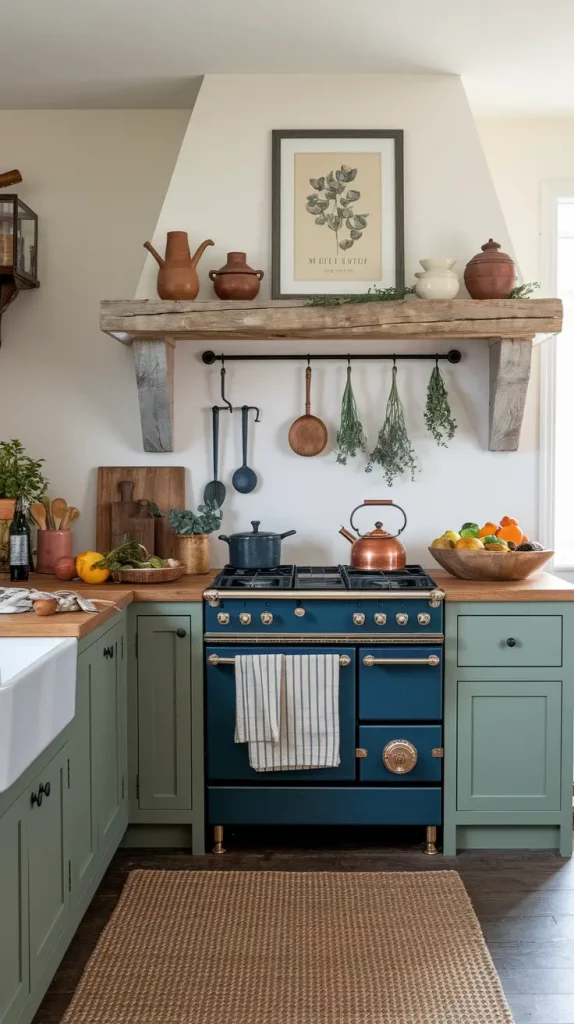
Elle Decor reminds us that rustic kitchens are defined not by what you buy, but by what you keep. I always include scent as a final touch-a beeswax candle or the aroma of fresh bread cooling on the counter completes the story.
Summary
Rustic kitchens embody more than a style-they evoke a feeling of comfort, nostalgia, and connection to nature. Whether you prefer farmhouse coziness, DIY charm, modern sophistication, or the freshness of green cabinetry, these ideas offer inspiration for every taste and space.
Which rustic kitchen concept resonates with you most? Share your thoughts or questions in the comments, and let’s start crafting your dream kitchen together!